

Insider Briefer
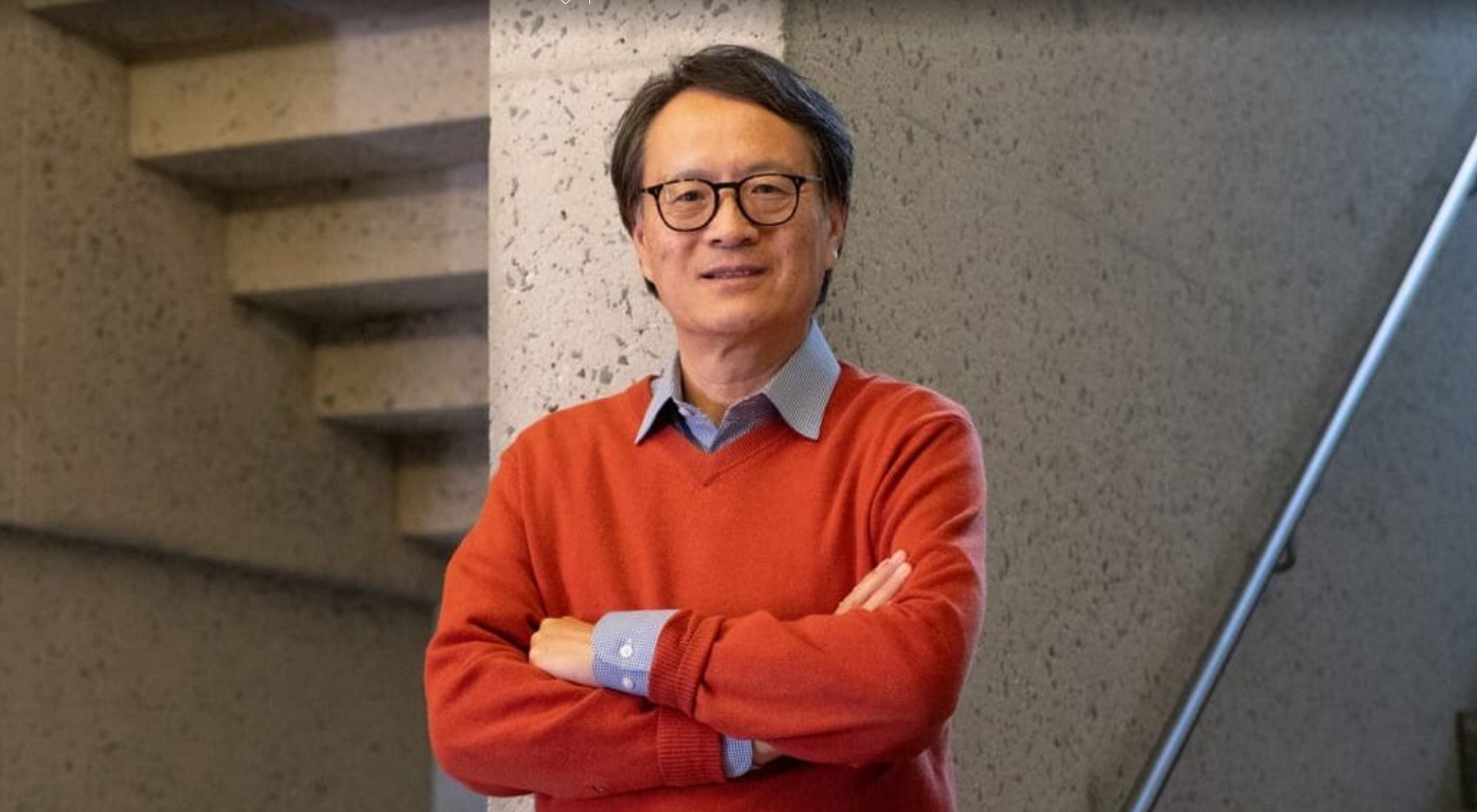
- Princeton’s Nan Yao has been named a Fellow of the Materials Research Society in recognition of decades of leadership and contributions to materials characterization.
- Yao’s work spans breakthroughs in quasicrystals, atomic-scale imaging, microscopy innovation, and applications across fields from quantum computing to fossil analysis.
- As founding director of Princeton’s Imaging and Analysis Center, Yao has built one of the world’s leading microscopy facilities and led extensive teaching and global outreach initiatives.
“Nan built and directs the crown jewel of materials characterization at Princeton. He has been a pillar of the Princeton Materials Institute for over 30 years,” said Rick Register, Eugene Higgins Professor of Chemical and Biological Engineering and PMI director. “This recognition as an MRS Fellow underscores Nan’s exceptional record of discovery and scholarly achievement: from natural quasicrystals, to atomic-scale imaging of interfaces, piezoelectric composites, and much more.”
According to Princeton’s School of Engineering — Yao’s work has advanced a broad set of topics, including the visualization of electron orbital signatures within individual atoms, early advances in transmission electron microscopy and helium-ion microscopy, a demonstration of mechanically breaking a single dative bond and insights into force-driven chemical reactivity at the single-atom scale. His expertise has supported an unusually wide range of research into combustion, lithium extraction, silicon nanowires, biological and biomimetic materials, topological insulators, superconducting quantum computing, organic and inorganic solar cells, carbon nanotubes, graphene, block copolymers, polymer glasses, nanoparticle drug delivery, optoelectronics, catalysis and neuromorphic computing. His work analyzing a 650-million-year-old sponge fossil revealed the origin of animals to be roughly 100 million years earlier than previously thought, and he and colleagues identified the earliest known use of diamond, dating to 4,000 B.C.
Yao is the founding director of the PMI’s Imaging and Analysis Center (IAC) and inaugural professor of the practice. His research uses advanced imaging, diffraction, spectroscopy and in-situ techniques, along with theoretical simulations, to study fundamental properties of complex materials. Starting with a single electron microscope in 1993, the Imaging Center has grown into a world-class facility with more than 50 state-of-the-art instruments in electron and ion microscopy, cryogenic imaging, x-ray and scattering methods, scanning probe techniques, and surface, spectroscopic, thermal and mechanical analysis.

The institute notes that — Yao was cited by the Society for “co-discovering the first natural quasicrystal and advancing materials characterization, global education, academia, industry partnerships, and community engagement in ways that strengthen the mission of the Materials Research Society,” according to the group’s website.
Scientists have known for centuries that solid materials are either crystalline, with atoms arranged in symmetrical patterns, or non-crystalline, with atoms arranged in amorphous, non-symmetrical patterns. Yao’s revolutionary co-discovery of a third form of solid materials, a naturally occurring quasicrystal, with Princeton physicist Paul Steinhardt, took place at the Imaging Center.
Yao designs and leads Princeton’s microscopy characterization curriculum, including creating an outreach program of free workshops and short courses that have served more than 6,000 students and 800 industrial scientists from 140-plus companies globally. He has won the Excellence in Teaching Award four times from the Princeton Engineering Council and the Commendation for Outstanding Teaching 10 times from Princeton’s School of Engineering and Applied Science.
He also serves as director of outreach for the Princeton Center for Complex Materials, a National Science Foundation-supported Materials Research Science and Engineering Center (MRSEC) at Princeton Materials Institute. According to a recent review by the National Science Foundation, the Imaging Center is “among the best in the world for advanced imaging and analysis of materials.”
He is a fellow of the Microscopy Society of America, Royal Microscopical Society (U.K.) and the American Association for the Advancement of Science. He has published two books, 18 book chapters and over 330 peer-reviewed articles. Yao has also received four patents.
Yao joined Princeton in 1993 as an associate research scholar at the Princeton Materials Institute. He received his Ph.D. in applied physics/electron microscopy from Arizona State University.
The 2026 class of fellows will be formally announced at the Materials Research Society’s Fall 2025 meeting in December and celebrated at the Spring 2026 meeting in Hawai’i. PMI associated faculty member Yueh-Lin “Lynn” Loo was named a fellow in 2020.
Source: Princeton Engineering