DOE Researchers Use Quantum Computers to Simulate Particle Physics Beyond Supercomputers



Insider Brief
- DOE-backed researchers achieved the largest quantum simulation to date, using scalable quantum circuits on IBM’s quantum computers to model particle physics phenomena too complex for classical supercomputers.
- The team first developed circuits for small systems using classical computation, then scaled them to more than 100 qubits to simulate vacuum properties and hadron pulses.
- The scalable circuits offer a path to studying matter in extreme conditions, potentially illuminating the matter-antimatter imbalance, supernova nucleosynthesis, and properties of ultra-dense matter.
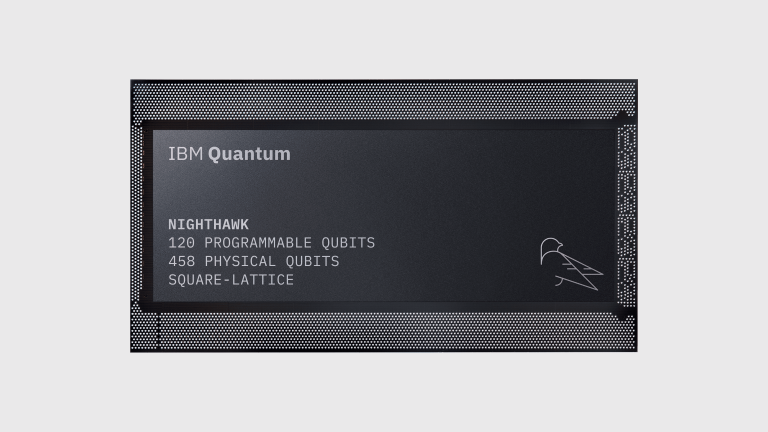
- Image courtesy of Roland Farrell, Marc Illa, Anthony Ciavarella, and Martin J. Savag.
Nuclear physicists have developed scalable quantum circuits that simulate fundamental physics too complex for classical supercomputers, marking one of the largest digital quantum simulations ever performed on IBM’s quantum hardware, according to the U.S. Department of Energy (DOE). Their work focuses on preparing the vacuum state and hadron pulses of a one-dimensional quantum electrodynamics (QED) model — a setup used to study the physics that underlies particle collisions.
As described by the DOE – The researchers used classical computers to determine optimal circuit elements for small systems, then leveraged symmetries and scale hierarchies to expand those circuits to more than 100 qubits. Running these circuits on IBM’s quantum machines allowed them to simulate vacuum properties with percent-level accuracy and to prepare localized hadron pulses for dynamic evolution.
The U.S. Department of Energy notes that this approach opens a pathway for simulating matter under extreme conditions — high densities, particle beams, and collision-like environments – that push beyond the limits of classical computation. Future quantum simulations using this method could shed light on why matter dominates antimatter, how heavy elements form in supernovae, and how ultra-dense matter behaves. The same scalable strategy could also be applied to other complex quantum systems, including exotic materials.

Read the full announcement here

Keep track of everything going on in the Quantum Technology Market. In one place.

Mohib Ur Rehman
Covering quantum and emerging technologies, Mohib explores the intersection of technology, security, and society. His work also frequently examines surveillance infrastructure and the institutions shaping the digital world. In addition to his work at The Quantum Insider, he co-runs SK NEXUS, an independent technology publication that helps readers understand the technologies shaping their lives.

Stay Ahead of Quantum
Get the latest research, company news, and market intelligence every week.
MENTIONED IN THE ARTICLE

IBM
IBM is an iconic technology pioneer founded in 1911 as the Computing-Tabulating-Recording Company and officially renamed International Business Machines Corporation in 1924. Beyond foundational computing, IBM possesses a deep legacy in aerospace and defense from building the guidance computers and Instrument Unit for NASA's historic Apollo missions to partnering with Airbus on CIMON, the first AI assistant on the ISS.
→

U.S. Department of Energy (DOE)
The mission of the Department of Energy is to ensure America's security and prosperity by addressing its energy, environmental, and nuclear challenges through transformative science and technology solutions. In September, 2022, Research supported by ASCR demonstrated that classical machine learning algorithms can accurately predict ground state properties and classify quantum phases of matter using data generated from quantum experiments. In November, 2022, Research supported by Q-NEXT revealed that the performance of a sensor network is constrained by the intrinsic noise associated with the quantum states used in the network. In March, 2023, Research funded by DOE SC NP achieved the first experimental observation of entanglement between dissimilar particles, specifically positive and negative pions. In August, 2023, Research funded by DOE SC BER demonstrated strong preservation of entanglement in a two-photon absorption process involving organic molecules, offering a new approach for developing quantum light-based spectroscopy and microscopy.
→