

Insider Brief
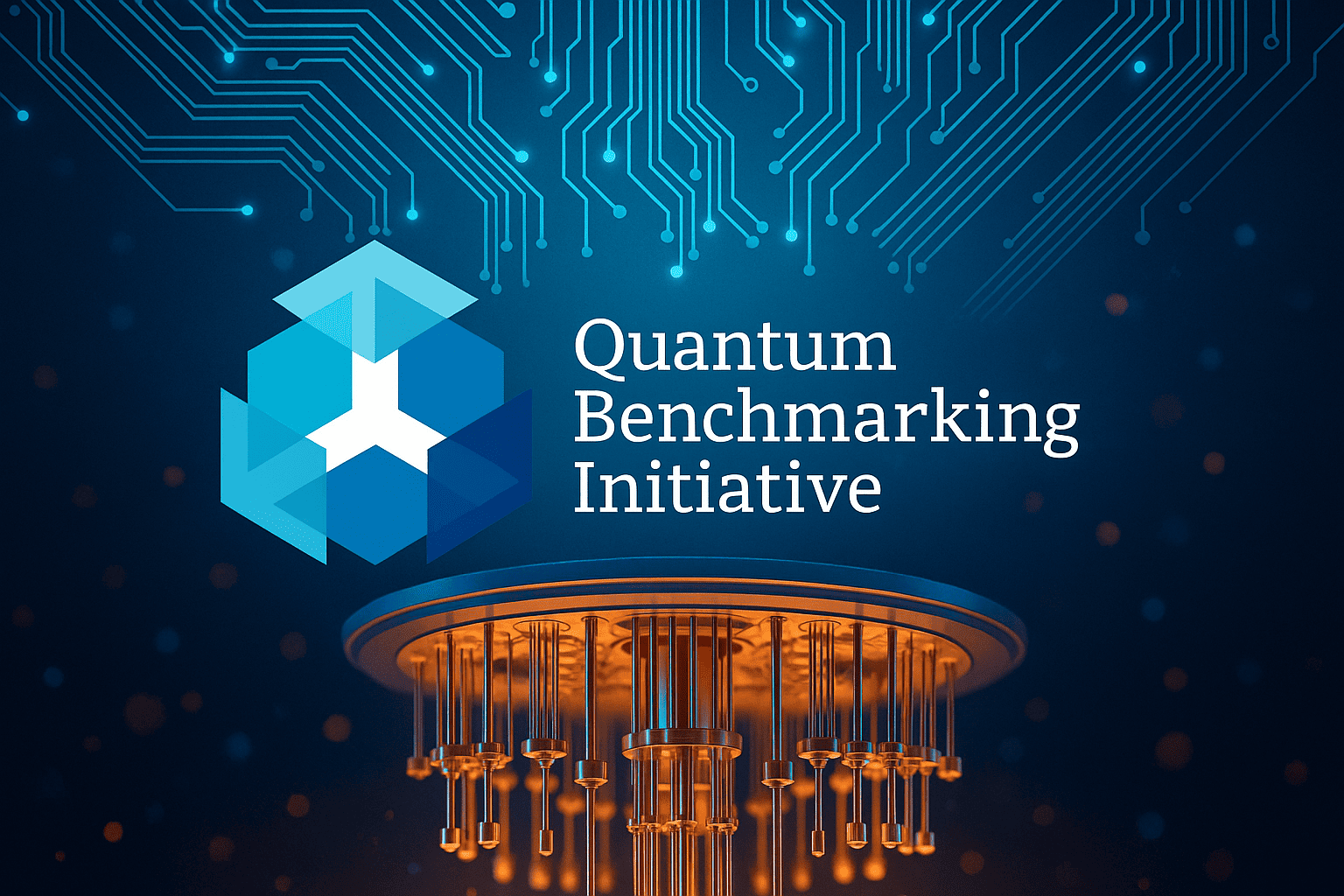
- DARPA has advanced 11 companies to Stage B of its Quantum Benchmarking Initiative, moving the program from conceptual proposals to technical validation of utility-scale quantum computing architectures.
- Stage B will evaluate each company’s R&D plans, risk-mitigation strategies, and prototype roadmaps to determine whether their approaches are realistic and scalable.
- The initiative aims to assess whether an industrially useful quantum computer—one whose computational value exceeds its cost—can be developed by 2033.
What Does Stage B Mean for DARPA’s Quantum Benchmarking Initiative?
The Defense Advanced Research Projects Agency (DARPA) has moved its flagship quantum computing effort, the Quantum Benchmarking Initiative (QBI), into its next phase — or Stage B — a shift from conceptual review toward rigorous technical validation of utility-scale quantum architectures. A total of 11 companies have moved into Stage B, according to the DARPA project web page.
Under the initiative’s three-stage scheme, participants must first present a plausible architecture (Stage A), then a detailed R&D plan (Stage B), and finally undergo independent verification of hardware (Stage C).
The transition to Stage B follows the completion of Stage A evaluations, in which DARPA assessed how well companies defined a path to achieving “utility-scale” quantum computing — meaning computational value that exceeds cost. DARPA Now, DARPA will subject select firms to a year-long deep dive into the realism of their roadmaps, risk-mitigation strategies and prototype burn-down plans.

Which Companies Are Advancing to Stage B and What Qubit Technologies Do They Use?
DARPA reports the following companies (with their qubit technology approach) have been selected for Stage B at this time:
| Company | Location | Qubit Approach |
|---|---|---|
| Atom Computing | Boulder Colorado | Neutral atom arrays |
| Diraq | Sydney and US locations | Silicon CMOS spin qubits |
| IBM | Yorktown Heights New York | Modular superconducting processors |
| IonQ | College Park Maryland | Trapped ions |
| Nord Quantique | Sherbrooke Canada | Superconducting qubits with bosonic correction |
| Photonic Inc. | Vancouver Canada | Optically linked silicon spin qubits |
| Quantinuum | Broomfield Colorado | Trapped ion QCCD architecture |
| Quantum Motion | London UK | MOS silicon spin qubits |
| QuEra Computing | Boston Massachusetts | Neutral atom arrays |
| Silicon Quantum Computing | Sydney Australia | Precision atom qubits in silicon |
| Xanadu | Toronto Canada | Photonic quantum computing |
The list may grow, according to DARPA, adding that It is likely but not guaranteed that additional teams will enter Stage B in the future. DARPA plans to announce any additional promotion decisions once they contracted with those teams.
In summary, Stage B includes the most diverse cross section of qubit technologies DARPA has ever evaluated in a single program.
Can a Useful Quantum Computer Be Developed by 2033?
By selecting multiple firms for Stage B, DARPA signals that it believes certain concepts presented in Stage A met the threshold of plausibility. The initiative’s ultimate goal is to assess whether an industrially-useful quantum computer can be developed by 2033 — defined as a system whose computational value outweighs its cost.
The move from conceptual review to rigorous validation suggests DARPA is narrowing focus from “could this work” to “can this be built.”
The DARPA team writes: “The Quantum Benchmarking Initiative is an expansion of the existing DARPA Underexplored Systems for Utility-Scale Quantum Computing (US2QC). QBI is separate from but related to the existing Quantum Benchmarking (QB) program that seeks to determine the yardstick for impact. In the simplest terms, QB seeks to answer the question: If a fully functioning quantum computer magically appeared, what would it make possible that a standard computer cannot accomplish?”
For the quantum-computing ecosystem, this transition marks a maturation step.
Firms that advance to Stage B are now tasked with detailing how they will scale, mitigate risks, and integrate prototypes — not just propose bold architectures. The outcome will provide clearer signals to investors, partners and national-security stakeholders about which qubit modalities and architectures may succeed.
What Will DARPA Evaluate During Stage B and How Will Firms Advance?
During Stage B (estimated to last about one year), DARPA will assess each performer’s R&D plan, prototype roadmap, risk-mitigation strategy and manufacturing pathway. After satisfactory review, select firms will proceed to Stage C, where independent verification and validation teams will test actual hardware against benchmarks.
DARPA says it is ultimately “interested in pursuing all viable approaches for which there is available funding.”
That means QBI is not a competition to narrow the field to an ultimate winner, or even a few “winners.”
“Rather, the aim is to evaluate each company’s approach on its own merits,” the team writes. “Multiple, single, or even no participants will ultimately demonstrate a path to an industrially useful quantum computer within the next eight years. Thorough evaluation is crucial to understanding the true potential of the technology.
Frequently Asked Questions
What is DARPA’s Quantum Benchmarking Initiative (QBI)?
The Quantum Benchmarking Initiative is DARPA’s flagship quantum computing effort designed to assess whether an industrially useful quantum computer—one whose computational value exceeds its cost—can be developed by 2033.
What does Stage B involve?
Stage B represents a shift from conceptual review toward rigorous technical validation. DARPA will conduct a year-long deep dive into the realism of each company’s roadmaps, risk-mitigation strategies, and prototype burn-down plans.
Which companies advanced to Stage B?
Eleven companies advanced: Atom Computing (neutral atoms), Diraq (silicon spin qubits), IBM (superconducting processors), IonQ (trapped-ion), Nord Quantique (superconducting with bosonic error correction), Photonic Inc. (silicon spin qubits), Quantinuum (trapped-ion), Quantum Motion (silicon spin qubits), QuEra Computing (neutral atom), Silicon Quantum Computing (atom qubits in silicon), and Xanadu (photonic).
What is the three-stage structure?
Participants must present a plausible architecture (Stage A), then a detailed R&D plan (Stage B), and finally undergo independent verification of hardware (Stage C).
What is “utility-scale” quantum computing?
Utility-scale quantum computing means computational value that exceeds cost—a quantum computer that provides more value than it costs to build and operate.
What happens after Stage B?
After satisfactory review in Stage B, select firms will proceed to Stage C, where independent verification and validation teams will test actual hardware against benchmarks.
Is this a competition to find a single winner?
No. DARPA is evaluating each company’s approach on its own merits. Multiple, single, or even no participants may ultimately demonstrate a path to an industrially useful quantum computer within eight years.
What does this advancement signal?
The transition marks a maturation step for quantum computing, moving from “could this work” to “can this be built.” Firms must now detail how they will scale, mitigate risks, and integrate prototypes.