

Insider Brief
- Quantum Machines, Arque Systems, and the Jülich Supercomputing Centre deployed the first NVIDIA DGX Quantum-powered quantum computer at a major supercomputing facility, integrating quantum resources with Europe’s top exascale system JUPITER.
- The system combines NVIDIA’s Grace Hopper Superchip with Quantum Machines’ OPX1000 controller and Arque Systems’ 5-qubit processor, achieving sub-4 microsecond latency for hybrid quantum–classical operations.
- Researchers will use the platform to accelerate qubit calibration, test quantum error correction, and develop hybrid algorithms, marking a significant step toward scalable quantum acceleration in high-performance computing.
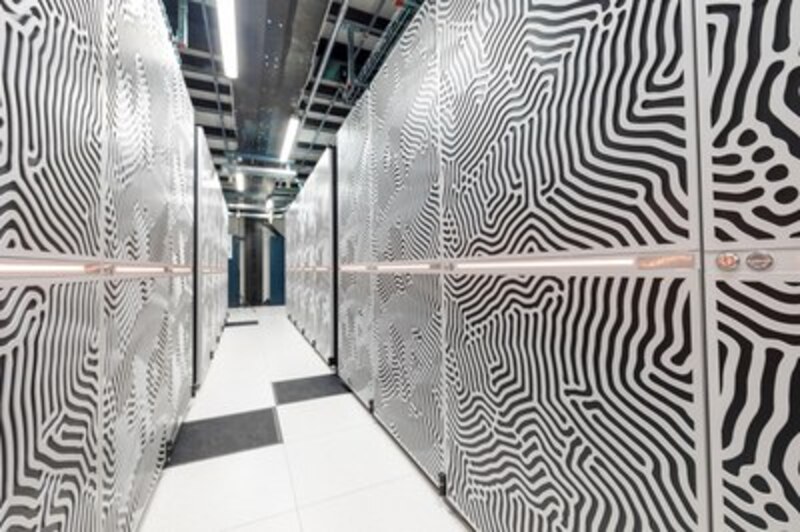
PRESS RELEASE — Quantum Machines, Arque Systems, and the Jülich Supercomputing Centre (JSC) announced today the first deployment of an NVIDIA DGX Quantum-powered quantum computer at a major supercomputing center, positioning Europe at the forefront of hybrid quantum-classical computing globally. This milestone at JSC, operator of Europe’s fastest supercomputer JUPITER (ranked #4 globally) and the continent’s first exascale system, represents a significant leap in integrating quantum computing capabilities into real-world high-performance computing environments. The deployment at this pioneering facility, which has led European HPC innovation for nearly two decades, provides researchers with unprecedented access to integrated quantum resources within one of the world’s most powerful computational infrastructures.
DGX Quantum combines NVIDIA’s Grace Hopper Superchip with Quantum Machines’ OPX1000 hybrid quantum-classical controller, enabling seamless interaction between classical and quantum computing resources. The integration enables round-trip data transfer with latency under 4 microseconds – a 1000-fold improvement over previous implementations.
“This deployment at JSC marks an important transition from laboratory environments to practical HPC integration,” said Prof. Dr. Kristel Michielsen, Director of Jülich Supercomputing Centre. “By bringing together quantum and classical computing resources at Europe’s leading supercomputing facility, we’re creating new possibilities for researchers to explore hybrid quantum-classical algorithms at scale.”

The system features Arque Systems’ 5-qubit quantum processor, which uses electron shuttling to couple qubits – an approach intended to enable architectures suitable for quantum error correction (QEC), a key requirement for practical quantum computing. To leverage the fast gate speeds of spin qubits, the tightly integrated stack delivers microsecond-scale analog feedback, ensuring classical processing stays within qubit coherence times.
Key aspects of the collaboration include accelerating qubit calibration routines, benchmarking quantum error correction performance, and exploring hybrid quantum-classical algorithm development within a high-performance computing environment. The integration enables microsecond-scale interaction between quantum control hardware and classical compute resources, allowing quantum operations to become a seamless part of the HPC workflow.
A central advantage of this architecture is the unprecedented ability to run neural networks and machine learning models directly on high-performance classical accelerators – such as GPUs, while maintaining low-latency communication with the quantum controller. This enables advanced techniques like adaptive calibration and decoder optimization to be executed in real time, dramatically speeding up workflows that are currently bottlenecked in other systems. This level of integration is not available in any other quantum computing setup today and lays the foundation for scalable, high-impact quantum acceleration in both scientific research and industrial applications.
“Deploying our quantum system at JSC represents a major milestone in making quantum computing accessible within existing HPC infrastructure,” said Dr. Markus Beckers, CEO of Arque Systems. “This collaboration demonstrates how quantum processors can be integrated as computational resources alongside traditional supercomputing capabilities.”
“We’re witnessing the convergence of two transformative technologies, AI and quantum computing, coming together in the world’s most advanced computing facilities,” said Dr. Itamar Sivan, CEO of Quantum Machines. “This deployment represents more than just a technical achievement; it’s a significant step towards a future where quantum acceleration becomes as accessible as GPU acceleration is today, fundamentally changing how we approach the world’s most complex computational challenges.”
“Tight integration of quantum and classical systems is a key and pressing challenge for performing the quantum error correction needed to deploy useful quantum applications,” said Sam Stanwyck, Quantum Product Lead for quantum computing at NVIDIA. “DGX Quantum is allowing researchers to draw on state-of-the-art AI supercomputing to implement the control processes they need to turn today’s qubits into tomorrow’s accelerated quantum supercomputers.”