

Insider Brief
- IBM and AMD announced a partnership to develop quantum-centric supercomputing architectures, combining IBM’s quantum systems with AMD’s high-performance CPUs, GPUs, and AI accelerators to push beyond the limits of classical computing.
- The collaboration will focus on scalable, open-source hybrid platforms that allow quantum computers to simulate molecular behavior while classical supercomputers process large-scale data, benefiting in areas such as drug discovery, materials science, and logistics.
- Initial demonstrations are planned later this year, with the companies aiming to advance fault-tolerant quantum computing by the decade’s end, supported by AMD’s real-time error correction capabilities and IBM’s Qiskit ecosystem.
PRESS RELEASE – Today, IBM (NYSE: IBM) and AMD (NASDAQ: AMD) announced plans to develop next-generation computing architectures based on the combination of quantum computers and high-performance computing, known as quantum-centric supercomputing. AMD and IBM are collaborating to develop scalable, open-source platforms that could redefine the future of computing, leveraging IBM’s leadership in developing the world’s most performant quantum computers and software, and AMD’s leadership in high-performance computing and AI accelerators.
Quantum computing is a completely different way to represent and process information. While classical computers use bits that can only be either a zero or one, quantum computers’ qubits represent information according to the quantum mechanical laws of nature. These properties enable a much richer computational space to explore solutions to complex problems beyond the reach of classical computing alone, including in fields such as drug discovery, materials discovery, optimization, and logistics.
“Quantum computing will simulate the natural world and represent information in an entirely new way,” said Arvind Krishna, Chairman and CEO, IBM. “By exploring how quantum computers from IBM and the advanced high-performance compute technologies of AMD can work together, we will build a powerful hybrid model that pushes past the limits of traditional computing.”

“High-performance computing is the foundation for solving the world’s most important challenges,” said Dr. Lisa Su, Chair and CEO of AMD. “As we partner with IBM to explore the convergence of high-performance computing and quantum technologies, we see tremendous opportunities to accelerate discovery and innovation.”
In a quantum-centric supercomputing architecture, quantum computers work in tandem with powerful high-performance computing and AI infrastructure, which are typically supported by CPUs, GPUs and other compute engines. In this hybrid approach, different components of a problem are tackled by the paradigm best suited to solve them. For example, in the future, quantum computers could simulate the behavior of atoms and molecules, while classical supercomputers powered by AI could handle massive data analysis. Together, these technologies could tackle real-world problems at unprecedented speed and scale.
AMD and IBM are exploring how to integrate AMD CPUs, GPUs, and FPGAs with IBM quantum computers to efficiently accelerate a new class of emerging algorithms, which are outside the current reach of either paradigm working independently. The proposed effort could also help progress IBM’s vision to deliver fault-tolerant quantum computers by the end of this decade. AMD technologies offer promise for providing real-time error correction capabilities, a key element of fault-tolerant quantum computing.
The teams are planning an initial demonstration later this year to show how IBM quantum computers can work in tandem with AMD technologies to deploy hybrid quantum-classical workflows. The companies also plan to explore how open-source ecosystems, such as Qiskit, could catalyze the development and adoption of new algorithms that leverage quantum-centric supercomputing.
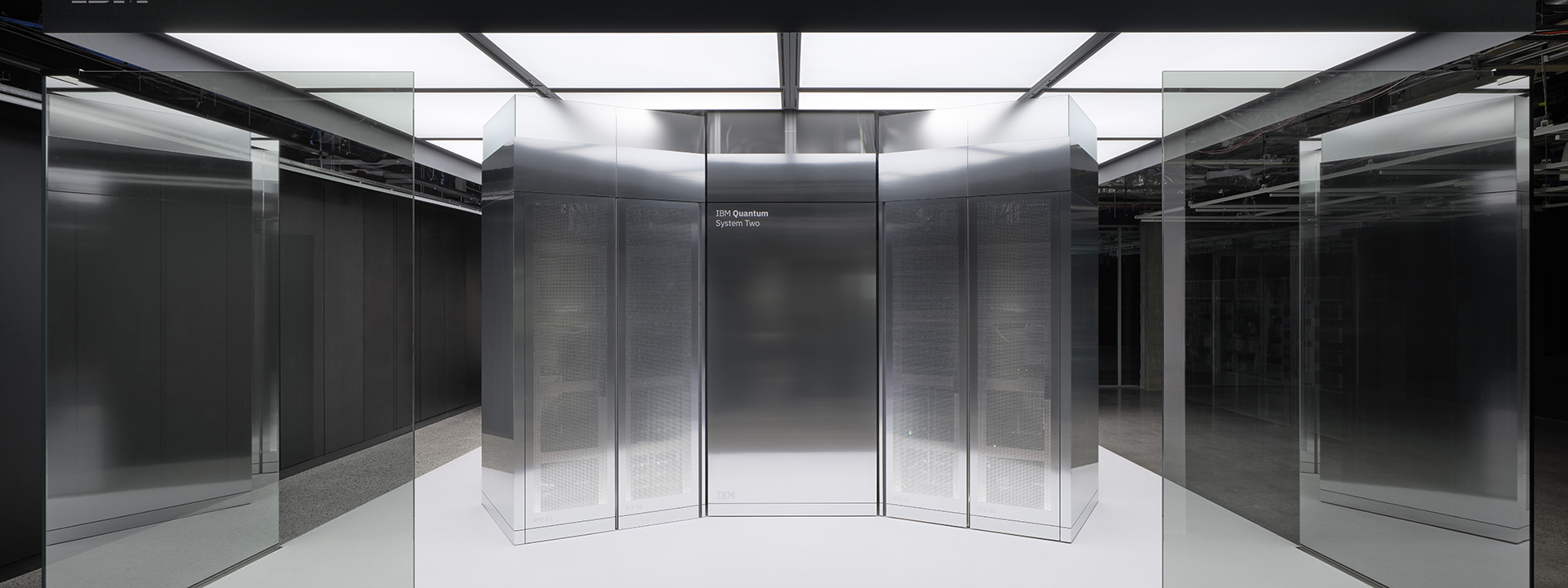
IBM has already initiated the first steps towards a vision in which quantum and classical computing are seamlessly integrated, including a recent partnership with RIKEN to deploy and directly connect IBM’s modular quantum computer, IBM Quantum System Two, with Fugaku, one of the world’s fastest classical supercomputers; as well as work with industry leaders such as Cleveland Clinic, the Basque Government, and Lockheed Martin to demonstrate how combining quantum and classical resources could return valuable results for difficult problems, beyond what classical computers can do on their own.
AMD CPUs and GPUs power Frontier at the U.S. Department of Energy‘s Oak Ridge National Laboratory—the first supercomputer in history to officially break the exascale barrier. Today, AMD EPYC™ CPUs and AMD Instinct™ GPU technology also drive El Capitan at Lawrence Livermore National Laboratory, giving AMD the distinction of powering the two fastest supercomputers in the world, according to the TOP500 list. Beyond high-performance computing, AMD CPUs, GPUs and open-source software also power numerous generative AI solutions for leading enterprises and cloud providers around the world.