Insider Brief
- Japan will invest approximately 50 billion yen (about $335 million USD) to accelerate the industrialization of its domestic quantum technology sector.
- The initiative supports more than 10 companies developing quantum hardware, software, and operating systems, including Fujitsu, KDDI, and startups like OptQC and Jij.
- The Ministry of Economy, Trade and Industry aims to establish Japan as a global leader in quantum computing, with 2025 marked as the “first year of quantum industrialization.”
Japan is preparing to inject roughly 50 billion-yen (about $335 million USD) into its domestic quantum technology sector, signaling an aggressive push to industrialize its research and compete with the United States and China in a field that could transform industries from pharmaceuticals to finance.
The Ministry of Economy, Trade and Industry (METI) will partner with major corporations such as Fujitsu and KDDI, along with emerging startups, to build out a comprehensive national quantum ecosystem, according to Yahoo Japan, which reported the initiative following a TV Tokyo interview with government officials. More than 10 domestic firms are expected to receive support.
The investment comes amid intensifying global competition over quantum computing — machines that could perform calculations far beyond the capabilities of today’s most powerful supercomputers. While still in the early stages of development, these systems are expected to play key roles in drug discovery, cryptography, logistics and energy optimization.

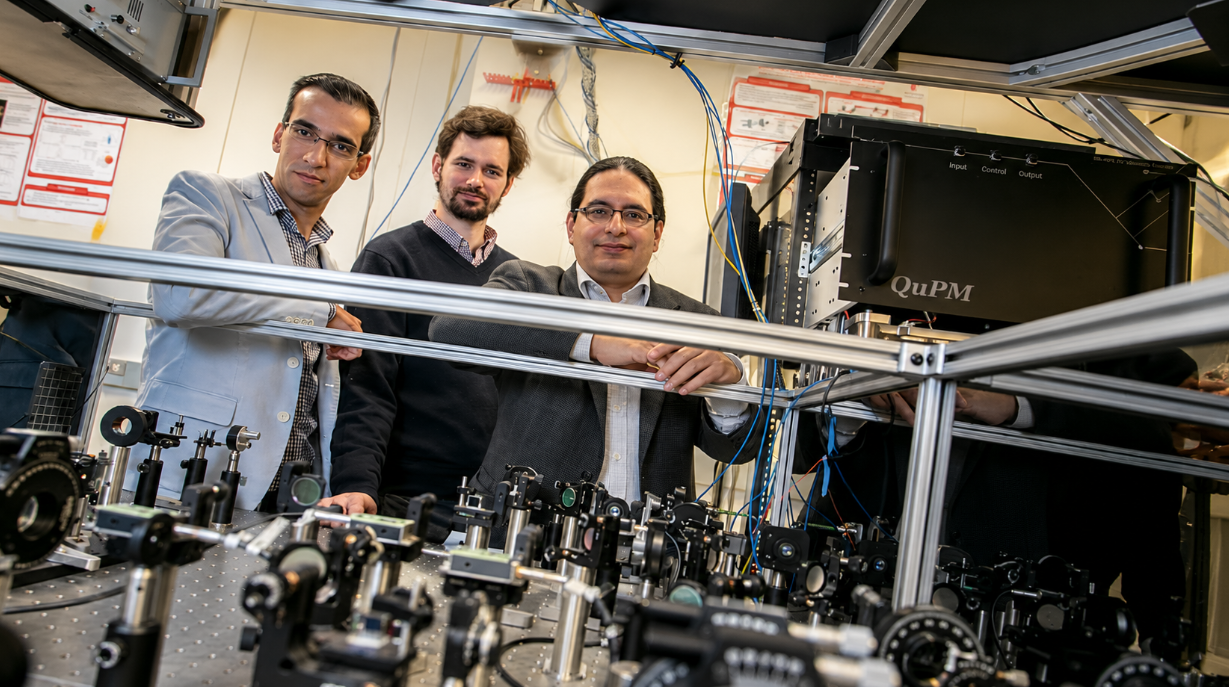
Japan’s plan includes backing multiple quantum hardware strategies. According to Yahoo Japan, METI is supporting the development of superconducting quantum systems by Fujitsu, a method also being pursued by U.S. tech giants like IBM and Google. At the same time, it will aid the University of Tokyo in advancing optical-based quantum computing, a method that consumes less power and is seen as potentially more scalable. One of the startups being considered for support is OptQC, which is developing commercial applications for the optical approach.
But Japan’s ambitions go beyond building machines. The government is also investing in middleware, which is the software that allows quantum devices to run applications. Without this layer, quantum hardware cannot be practically used. In this domain, METI plans to support efforts by telecom company KDDI and startup Jij to create a quantum operating system (OS), according to Yahoo Japan.
The development of a dominant OS could prove decisive. While American firms currently lead in hardware, no company has yet locked in a widely adopted quantum OS, according to the report. That creates an opening for Japanese players to define the software standards of the future, just as Microsoft did for classical computing with Windows. METI is betting that if Japan can capture the OS layer, it could secure a “winner-takes-all” position in the next computing era.
The government has declared this year as the “first year of quantum industrialization” and is rolling out infrastructure to match. A new facility called G-QuAT has been established as a hub for business collaboration, with goals to foster talent and speed up technology transfer.
With this push, Japan appears to be furthering its shift from academic research to commercial application, turning scientific progress into national competitiveness. The article further suggests that the effort is not just about technology but about strategic positioning in a race where the first to scale quantum may also control its global economic impact.