Insider Brief
- SEEQC and IBM have announced a strategic technical collaboration under DARPA’s Quantum Benchmarking Initiative to advance scalable, energy-efficient quantum computing.
- The partnership will integrate SEEQC’s Single Flux Quantum (SFQ) chip-based control technology with IBM’s quantum systems architecture to reduce energy use and consolidate classical control hardware.
- Both companies, anchored in New York State’s growing quantum ecosystem, aim to accelerate the development of large-scale, fault-tolerant quantum systems aligned with IBM’s 2029 roadmap.
PRESS RELEASE — SEEQC, a leader in scalable and energy-efficient quantum technologies, today announced a strategic technical collaboration with IBM as part of the U.S. Defense Advanced Research Projects Agency’s (DARPA) Quantum Benchmarking Initiative (QBI).
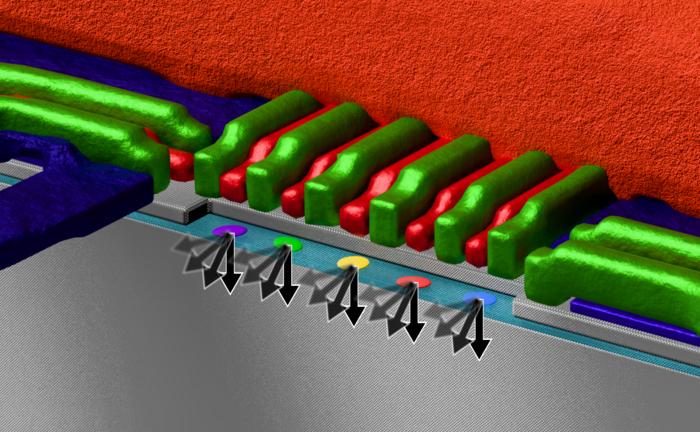
The collaboration will explore integrating SEEQC’s Single Flux Quantum (SFQ) chip-based control layer technologies with IBM’s leading-edge quantum systems architecture. SEEQC envisions using its SFQ technologies to shrink and consolidate external racks of classical control hardware by transferring certain elements to a system-on-a-chip that operates adjacent to quantum chips within an ultra-cold dilution refrigerator.
“SEEQC’s work with IBM highlights both companies’ contributions to the U.S. Government’s investments into large-scale quantum computing capabilities,” said John Levy, CEO and Co-Founder of SEEQC. “Our leading SFQ chip-based digital control technology improves the energy efficiency and functionality of quantum computing systems, and we’re excited to build on our team’s research.”

While SEEQC explores how SFQ control chips could enhance quantum system performance and reduce energy use in future systems, IBM will continue to progress on its IBM Quantum Development Roadmap, including its work to deliver a large-scale, fault-tolerant quantum computer.
“IBM is on track with our IBM Quantum Roadmap to realize a fault-tolerant quantum computer by 2029,” says Jay Gambetta, IBM Fellow and VP, IBM Quantum. “Controlling and scaling such large-scale quantum systems is a difficult engineering problem with many unresolved research questions. We are excited to collaborate with SEEQC, investigate these questions, and accelerate the progress toward our 2029 goal.”
While both companies maintain a global presence, SEEQC and IBM are deeply rooted in New York State’s quantum ecosystem. SEEQC designs and tests its SFQ chips at its headquarters in Elmsford, while the IBM Quantum team primarily works out of the Thomas J. Watson Research Center in Yorktown Heights.
“This collaboration between IBM and SEEQC showcases the strength of Westchester County’s and New York State’s ecosystem of expertise in quantum information sciences,” said Deborah Novick, Director at the Westchester County Office of Economic Development and co-lead of the NY QUANTUM Consortium. “I am excited to see how the two organizations help advance quantum computing as part of DARPA’s QBI.”
The Quantum Benchmarking Initiative reflects DARPA’s broader mission to develop rigorous performance metrics and enable the design of practical, useful quantum computers for national and global challenges. The SEEQC-IBM collaboration exemplifies how New York’s quantum ecosystem contributes to the entire “commercialization continuum” — from fundamental research and chip fabrication, to system integration and deployment.