Guest Post: Latin America is Delivering Quantum Technology: It’s Time to Recognize It!



Guest Post by Paulina Assmann, CEO of SeQure Quantum and Member of the Advisory Commission on Quantum Technologies in Chile.
I will never forget when I was told, “You must speak perfect English for people to believe you”. Worse, when they assumed that any technological advancement coming from Latin America was simply copied from elsewhere. These statements reflect a persistent perception: the idea that our region cannot lead at the technological frontier, that we are only capable of adopting what others create.

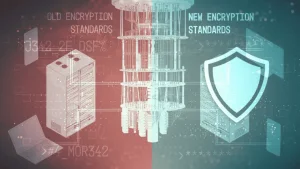
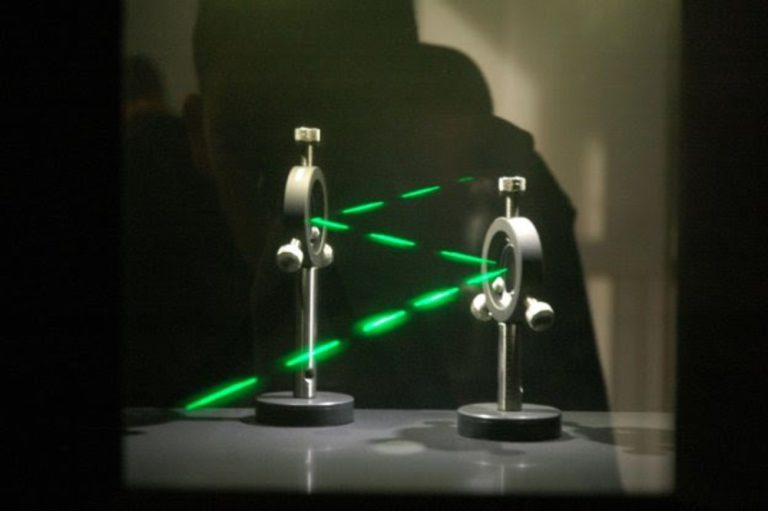
That perception is wrong. As CEO of Sequre Quantum, I lead a company that is not only developing deep tech but is already delivering cutting-edge quantum solutions to the world. Our real-time self-certifying quantum random number generator (QRNG) proves that Latin America is not just a consumer of innovation—it is a creator of critical technologies for global digital security.
While top tech CEOs from companies like IBM, Google, and Microsoft emphasize the urgency of preparing for the Quantum Safe era, in our region, this technology is already a reality. We have the talent, the infrastructure, and the strategic vision to compete and lead in fields such as quantum cybersecurity, ultra-precise sensors, and secure telecommunications.

This advancement is not an isolated case. In recent months, Latin America has demonstrated its ability to develop frontier technology for the region, with projects like LatamGPT, an artificial intelligence model created locally that competes with global players. This is a clear example that we do not need to be mere consumers of technology; we can be creators and exporters of innovation.
However, one of the biggest challenges we still face is the lack of visibility and recognition. Despite our technological achievements, global narratives rarely include Latin America in the conversation about quantum advancements. This is not just an oversight—it is a missed opportunity. The world must broaden its perspective and acknowledge that cutting-edge quantum research and commercialization are happening beyond traditional tech hubs.
The global industry must acknowledge this new reality: Latin America is not just adopting technology—it is creating, scaling, and delivering it. Our startups are solving real-world problems with solutions that are ready to be integrated into the global digital infrastructure. The difference between falling behind and leading in the quantum era will depend on how quickly companies can adopt cutting-edge technologies—regardless of where they come from.
The quantum future is already here, and Latin America is actively building it. The question is not whether we can develop quantum technology—the question is: are you ready to adopt it? Because if you’re not looking toward Latin America now, you are already behind.

Keep track of everything going on in the Quantum Technology Market. In one place.
Topics

Resonance
The Quantum Insider is the leading online resource dedicated exclusively to Quantum Computing. You can contact us at [email protected].

Stay Ahead of Quantum
Get the latest research, company news, and market intelligence every week.
MENTIONED IN THE ARTICLE
IBM
IBM is an iconic technology pioneer founded in 1911 as the Computing-Tabulating-Recording Company and officially renamed International Business Machines Corporation in 1924. Beyond foundational computing, IBM possesses a deep legacy in aerospace and defense from building the guidance computers and Instrument Unit for NASA's historic Apollo missions to partnering with Airbus on CIMON, the first AI assistant on the ISS.
→
Microsoft
Microsoft engages in the creation and licensing of software for both consumer and enterprise use. The company is renowned for its development of Windows operating systems and the Office suite designed for productivity. Microsoft's structure encompasses three major segments of roughly equal size: productivity and business processes, which encompasses legacy Microsoft Office, cloud-based Office 365, Exchange, SharePoint, Skype, LinkedIn, and Dynamics; the intelligence cloud, which includes offerings like Azure, Windows Server OS, and SQL Server; and more personal computing, which covers Windows Client, Xbox, Bing search, display advertising, and a range of Surface laptops, tablets, and desktops.
→