

Insider Brief:
- Pasqal announced 15 finalists for “The Blaise Pascal Quantum Challenge” hackathon, where over 800 participants from 70+ countries developed quantum AI solutions for energy, resource efficiency, and healthcare sustainability.
- Finalists will receive specialized training in Pasqal’s neutral-atom quantum technologies to refine their projects, which align with the United Nations’ Sustainable Development Goals and address pressing global challenges.
- The AI Action Summit in Paris hosted the finalist announcement and discussions on sustainable quantum AI solutions, with participation from global industry leaders and policymakers, including the UN Tech Envoy’s Senior Advisor.
- The finalists will compete in a two-week virtual hackathon, culminating in a pitch ceremony on March 11, where a jury of experts from the European Commission, academia, and industry will select three winners.
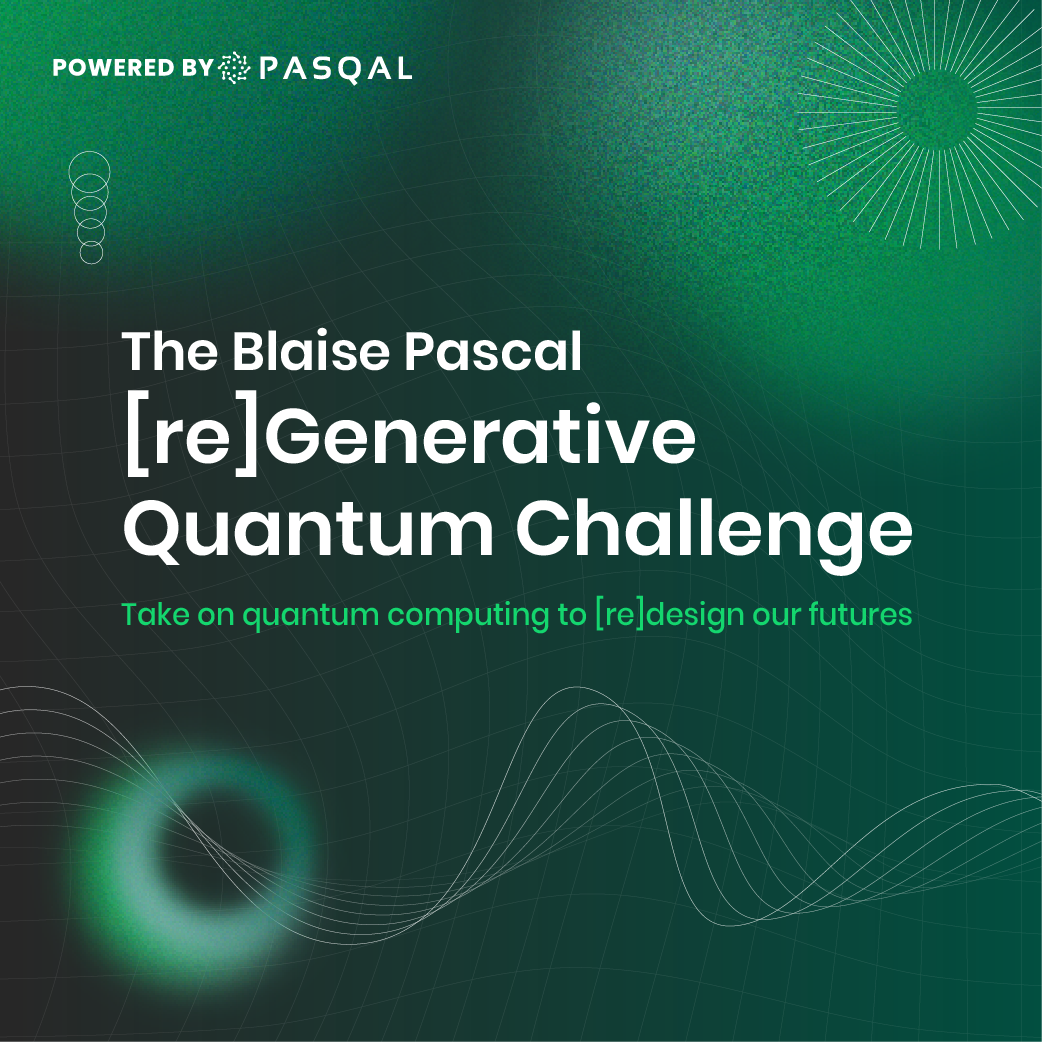
PRESS RELEASE — Pasqal, a quantum company specializing in neutral-atom quantum computing, announced yesterday the 15 finalists of “The Blaise Pascal Quantum Challenge: Combining Quantum AI for Sustainable Innovation” hackathon. Over the past eight weeks more than 800 participants from over 70 countries have collaborated with mentors from Pasqal’s technical expert team to develop solutions in the domains of transforming energy systems, maximizing resource efficiency, and accelerating sustainable innovation in healthcare. The finalists were announced on the second day of the AI Action Summit, in Paris, in partnership with the French government who named Pasqal’s hackathon a Convergence AI challenge.
The finalist projects are:
- AIQTEC, Piezoelectric urban energy harvesting (Spain / Argentina)
- Control alt de ligt, Renewable power flow grid optimization (UK / Germany)
- Feynman Prodigies, CO₂ hydrogenation optimization (India)
- GIC-quAI, Colorectal cancer early diagnosis (Portugal)
- Qorea, Renewable energy portfolio optimization (South Korea)
- QScreen, Multimodal cancer screening (India / Germany / Brazil /Netherlands / Italy / UK)
- QTX, Typhoon forecasting model (Taïwan)
- Quantum Beach Hill, Water-saving canal navigation planning (Ireland)
- Quantum2Pi, Marine habitat protection optimisation (Italy / Poland)
- QuaNtumFix, Sustainable nitrogen fixation (USA)
- Qurie, Quantum climate risk analysis (Spain)
- SherbrooQ, Wildfire prevention optimisation (France / Canada / Switzerland)
- Sigma Fellas Incorporated, Real-time wildfire response (North Macedonia)
- teamUGR, Sustainable urban transport planning (Spain)
- Uva y Quanta, EV charging optimization (Italy / Switzerland)
Finalists were selected based on sustainability impact, technical feasibility, innovation and creativity, and will receive intense training on Pasqal’s neutral-atom quantum technologies to gain deep insights into how these tools can be leveraged to bring solutions to impactful fruition. The hackathon is part of a multi-year initiative to explore and showcase inspiring quantum use cases that contribute to the United Nations’ Sustainable Development Goals. By contributing innovative ideas and receiving mentorship from Pasqal and partners, participants are being given the opportunity to shape a sustainable future through quantum AI applications.

As a Convergence AI challenge leader, Pasqal’s hackathon has been recognized for its ability to close the quantum divide while supporting research and innovation around quantum AI solutions that address pressing industrial, environmental and societal issues.
During the AI Action Summit, Pasqal led the discussions around sustainable quantum AI solutions organizing a roundtable with prominent members of the global private and public sectors, including the Senior Advisor to the UN Tech Envoy, and leaders from international companies such as EDF and CMA-CGM. Ample discussions were also dedicated to quantum computing as a key global driver of Tech Value Chains.
“The power of quantum computing is immense, and we are seeing tangible results of the technology already,” said Georges-Olivier Reymond, Co-CEO and Co-founder of Pasqal. “This hackathon puts the power of quantum AI in the hands of innovators who have a vision to wield its potential for global sustainable initiatives. It also shows that quantum is not just a future promise – thanks to the technology that our very co-founders helped to create, quantum computing enables early use cases. The support of the hackathon by the French government and our active participation at the Summit are a recognition of our pioneering spirit and our commitment to innovation, sustainability and ethics, but also a testament to the nation’s belief in the potential of quantum as a critical and strategic technology.”
These projects will participate in a two-week virtual hackathon, and a pitch ceremony showcasing their projects on March 11. From there, three winners will be selected by a jury including Gustav KALBE, Acting Director of DG Connect C “Digital Excellence and Science Infrastructure” at the European Commission and Honorary Senior Member of the Jury; Georges-Olivier Reymond, Co-CEO and Co-founder of Pasqal; Eun-Ah KIM, Research Fellow at National Assembly Futures Institute; Jayne Thompson, Institute of High-Performance Computing and A*STAR; Etienne de Rocquigny, CEO and Founder of Blaise Pascal Advisors; and Kristel Michielsen, Jülich Supercomputing Centre and the founder of EMBD.
To learn more about these finalists and the projects they’re developing, visit https://www.agorize.com/en/challenges/blaisepascalquantumchallenge2025.