Quobly Opens New Processing Facilities, Accelerates Industrial Output by 50 Times



Insider Brief
- Quobly has opened new quantum chip processing facilities in Grenoble, advancing its industrialization efforts with a goal of reaching one million physical qubits by 2031.
- The new infrastructure boosts Quobly’s processing capacity, achieving 10x faster testing speeds and 50x higher wafer processing volumes.
- Quobly’s new location in BHT3 enhances its collaboration with key partners like CEA-Leti, CNRS, and STMicroelectronics, supporting its rapid growth and scaling ambitions.
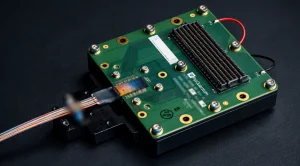
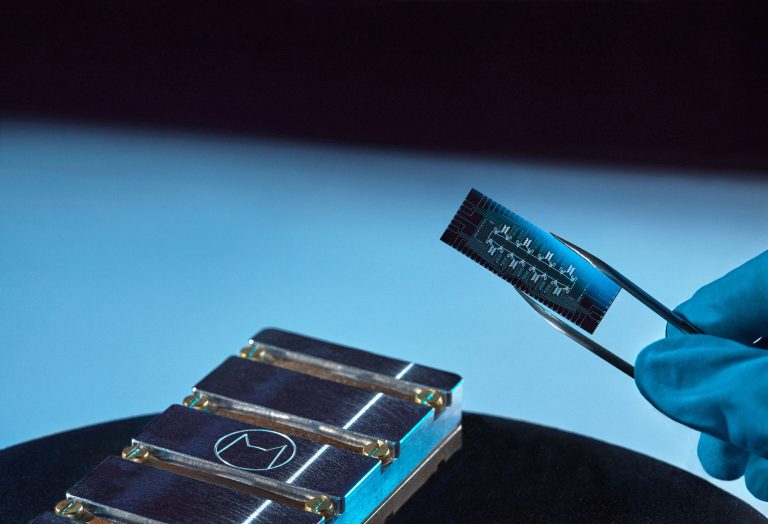
PRESS RELEASE — Quobly, the pioneering French startup developing large-scale quantum processors based on silicon qubits, is taking a decisive step toward industrialization with the opening of its new quantum chip processing facilities along with new and expanded offices. Located in the heart of Grenoble’s deep-tech ecosystem, Quobly’s new center within BHT3, a hub purpose-built for high-tech innovation, will accelerate its product development cycle and enhance its capacity to scale toward millions of qubits.
This milestone follows closely on the heels of Quobly’s recent announcement of a strategic collaboration with STMicroelectronics, reinforcing the company’s readiness to industrialize quantum processors at scale, with a goal of reaching one million physical qubits by 2031.
A Quantum Leap in Processing Capacity

With this new infrastructure, Quobly is significantly enhancing its ability to process and test quantum chips. Compared to its previous pre-industrial workflows, the company now achieves:
- 10x faster testing speeds
- 50x higher wafer processing volumes
- A design-to-testing cycle that is 3x faster
This acceleration represents a major shift, transitioning Quobly from research-driven workflows to scalable industrial production while maintaining close collaborations with the CEA and CNRS.
Paving the Way for Fault-Tolerant Quantum Computing
Quobly is accelerating the development of fault-tolerant quantum computing (FTQC) by integrating industrial-grade processing capabilities. This new infrastructure and streamlined workflow will enable Quobly to meet the growing demand for scalable quantum processors. “This new facility marks a pivotal moment for Quobly,” said Maud Vinet, CEO of Quobly. “By significantly accelerating our testing and processing capabilities, we are bringing the semiconductor know-how and methodologies in quantum computing to get closer to industrial reality. This reinforces our position as an international leader in scaling qubits to fulfill the promises of quantum computing and meet the needs of our customers.”
BHT3: A Strategic Location for Industrial Growth
Quobly’s decision to establish its new processing center within BHT3 is a key part of its industrialization strategy. This Grenoble-based high-tech campus is uniquely designed to support quantum and microelectronics innovation, offering:
- Proximity to Key Partners: Situated just steps from CEA-Leti, CNRS, and UGA, BHT3 provides seamless access to leading researchers and technology experts in quantum physics and semiconductor processing.
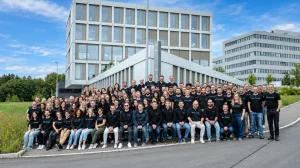
- Infrastructure for a Growing Team: With its team tripling in size over the past year to 70 collaborators, Quobly’s expansion into BHT3 supports its rapid growth strategy, providing an environment designed for innovation and professional development.
- Collaborative R&D Environment: The position makes it easy for Quobly to regularly interact with Grenoble’s deep-tech ecosystem, including STMicroelectronics, Soitec, and Air Liquide.
- Sustainability & Scalability: Designed to support industrial growth while maintaining an environmentally conscious footprint, BHT3 enables Quobly to scale efficiently without compromising on sustainability.
In addition to its Grenoble headquarters, Quobly has a worldwide footprint, with ongoing scientific and business collaborations in Europe, the US, and Taiwan. With the addition of these new processing facilities, Quobly is taking a decisive step toward making large-scale quantum computing a reality.

Keep track of everything going on in the Quantum Technology Market. In one place.
Topics

Matt Swayne
With a several-decades long background in journalism and communications, Matt Swayne has worked as a science communicator for an R1 university for more than 12 years, specializing in translating high tech and deep tech for the general audience. He has served as a writer, editor and analyst at The Quantum Insider since its inception. In addition to his service as a science communicator, Matt also develops courses to improve the media and communications skills of scientists and has taught courses.
[email protected]

Stay Ahead of Quantum
Get the latest research, company news, and market intelligence every week.
MENTIONED IN THE ARTICLE

Quobly
Quobly, formerly Siquance, was founded in 2022 to develop and commercialize a universal large-scale quantum computer using proven semiconductor-industry processes. Quobly specializes in silicon-based quantum computing, focusing on scalable quantum processors. It develops silicon spin qubit QPUs using FD‑SOI semiconductor manufacturing to address challenges such as high‑complexity simulations in energy systems, drug discovery, and materials. It emphasizes industrial manufacturability and cost efficiency, working with RTOs and semiconductor partners (e.g., CEA‑Leti, CNRS, STMicroelectronics) to deliver fault-tolerant quantum systems capable of tackling real-world problems now intractable for classical supercomputers.
→

CEA-Leti
CEA-Leti is a French public applied-research lab (under CEA Tech) in Grenoble, specializing in micro/nanotechnologies, electronics, photonics, and integration, operating as a bridge between fundamental research and industrial deployment.
→
CNRS
The French National Centre for Scientific Research is among the world's leading research institutions. Its scientists explore the living world, matter, the Universe, and the functioning of human societies in order to meet the major challenges of today and tomorrow. Internationally recognised for the excellence of its scientific research, the CNRS is a reference in the world of research and development, as well as for the general public.
→