Insider Brief
- SEEQC has raised $30 million in funding led by NordicNinja and Booz Allen Ventures to accelerate the commercial rollout of its digital Single Flux Quantum (SFQ) chip platform, which integrates quantum and classical functions on a single processor for scalable, enterprise-grade quantum computing.
- The company’s SFQ technology replaces bulky, mixed analogue/digital quantum hardware with compact, energy-efficient digital chips, reducing costs by up to 97% and energy usage by 100,000 times, while enabling compatibility with various quantum computing architectures like superconducting, photonics, and trapped ions.
- With partnerships spanning major players like NVIDIA, BASF, NASA, and the US Department of Defense, SEEQC aims to bridge quantum and classical computing, advancing applications in AI, materials science, and more, as it scales toward fault-tolerant, datacenter-scale quantum systems.
PRESS RELEASE — SEEQC – the first company to create digital chips to power full-stack quantum computing systems that work with all quantum computing technologies – has raised $30 million to further accelerate the capabilities and commercial rollout of its chip platform. The round was led by NordicNinja and Booz Allen Ventures with participation from SIP Capital, alongside existing investors EQT Ventures, M-Ventures (Merck), BlueYard Capital, FAM and Asset Management.
Quantum computers promise revolutionary advances in energy optimization, drug and material discovery, security, cryptography, and AI modeling. However, current quantum computers are limited by physical hardware challenges and cryogenic requirements. Existing architecture requires complex, expensive and power-hungry mixed analogue and digital hardware and wiring, to manage control, readout, data processing, and error correction, with signals traveling between supercooled quantum processors and room-temperature electronics, causing delays and noise that compromise the accuracy and power of computations.
Founded in 2019, SEEQC addresses these fundamental challenges by reimagining this infrastructure. Its proprietary, digital Single Flux Quantum (SFQ) technology integrates quantum and classical functions onto a single digital processor; bringing quantum out of the lab into enterprise-ready systems.

Replacing bulky quantum hardware with a single chip
SEEQC is developing the platform that replaces today’s bulky, mixed analogue/digital room temperature quantum hardware with a single digital chip that, together with qubits, forms a full-stack quantum/classical processor. The company’s SFQ chips operate at the same, ultra-low temperatures as the qubits themselves, to deliver real-time digital readout, control, and multiplexing. Today SFQ chips are compatible with superconducting hardware, meanwhile, this will be broadened in the future to include supporting spin silicon, photonics, trapped ion, and more. SEEQC’s platform-agnostic, chip-based solution is augmented by the company’s PRISM firmware and software designed to support a range of applications for third-party developers.
This approach has been shown to cut costs by as much as 97% and reduce energy usage by up to 100,000 times compared to classical chips. This is putting the quantum industry on the path to scaling quantum computers to millions of qubits. This is needed to unlock both near-term applications, and the fault-tolerant functions that will see quantum eventually reach datacenter-scale.
Towards practical, scalable real-world quantum applications
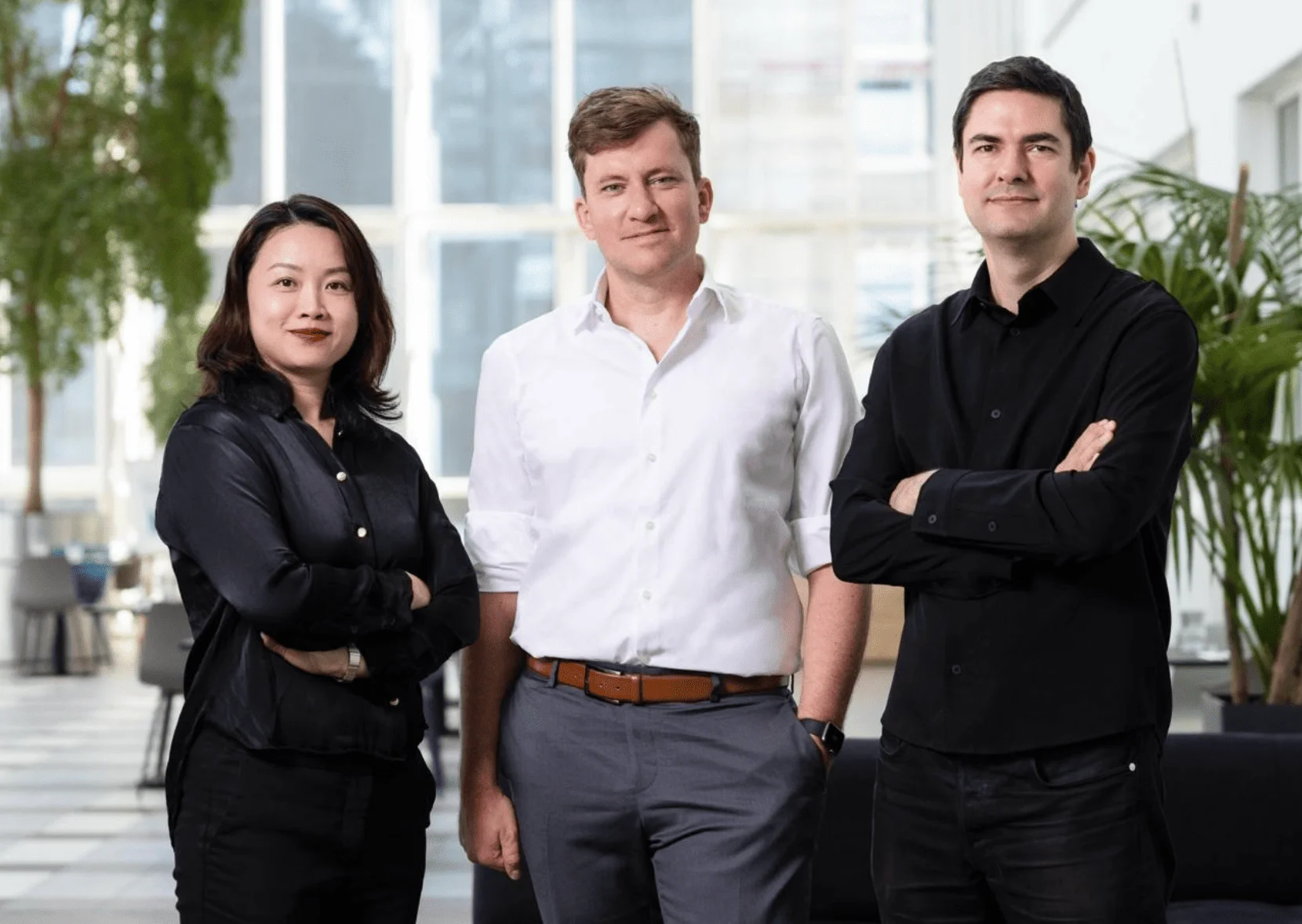
Led by serial deep technology entrepreneur John Levy (CEO), co-inventor of SFQ technology Dr Oleg Mukhanov (CSO), chip technology expert Dr Shu-Jen Han (CTO), and quantum computing physicist Dr Matthew Hutchings (CPO), SEEQC is at the heart of the quantum ecosystem. The US-based company, with operations in the UK and Italy, operates one of the most advanced superconducting chip foundries in the world, capable of multi-layer superconducting chip manufacturing and cryogenic testing. It has become a go-to digital infrastructure partner for some of the industry’s biggest players, including NVIDIA and BASF as well as NASA, the US Department of Energy, the US Department of Defense, the National Institute of Standards and Technology (NIST) and leading academic institutions. Through these partnerships, SEEQC is advancing the platform for quantum applications for AI and machine learning, materials science, and more.
The latest funding will drive the company’s next-generation chip technology, expand its capabilities towards real-time, on-chip error correction, further accelerate its commercial rollout, and deepen its integration across the quantum ecosystem.
John Levy, CEO and co-founder of SEEQC, said: “Quantum computing needs to move beyond beautiful physics experiments into scalable, enterprise-grade systems that solve real-world problems. In the same way that classical computers were revolutionized by scaling from vacuum tubes to transistors to integrated circuits and today’s microprocessors, we’ve built the chip-based backbone that the entire quantum computing ecosystem needs to move beyond huge, complex hardware to finally achieve the same powerful scaling as classical processors. We’ve brought our platform to market and we’ve already shown what it’s capable of through collaborations with some of the world’s biggest innovators like NVIDIA and BASF. The new funding will help us accelerate this mission and continue bridging the gap between quantum and classical, lab and application, and potential and promise.”
Marek Kiisa, Managing Partner at NordicNinja, said: “SEEQC’s digital architecture is the missing link for scalable quantum computing. Its approach is solving fundamental industry challenges and enabling our quantum future. This capability will unlock quantum’s full potential for quantum AI, enterprise applications, and beyond. We’re delighted to be supporting John, and the team and look forward to working closely with them as they scale up their impact and help expand their partnerships and customer relationships with Japan and other Asian locations.”
JD Dulny, Vice President and quantum lead at Booz Allen Hamilton, said: “Booz Allen has long been invested in the future of quantum computing and the potential it has to reshape how we solve key problems facing our clients in the federal government. We look forward to working alongside SEEQC to overcome critical quantum hardware bottlenecks and to enable the proliferation and advancement of quantum technology.”