

Insider Brief:
- The U.S. National Science Foundation (NSF) announced six new pilot projects under the National Quantum Virtual Laboratory (NQVL), providing $1 million each over 12 months to advance quantum technologies and expand access to specialized tools and testbeds.
- Two projects, ERASE and FTL, will work towards improving quantum computing hardware and error correction, with goals of achieving scalable systems and low-error logical qubit computers.
- ASPEN-Net and DQS-CP will focus on quantum networking and sensing, enhancing entanglement distribution for secure communications and achieving quantum advantage in chemical property measurements.
- Projects like Q-BLUE and QuPID center around quantum simulations and photonic integration, enabling real-world applications in fields like condensed matter physics, microelectronics, and healthcare.
PRESS RELEASE — In a recent release, the U.S. National Science Foundation announced six new pilot projects under the National Quantum Virtual Laboratory, each centered around accelerating the development of quantum technologies by providing researchers across the U.S. with access to specialized tools and testbeds. These projects join five others introduced in August as part of NSF’s strategy to address current technological gaps and develop applications that serve practical uses.
According to the NSF release, each project will receive $1 million over 12 months to create real-world environments for advancing quantum capabilities. The NQVL initiative, established under the 2018 National Quantum Initiative Act, focuses on expanding access to quantum tools, developing a quantum workforce, and scaling U.S. leadership in quantum science. NSF Director Sethuraman Panchanathan emphasized the initiative’s expansive vision, stating, “Similar to the nature of entanglement itself, NSF is building the National Quantum Virtual Laboratory to serve as a national resource unconfined by the limitations of distance and space — or the boundaries of laboratory walls.”
Advancing Quantum Computing Platforms
Two projects will focus on enhancing quantum computing hardware, error correction, and logical qubit systems:

- Erasure Qubits and Dynamic Circuits for Quantum Advantage (ERASE): Led by Yale University with and including Virginia Polytechnic Institute, the University of Maryland, Princeton University, North Carolina Agricultural and Technical State University, RTX Technology Research Center, Quantum Circuits Inc., NVIDIA, Quantinuum, JP Morgan Chase & Co., and Amazon Web Services, the ERASE project targets practical quantum computing by improving error detection and correction. The platform will provide tools for algorithm development, software optimization, and experiments in quantum error correction—all necessary to progress towards scalable quantum systems.
- Accelerating Fault-Tolerant Quantum Logic (FTL): Led by UCLA, in collaboration with the University of California Berkeley, the University of California San Diego, Cornell University; the University of Maryland, and Quantinuum, the team will work towards the development of a 60-logical-qubit quantum computer. The goal is to achieve low error rates by integrating advancements across hardware, architecture, and systems engineering.
Quantum Networking and Distributed Sensing
Projects focusing on distributed quantum networks and quantum-enhanced sensing include:
- Attosecond Synchronized Photonic Entanglement Network (ASPEN-Net): Led by the University of Oregon and including the University of New Orleans, the University of North Dakota, the University of Illinois Urbana-Champaign, the University of Colorado Boulder, the National Institute of Standards and Technology, HRL Laboratories, and Boeing, ASPEN-Net will create a 16-node quantum networking testbed. The team intends to achieve entanglement rates five orders of magnitude beyond current methods, supporting advancements in secure quantum communications, distributed sensors, and computing over distances up to 100 kilometers.
- Distributed-Entanglement Quantum Sensing of Chemical Properties (DQS-CP): Led by Ohio State University, alongside partners the University of Iowa, University of Chicago, Massachusetts Institute of Technology, and Merck Sharp & Dohme LLC, the team will explore entanglement-based quantum sensing for molecular and solid-state systems. The project may enable quantum advantage—outperforming the most advanced classical sensing techniques—for measuring chemical properties.
Quantum Simulation and Photonics
The remaining projects address quantum simulations and photonic integration for real-world applications:
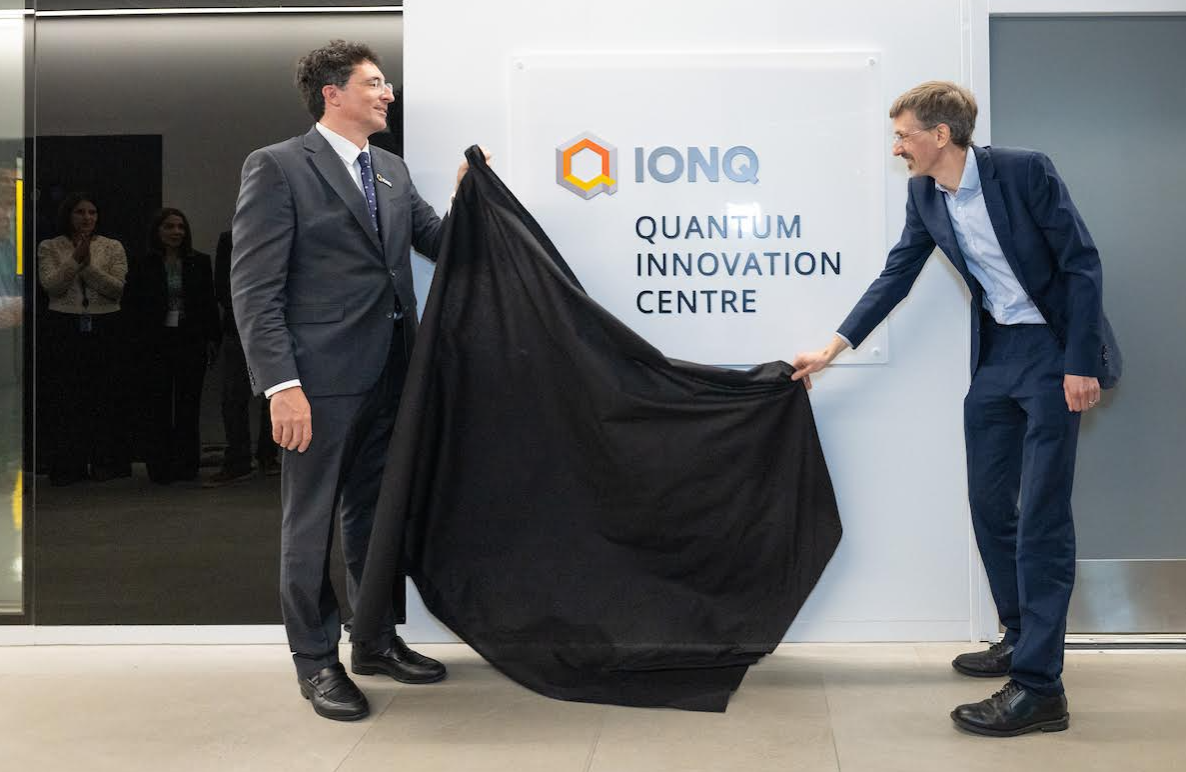
- Quantum Blueprint–Optimizing Analog Pathways in Diverse Scientific Realms (Q-BLUE): Led by Iowa State University in collaboration with Indiana University and IonQ, Q-BLUE focuses on analog quantum simulations. These methods are expected to address challenges in quantum chemistry, condensed matter physics, and nuclear physics.
- Quantum Photonic Integration and Deployment (QuPID): Led by the University of Michigan, alongside Stanford University, Harvard University, Michigan State University, Ohio State University, the University of Arizona, the University of Southern California, Honeywell, MONSTR Sense Technologies, and TOPTICA Photonics, the team will develop quantum photonic integrated circuits for high-precision spectroscopic measurements. Applications span industries such as microelectronics and healthcare.
A National Effort for Quantum Leadership
The NSF NQVL speaks to a growing national push to bridge quantum research and practical applications. Beyond technological advancements, the program will also contribute to workforce development by providing educational opportunities for the next generation of quantum scientists and engineers.
The 11 pilot teams, which includes the previous five announced earlier this year and the newly announced six projects, are invited to submit proposals for the next phase of NSF NQVL funding, which will focus on advancing prototypes and testbeds. As NSF continues to invest in distributed quantum resources, it is building a foundation for practical applications—from secure communications to advanced computing and sensing technologies—while providing broader access to quantum tools nationwide.




![Quantum Circuits [acquired by D-Wave]](https://s3.us-east-2.amazonaws.com/tqd.s3.bucket/logos_medium/Quantum-Circuits.jpg)