

Insider Brief:
- A research team led by QuTech connected quantum processors across 25 km between Delft and The Hague by integrating quantum nodes with existing optical fiber infrastructure.
- The project involves a photon-efficient protocol and precise stabilization techniques that help maintain entanglement across long distances, overcoming challenges like photon loss and node stability.
- Supported by European entities, this achievement contributes to the foundational infrastructure for a European quantum internet, with modular architecture adaptable for future scalability and linking multiple quantum processors.
The classical internet has served us well as is with its global data exchange, but the integration of a quantum element could elevate the tradition through secure data sharing, distributed computing across distant quantum processors, and entirely new frameworks for privacy in communication and data access. While this has yet to be realized in this capacity, an international research team led by QuTech, a collaborative entity between TU Delft and TNO, has successfully connected quantum processors across metropolitan distances–a necessary step towards the quantum internet. According to a recent article published in Science Advances, the team linked quantum processors in the Dutch cities of Delft and The Hague using deployed optical internet fiber, achieving a 25 km quantum link.
Quantum Across Cities
As opposed to the predictable, sequential operations that make the classical internet possible, a quantum internet would rely on the entanglement that enables qubits to create instantaneous connections. As explained in the study, the researchers envision a quantum internet as a global network of qubits, supporting new functionalities, such as generating secure encryption keys or connecting quantum computers for high-performance processing.

By successfully integrating quantum nodes with existing optical fiber infrastructure, the team is actively transitioning quantum connectivity from controlled lab conditions to real-world environments. QuTech’s Ronald Hanson emphasizes this in a recent review of the study: “The distance over which we create quantum entanglement in this project, via 25 km of deployed underground fiber, is a record for quantum processors. This is the first time such quantum processors in different cities are connected.”
Engineering Innovations and Challenges
Transitioning from lab-based experiments to citywide deployment was not without rather notable engineering hurdles. Quantum links, sensitive to photon loss, require precision control over long distances. According to the research team, a robust control system had to be designed to maintain independent node operation, stabilize the link against photon loss, and confirm entanglement every time a quantum connection was created.
As explained by co-author Arian Stolk, achieving stability over 25 km of fiber link required extreme precision: “The link needed to be stable well within the wavelength of the photons (smaller than a micrometer) over 25 kilometers of optical fiber. That challenge compares to keeping the distance between the Earth and the moon constant with the accuracy of only a few millimeters.” The innovation behind this achievement is noted by the team as demonstrating a photon-efficient protocol and precise stabilization techniques, allowing the team to overcome photon loss, one of the major obstacles for such long-distance connections.
The scalability of this quantum network is further supported with precision timing and phase control across multiple qubit nodes, the platform is adaptable to diverse quantum systems, making it a candidate for widespread deployment.
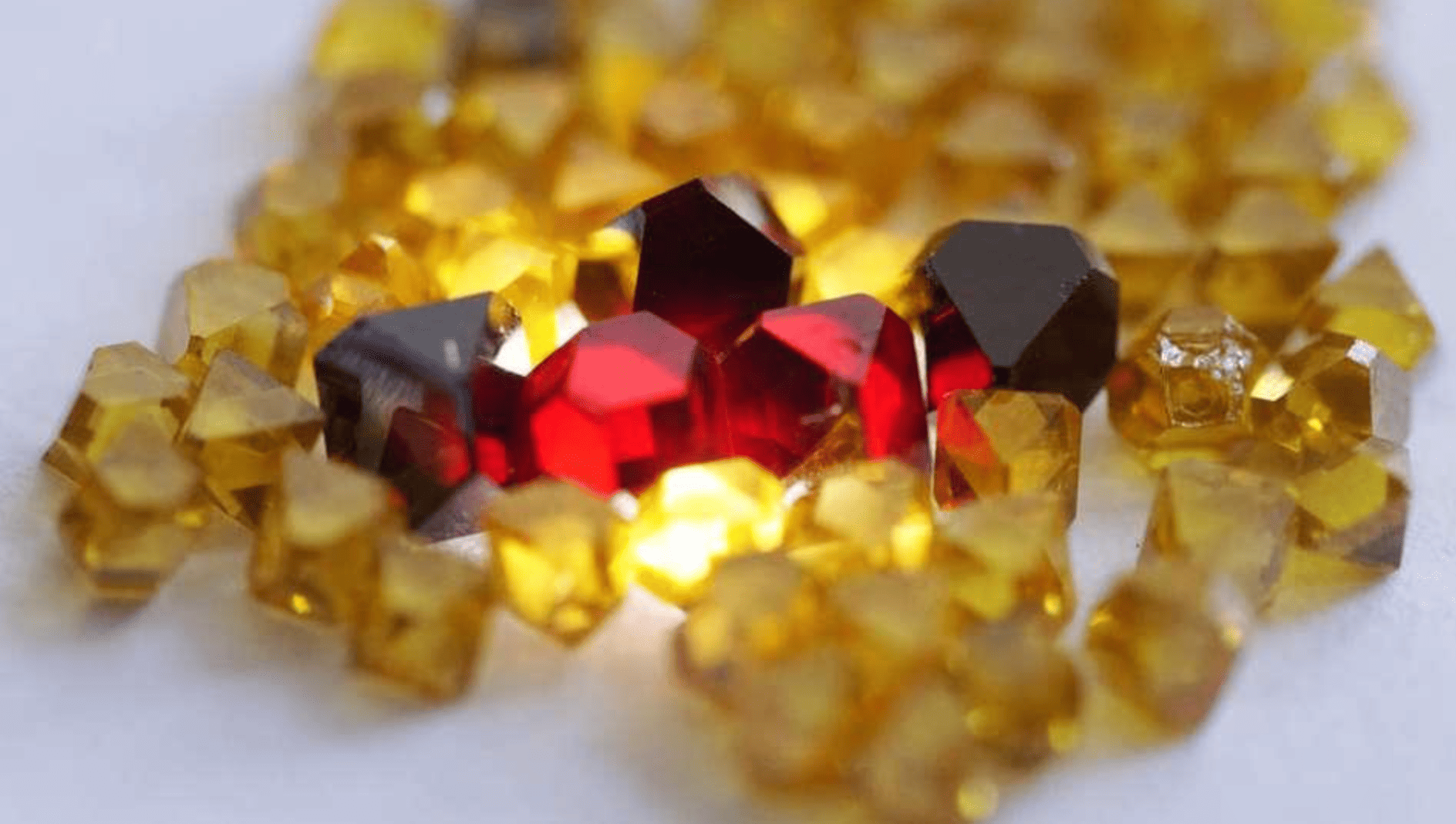
According to the article, the project’s modular architecture, incorporating contributions from specialized partners, demonstrates a scalable foundation for linking more quantum processors. Essential components were provided by Fraunhofer ILT, Element Six, and Toptica, among others, each delivering technology tailored to the rigorous demands of metropolitan-scale quantum networking.
Toward Scalable and Secure Quantum Networks
The successful 25 km connection between Delft and The Hague is part of a broader vision, receiving support from several European entities in pursuit of the European quantum internet. “We continue to show leadership in the development of the future fundament of our digital infrastructure and how to make it applicable, which is the core of the national and European strategy.” says Jesse Robbers from Quantum Delta NL, a co-funder of the project. While much work remains, this demonstration of entangled nodes linked over urban fiber represents the theoretical frameworks moved ever closer to the end goal of practical application.
Contributing authors on the study include Arian J. Stolk, Kian L. van der Enden, Marie-Christine Slater, Ingmar te Raa-Derckx, Pieter Botma, Joris van Rantwijk, J. J. Benjamin Biemond, Ronald A. J. Hagen, Rodolf W. Herfst, Wouter D. Koek, Adrianus J. H. Meskers, René Vollmer, Erwin J. van Zwet, Matthew Markham, Andrew M. Edmonds, J. Fabian Geus, Florian Elsen, Bernd Jungbluth, Constantin Haefner, Christoph Tresp, Jürgen Stuhler, Stephan Ritter, and Ronald Hanson.