Quantum Computing Inc. Extends Partnership with Los Alamos National Lab to Advance Dirac-3 Quantum Optimization Machine



Insider Brief:
- Quantum Computing Inc. has extended its Cooperative Research and Development Agreement (CRADA) with Los Alamos National Laboratory to collaborate on advancing QCi’s Dirac-3 quantum optimization machine.
- The Dirac-3 machine is the first to solve beyond QUBO problems by addressing high-dimensional discrete variables with multi-body interactions.
- QCi is also working on projects with NASA and the U.S. Department of Defense, adding to its other work in fields such as energy grid management and offshore wind optimization.
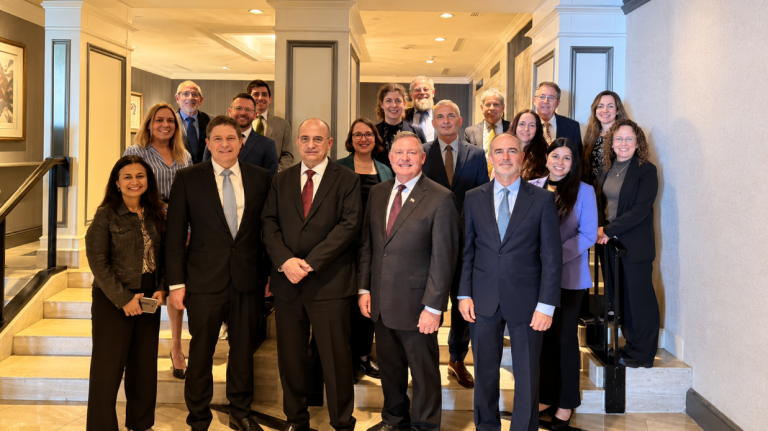
Quantum Computing Inc., an innovative, integrated photonics and quantum optics technology company, announced the extension of its Cooperative Research and Development Agreement (CRADA) with the Los Alamos National Laboratory (LANL).
This strategic collaborative agreement focuses on QCi’s new entropy quantum optimization machine, Dirac-3, and its capabilities to quickly and efficiently solve highly complex problems associated with quantum simulations, social networks, protein structure prediction, and telecommunications. QCi’s Dirac-3 quantum optimization machine is the first of its kind to solve beyond QUBO problems, addressing high-dimensional discrete variables with multi-body interactions, which sit in the upper tier of the world’s most complex optimization problems, using nonlinear quantum optics.

Dr. William McGann, Chief Executive Officer (CEO) of QCi states, “We are pleased to extend this strategic collaboration with LANL. Dirac-3 is a cornerstone product in our high-performance computing portfolio of products and is quickly becoming recognized as a new and powerful quantum machine with leading edge capabilities in solution quality and power consumption. Our new machine is now competing with the world’s most powerful computers in solving very complex, real-world problems in energy grid management, offshore wind optimization, and signal processing applications.”
QCi is also currently completing multiple projects for the National Aeronautics and Space Administration (NASA) and is engaged in other CRADAs with the U.S. Department of Defense (DoD).
A complete description and overview of QCi’s Dirac-3 can be found at www.quantumcomputinginc.com, where a comprehensive set of publications and blogs on QCi’s technology and products are openly available.
About Quantum Computing Inc.
Quantum Computing Inc. (“QCi” or the “Company”) (Nasdaq: QUBT) is an innovative, integrated photonics and quantum optics technology company that provides accessible and affordable quantum machines to the world today. QCi products are designed to operate at room temperature and low power at an affordable cost. The Company’s portfolio of core technology and products offer unique capabilities in the areas of high-performance computing, artificial intelligence, cybersecurity, as well as remote sensing applications.

Keep track of everything going on in the Quantum Technology Market. In one place.
Topics

Cierra Choucair
Cierra Choucair is a journalist and data analyst at The Quantum Insider, where she covers quantum computing and emerging technologies. With a background that blends scientific analysis, public communication, and product storytelling, she bridges technical complexity and industry insight across research, startups, and policy. She is the author of The Daily Qubit, a widely read newsletter spotlighting quantum research, use cases, and industry trends.

Stay Ahead of Quantum
Get the latest research, company news, and market intelligence every week.
MENTIONED IN THE ARTICLE
Los Alamos National Laboratory
Los Alamos National Laboratory (LANL) is a U.S. national security laboratory in New Mexico. Founded in 1943 to develop the first atomic bombs during the Manhattan Project, it holds a significant role in aerospace, developing space-based sensors, instruments, and plutonium-238 heat sources for NASA missions, spanning over 60 years of space-based research.
→

NASA
The National Aeronautics and Space Administration (NASA) is the U.S. government agency driving pioneering research and technological development in both atmospheric flight (aeronautics) and space exploration (astronautics). NASA acts as a research organization, utilizing advanced wind tunnels, supercomputing, and flight test laboratories to advance aircraft aerodynamics, propulsion, and materials, while simultaneously involved in the design, construction, and operation of launch vehicles and spacecraft for deep space exploration. Through its aeronautics research directorate, the agency works to improve the safety, efficiency, and environmental impact of aviation, whereas its space programs focus on developing cutting-edge flight systems, robotic explorers, and human transportation capabilities.
→