PsiQuantum Likely Less Than Six Years Away From Commercial Quantum Computer


Insider Brief
- PsiQuantum expects to deliver its first commercial quantum computing system in under six years.
- Research advances and partnerships have accelerated the timeline for delivery of its system.
- PsiQuantum has garnered substantial investment, with a valuation of $3.15 billion and $700 million in funding.
PRESS RELEASE — PsiQuantum expects to deliver its first commercial quantum computing system in under six years, according to Chief Executive Jeremy O’Brien,
In an interview with according to Reuters, O’Brien said the Palo Alto-based startup’s research advances — and a strategic partnership with chip manufacturing partner GlobalFoundries — is making the timeline shorter than estimates by many experts.
In an interview, O’Brien expressed confidence in the company’s progress, telling Reuters, “The first system that’s actually capable of solving important problems that people want to know the answer to – that’s just a handful of years away.”

“Certainly less than six,” he added.
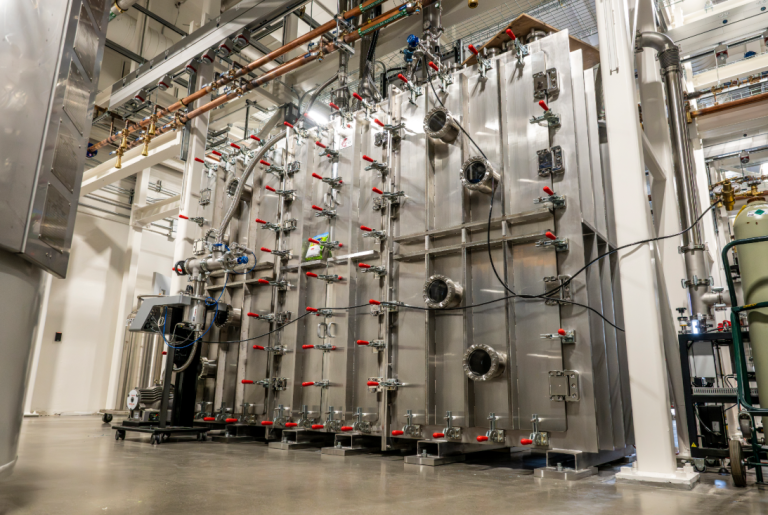
Typically, the development of practical quantum computing is estimated to take a decade or more, but PsiQuantum is determined to expedite the process. Their partnership with the U.S. Department of Energy is instrumental in achieving this goal. The collaboration will enable PsiQuantum to utilize the facilities at the SLAC National Accelerator Laboratory for designing the essential “cryogenic quantum modules” needed for quantum computers, which operate at temperatures close to absolute zero.
O’Brien emphasized the significance of this partnership, stating, “We’ve (now) got access to another several orders, a couple of orders of magnitude more cooling power through Stanford’s linear accelerator. You’re in a night and day type of world when it comes to cooling power.”
PsiQuantum has garnered substantial investment, with a valuation of $3.15 billion and $700 million in funding, according to the news service. The company’s objective is to assemble multiple quantum modules into a data center-like configuration, aiming to reach approximately 1 million quantum bits, or qubits, for practical applications.
According to Reuters, potential applications for PsiQuantum system includes fields, such as materials science, national security and finance.
In addition to quantum computing, PsiQuantum is also engaged in research aimed at producing cost-effective and abundant green hydrogen, showcasing the company’s commitment to advancing technology with a positive impact on various industries.
For more market insights, check out our latest quantum computing news here.

Keep track of everything going on in the Quantum Technology Market. In one place.

Matt Swayne
With a several-decades long background in journalism and communications, Matt Swayne has worked as a science communicator for an R1 university for more than 12 years, specializing in translating high tech and deep tech for the general audience. He has served as a writer, editor and analyst at The Quantum Insider since its inception. In addition to his service as a science communicator, Matt also develops courses to improve the media and communications skills of scientists and has taught courses.
[email protected]

Stay Ahead of Quantum
Get the latest research, company news, and market intelligence every week.
MENTIONED IN THE ARTICLE

PsiQuantum
PsiQuantum is developing a utility scale fault tolerant quantum computer utilizing photonic qubits and standard semiconductor manufacturing processes. Founded in 2015, the company collaborates with aerospace partners like Airbus and Lockheed Martin on algorithms for fluid mechanics, aerodynamics, and impact modeling.
→

GlobalFoundries
GlobalFoundries Inc. is a multinational semiconductor contract manufacturing and design company. It was established through the divestiture of AMD's manufacturing arm and is currently owned by Mubadala Investment Company, a sovereign wealth fund of the United Arab Emirates.
→

U.S. Department of Energy (DOE)
The mission of the Department of Energy is to ensure America's security and prosperity by addressing its energy, environmental, and nuclear challenges through transformative science and technology solutions. In September, 2022, Research supported by ASCR demonstrated that classical machine learning algorithms can accurately predict ground state properties and classify quantum phases of matter using data generated from quantum experiments. In November, 2022, Research supported by Q-NEXT revealed that the performance of a sensor network is constrained by the intrinsic noise associated with the quantum states used in the network. In March, 2023, Research funded by DOE SC NP achieved the first experimental observation of entanglement between dissimilar particles, specifically positive and negative pions. In August, 2023, Research funded by DOE SC BER demonstrated strong preservation of entanglement in a two-photon absorption process involving organic molecules, offering a new approach for developing quantum light-based spectroscopy and microscopy.
→

SLAC National Accelerator Laboratory
SLAC National Accelerator Laboratory, originally named the Stanford Linear Accelerator Center, is a federally funded research and development center in Menlo Park, California, United States. Founded in 1962, the laboratory is now sponsored by the United States Department of Energy and administrated by Stanford University. It is the site of the Stanford Linear Accelerator, a 3.2 kilometer (2-mile) linear accelerator constructed in 1966 that could accelerate electrons to energies of 50 GeV. SLAC is developing a robust portfolio in Quantum Information Science (QIS) through its advantages as a national lab with large project infrastructure. Researchers at SLAC and Stanford are key contributors to Q-NEXT, a national quantum center, and will bring their expertise and leadership in numerous areas, including quantum sensors and networks, materials characterization, and simulations.
→