Quantum Computing Inc. Announces Agreement to Acquire QPhoton



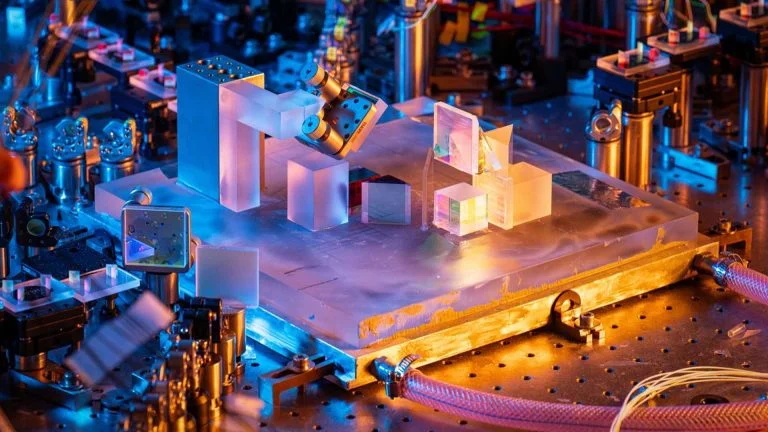
PRESS RELEASE — Quantum Computing Inc. (“QCI” or the “Company”) (NASDAQ: QUBT), a leader in accessible quantum computing software, today announced that it has entered into a definitive agreement to acquire QPhoton, a quantum photonics innovation company that has developed a series of quantum photonic systems (QPS). The acquisition of QPhoton extends QCI’s offerings to accelerate the accessibility of quantum computing, and other powerful technologies, into easily deployable solutions today, and advances QCI into a full-spectrum quantum software and hardware company.
QPhoton’s QPS, including those for AI and optimization, operate at room temperature and maintain computational stability in a variety of application environments. These unique approaches eliminate the cost and complexity required by the hyper-cooled, tightly controlled environments required by other technology. QPhoton’s QPS is designed to be easily deployed and used at a substantially reduced total cost of ownership relative to competing offerings, while providing substantial quantum advantages.
The QPS for optimization work effectively with QCI’s Qatalyst™ software, which is designed to eliminate the need for complex quantum programming and runs seamlessly across a variety of quantum computers. This combination sets QCI on a path to delivering a broadly accessible and affordable solution that can be used by non-quantum experts, anywhere, for real-world industry applications.
Qatalyst will continue to be a vendor-neutral software, supporting a variety of quantum computing platforms including D-Wave, IonQ, Oxford Quantum Circuits, Rigetti, and QPhoton, among others.

“This acquisition is key to QCI delivering on its commitment to be the democratizing force that empowers non-quantum experts to realize quantum value,” stated Robert Liscouski, CEO of QCI. “The combination of QPhoton’s powerful quantum processing technology and systems with QCI’s Qatalyst software significantly accelerates accessibility to quantum solutions for real business problems. Just a year ago this quantum functionality seemed far off. QCI, with QPhoton’s technology, will be launching ready-to-run anywhere, full-stack quantum systems that can deliver affordable, user-friendly solutions for real business problems to a much larger audience.”
“Joining forces with QCI is a momentous occasion in achieving my life’s work in delivering real quantum value to industry,” said Dr. Yuping Huang, CEO of QPhoton. “Our quantum hardware, which emphasizes turn-key and cost-effective operations, is an ideal match for QCI’s ready-to-run Qatalyst software and many other services that we are going to jointly develop and provide. This combination lays the groundwork for scalable quantum solutions to be incorporated into critical business activities and will operate seamlessly alongside classical technology today.”
Dr. Huang, the Gallagher Associate Professor of Physics at Stevens Institute of Technology and the founding Director of the Center for Quantum Science and Engineering, has developed a number of quantum techniques over the past few years based on over $18 million of investment from many US government agencies, including the Department of Defense, the National Science Foundation, and NASA. His research has led to the development of practical quantum and photonic technologies ranging from quantum networking, quantum biomedical imaging, quantum processing on a chip to quantum remote sensing.
“Through the planned acquisition of QPhoton and Dr. Huang’s continued leadership at the Center for Quantum Science and Engineering, we will work closely with Stevens Institute of Technology to provide additional opportunities to PhD, graduate and undergraduate physics students. This is a very important and exciting partnership for QCI,” Liscouski added.
“Stevens Institute of Technology is immensely proud that Professor Yuping Huang, QPhoton and QCI have reached this exciting point in their goal to make quantum capabilities broadly accessible to many industries,” said Nariman Farvardin, president of Stevens Institute of Technology. “Dr. Huang is a talented researcher and entrepreneur and a product of the fertile environment at Stevens that supports faculty in creating new technologies that have the potential to be major disruptors in industry and society.”
“It’s clear to me that the combination of QCI and QPhoton can deliver a quantum computer that will dramatically shift the accessibility of quantum systems and drive results sooner and more cost effectively,” said Paul Nashawaty, Senior Analyst at Enterprise Strategy Group (ESG). ESG, a division of TechTarget, is an IT analyst, research, validation, and strategy firm that provides market intelligence and actionable insight to the global IT community. “A special benefit of this merger is that the companies are broadening the user base to non-quantum experts who have been anxiously awaiting the opportunity to explore quantum-possible problems in areas like optimization, drug discovery and others. With a full-stack approach, QCI and QPhoton offer a unique opportunity to accelerate the delivery of practical quantum applications. This is the same process that drove value in classical computing and we’re seeing it now in quantum,” added Nashawaty.
QPhoton will be a wholly-owned subsidiary of QCI, and Dr. Huang is expected to join QCI as a director and officer. Under the definitive agreement, at the closing of the proposed transaction, QCI will issue to QPhoton’s stockholders aggregate merger consideration consisting of: 5,802,206 shares of QCI’s common stock, 2,377,028 shares of a new series of QCI’s preferred stock, convertible into 23,770,280 shares of common stock (subject to receipt of the approval of QCI’s stockholders), and warrants exercisable, at a purchase price of $0.0001 per share, to purchase up to 7,028,337 shares of common stock (subject to receipt of the approval of QCI’s stockholders). The merger consideration is subject to adjustment under certain circumstances, such that it will represent in total approximately 49% of the total capital stock of QCI outstanding immediately following the closing. The transaction is expected to close during the third or fourth quarter of 2022 and is subject to customary and other closing conditions, including QCI obtaining a final order from the Court of Chancery of the State of Delaware pursuant to Section 205 of the General Corporation Law of the State of Delaware.
The description of the transaction contained herein is only a summary and is qualified in its entirety by the reference to the definitive agreement entered into between QCI and QPhoton and other definitive agreements relating to the transaction. Additional information about the transaction will be provided in a Current Report on Form 8-K to be filed by QCI with the Securities and Exchange Commission and available at www.sec.gov.
To learn more about QCI and how Qatalyst can deliver results for your business today, go to www.quantumcomputinginc.com.
For more market insights, check out our latest quantum computing news here.

Keep track of everything going on in the Quantum Technology Market. In one place.
Topics

Matt Swayne
With a several-decades long background in journalism and communications, Matt Swayne has worked as a science communicator for an R1 university for more than 12 years, specializing in translating high tech and deep tech for the general audience. He has served as a writer, editor and analyst at The Quantum Insider since its inception. In addition to his service as a science communicator, Matt also develops courses to improve the media and communications skills of scientists and has taught courses.
[email protected]

Stay Ahead of Quantum
Get the latest research, company news, and market intelligence every week.
MENTIONED IN THE ARTICLE

D-Wave Quantum
D-Wave Quantum is a pioneering dual-platform quantum computing company that partners with aerospace organizations to solve complex logistical, defense, and satellite challenges. Founded in 1999, the company’s quantum annealing technology is utilized by industry leaders like Lockheed Martin to optimize aircraft networks, improve manufacturing efficiencies, and support critical national security initiatives.
→

IonQ
IonQ is a developer in trapped ion quantum computing founded in 2015 that actively applies its technology to the aerospace and defense sectors. The company empowers satellite-based quantum networks and quantum enabled drones to improve positioning, navigation, and timing resilience in GPS denied environments, and collaborates with industry leaders like Airbus to optimize aircraft loading.
→

Oxford Quantum Circuits
Oxford Quantum Circuits (OQC) is a company that specializes in quantum computing technology aimed at addressing challenges like climate change and new drug discoveries. They offer Quantum Computing as-a-Service (QCaaS), making quantum computing accessible for breakthrough discoveries. OQC's core technology, the Coaxmon, ensures scalability and high-fidelity operation times in their superconducting quantum processors.
→

Rigetti Computing
Rigetti Computing develops integrated quantum computers and superconducting processors specialized for complex aerospace optimization and satellite communication tasks, including collaborations with the U.S. Air Force. Founded in 2013, the firm produces modular, multi-chip processors internally and provides cloud-based access for large-scale, complex simulations.
→

NASA
The National Aeronautics and Space Administration (NASA) is the U.S. government agency driving pioneering research and technological development in both atmospheric flight (aeronautics) and space exploration (astronautics). NASA acts as a research organization, utilizing advanced wind tunnels, supercomputing, and flight test laboratories to advance aircraft aerodynamics, propulsion, and materials, while simultaneously involved in the design, construction, and operation of launch vehicles and spacecraft for deep space exploration. Through its aeronautics research directorate, the agency works to improve the safety, efficiency, and environmental impact of aviation, whereas its space programs focus on developing cutting-edge flight systems, robotic explorers, and human transportation capabilities.
→