

Rigetti Computing Announces Its Going Public Through $1.5bln SPAC Deal

Rigetti Lab
Hub Hub
Rigetti Lab
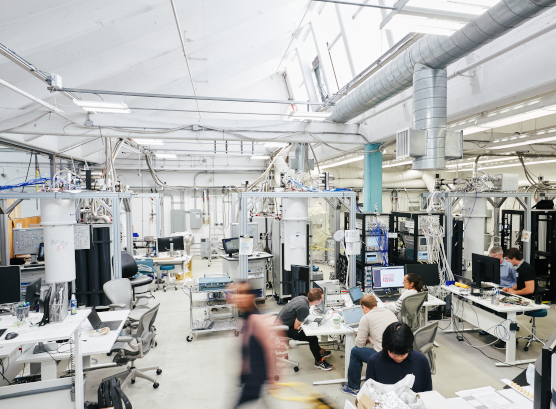
Rigetti Computing announces plans to become publicly traded via merger with Supernova Partners Acquisition Company II.

Following close on the heels of IonQ‘s public listing, Rigetti announced today that they are going public through a Special Purpose Acquisition Company, or SPAC.

In a company announcement, the pioneer in full-stack quantum computing said it has entered into a definitive merger agreement with Supernova Partners Acquisition Company II, Ltd. (“Supernova II”) (NYSE:SNII), a publicly traded special purpose acquisition company. When the transaction closes, the publicly traded company will be named Rigetti Computing, Inc. and its common stock is expected to be listed on the NYSE under the ticker “RGTI.”

According to the announcement, the company will use the proceeds from the transaction to accelerate development of multiple generations of quantum processors and grow its commercial business. Rigetti expects to scale its quantum computers from 80 qubits in 2021, to 1,000 qubits in 2024, and to 4,000 qubits in 2026.

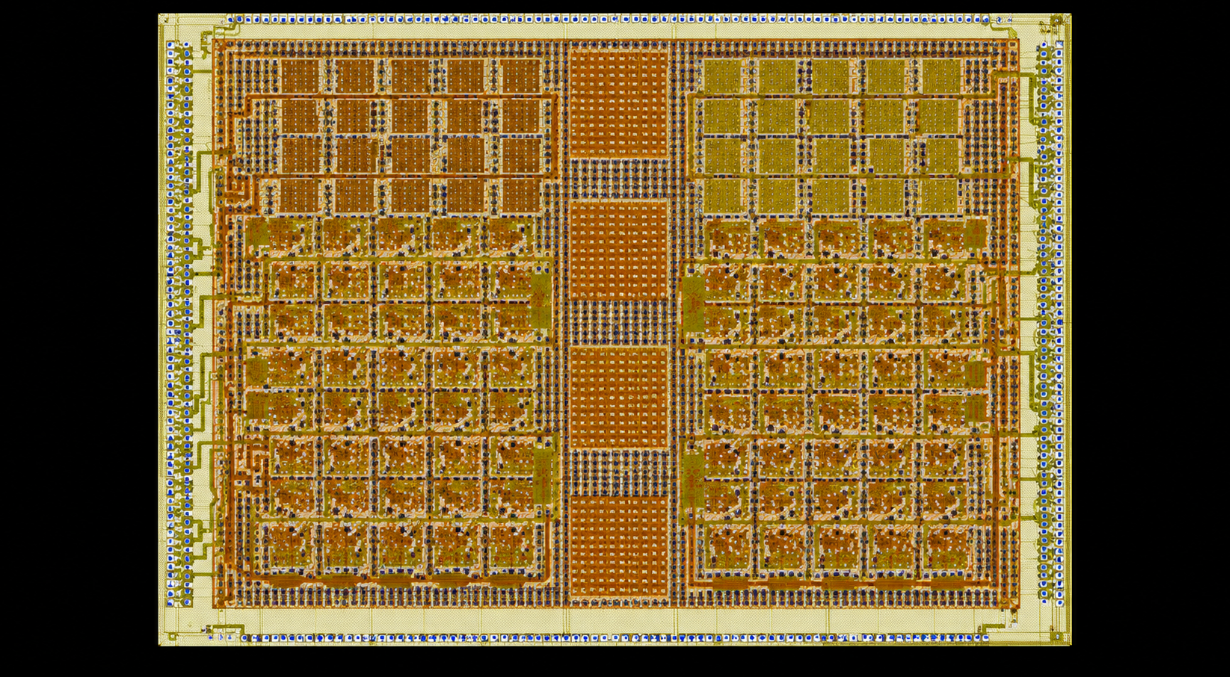
Rigetti introduced its scalable superconducting chips in June 2021 and has developed patented multi-chip architecture to serve as the building block for new generations of quantum processors.

Introducing TQI 2.0Introducing TQI 2.0

Quantum computing is one of the most transformative emerging technologies in the world today. Many of the world’s most important problems remain intractable, lying far beyond the capabilities of today’s supercomputers. Quantum computers process information in a fundamentally different way — solving problems simultaneously as opposed to sequentially — which will allow them, when scaled, to tackle problems of staggering computational complexity at unprecedented speed.

Rigetti expects that quantum computers could be applied to a range of important uses such as enabling biotech companies to bring more effective therapies to market faster; researchers to develop more affordable clean energy sources; and financial companies to access faster and more accurate market insights to help reduce market volatility.

RigettiRigetti’s quantum computers work in tandem with existing cloud and high-performance computing infrastructure. The company sells access to its machines through the Rigetti Quantum Cloud Services platform.

The PIPE transaction is subscribed to by top investors including: funds and accounts advised by T. Rowe Price Associates, Inc.; Bessemer Venture Partners; Franklin Templeton; and In-Q-Tel. Strategic investors include Keysight Technologies and Palantir Technologies. Ampere Computing will make a direct investment. These new strategic investors provide strong complementary technologies for advancing Rigetti’s quantum advantage, and build on Rigetti’s existing partnerships and collaborations with customers like Amazon Web Services, Astex Pharmaceuticals, DARPA, NASA, Standard Chartered Bank and the U.S. Department of Energy.

Rigetti CEO Chad Rigetti founded the company in 2013. The company has raised approximately $200 million in venture capital and today employs more than 130 people with offices in the United States, Canada, U.K., and Australia.

Supernova II is led by Michael Clifton, an investor who most recently helped lead global technology investing at The Carlyle Group; Robert Reid, a long-time senior partner at Blackstone; Spencer Rascoff, a serial entrepreneur who co-founded Hotwire, Zillow, dot.LA and Pacaso and who led Zillow as CEO for nearly a decade; and Alexander Klabin, founder and CEO of Ancient and former managing partner, co-CIO and co-founder of Senator Investment Group.

Clifton is expected to join the Rigetti Board of Directors after the transaction closes.

For more market insights, check out our latest quantum computing news here.

Keep track of everything going on in the Quantum Technology Market. In one place.

Share

Stay Ahead of Quantum

Get the latest research, company news, and market intelligence every week.

MENTIONED IN THE ARTICLE

IonQ
InvestorUnited States · 1001-5000 FTEs

IonQ is a developer in trapped ion quantum computing founded in 2015 that actively applies its technology to the aerospace and defense sectors. The company empowers satellite-based quantum networks and quantum enabled drones to improve positioning, navigation, and timing resilience in GPS denied environments, and collaborates with industry leaders like Airbus to optimize aircraft loading.

→
Rigetti Computing
CompanyUnited States · 101-500 FTEs

Rigetti Computing develops integrated quantum computers and superconducting processors specialized for complex aerospace optimization and satellite communication tasks, including collaborations with the U.S. Air Force. Founded in 2013, the firm produces modular, multi-chip processors internally and provides cloud-based access for large-scale, complex simulations.

→
Bessemer Venture Partners
InvestorUnited States · 101-500 FTEs

Bessemer Venture Partners (BVP) is one of the oldest and most established venture capital firms in the world, tracing its roots to 1911 as a private family office created by Henry Phipps Jr. Formally establishing itself as a dedicated venture capital firm in the 1970s and opening a Silicon Valley office in 1975, the firm now manages over $19-20 billion in assets and specializes in early-stage and growth investments across sectors including cloud computing, cybersecurity, fintech, and AI. With a global presence through offices in San Francisco, New York, Boston, Bangalore, and Tel Aviv, BVP has helped scale hundreds of companies, with a portfolio boasting over 150 IPOs, including notable successes such as Shopify, LinkedIn, Pinterest, Twilio, and Yelp.

→
Amazon Web Services (AWS)
CompanyUnited States · 10001+ FTEs

Amazon Braket – A fully managed service that allows scientists, researchers, and developers to begin experimenting with computers from multiple quantum hardware providers in a single place. Bra-ket notation is commonly used to denote quantum mechanical states, and inspired the name of the service.

→
Defense Advanced Research Projects Agency (DARPA)
GovernmentUnited States · 101-500 FTEs

The Defense Advanced Research Projects Agency (DARPA) is an independent research and development agency within the U.S. Department of Defense (DoD) established in 1958 to prevent and create strategic technological surprises for national security. Operating with a relatively small staff of program managers who are empowered to take high-risk, high-reward approaches, DARPA functions by funding cutting-edge research in academia, industry, and government laboratories rather than conducting research in-house. Its mission focuses on creating revolutionary technologies—such as the Internet (ARPANET), stealth technology, GPS, and mRNA vaccine platforms—that transition into practical military and civilian applications. DARPA programs are typically finite in duration and demand transformational breakthroughs rather than incremental improvements, positioning the U.S. at the forefront of technological innovation.

→
NASA
InvestorUnited States · 10001+ FTEs

The National Aeronautics and Space Administration (NASA) is the U.S. government agency driving pioneering research and technological development in both atmospheric flight (aeronautics) and space exploration (astronautics). NASA acts as a research organization, utilizing advanced wind tunnels, supercomputing, and flight test laboratories to advance aircraft aerodynamics, propulsion, and materials, while simultaneously involved in the design, construction, and operation of launch vehicles and spacecraft for deep space exploration. Through its aeronautics research directorate, the agency works to improve the safety, efficiency, and environmental impact of aviation, whereas its space programs focus on developing cutting-edge flight systems, robotic explorers, and human transportation capabilities.

→
U.S. Department of Energy (DOE)
GovernmentUnited States · 10001+ FTEs

The mission of the Department of Energy is to ensure America's security and prosperity by addressing its energy, environmental, and nuclear challenges through transformative science and technology solutions. In September, 2022, Research supported by ASCR demonstrated that classical machine learning algorithms can accurately predict ground state properties and classify quantum phases of matter using data generated from quantum experiments. In November, 2022, Research supported by Q-NEXT revealed that the performance of a sensor network is constrained by the intrinsic noise associated with the quantum states used in the network. In March, 2023, Research funded by DOE SC NP achieved the first experimental observation of entanglement between dissimilar particles, specifically positive and negative pions. In August, 2023, Research funded by DOE SC BER demonstrated strong preservation of entanglement in a two-photon absorption process involving organic molecules, offering a new approach for developing quantum light-based spectroscopy and microscopy.

→

More in Research

Related Articles