Honeywell Reports Achieving Quantum Volume 128 on Company’s Quantum Computer
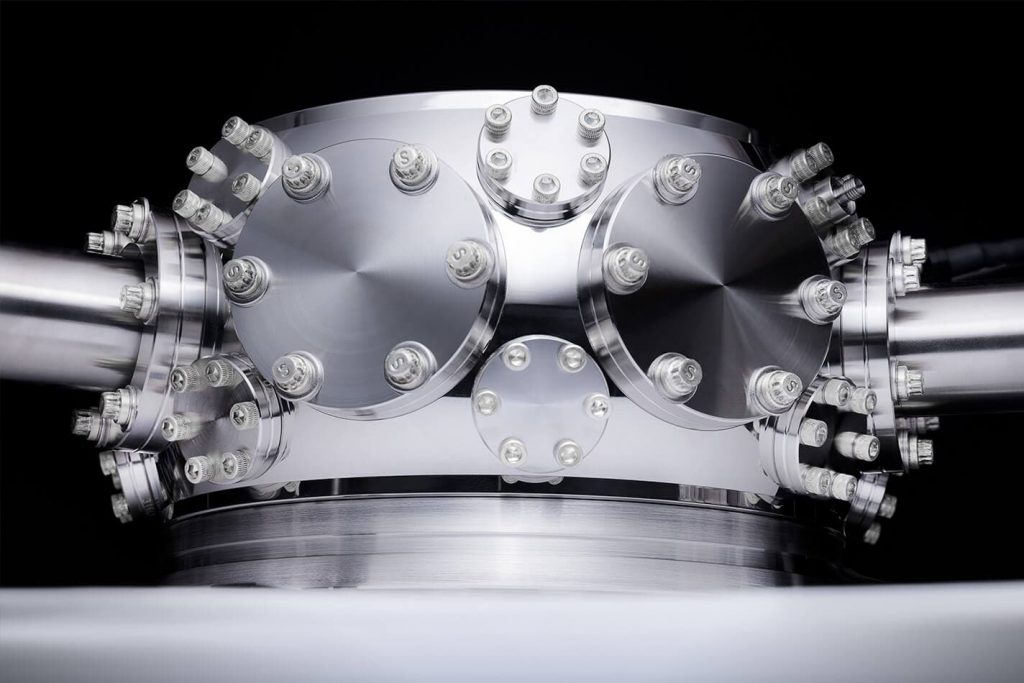



The Honeywell Quantum team report in a company statement that they achieved a Quantum Volume of 128 on their Quantum Computer in late September 2020.
They added that they expect that his achievement, along with future increases in the capabilities of quantum computers will help customers achieve results “beyond what they thought was possible.”
“Honeywell has made a commitment to shape and accelerate the development of Quantum Computing and bring its power to our customers,” said Tony Uttley, President of Honeywell Quantum Solutions. “Our differentiated technology, exemplified by the high-fidelity and fully-connected qubits with mid-circuit measurement and qubit reuse, enables our customers to push the frontier of quantum computing applications. And what is really exciting is that this is still just the beginning.”
Quantum volume is a metric that measures the performance of a quantum computer’s capabilities and error rates.

They added the following details:

The plot above shows the heavy outcomes for Honeywell Quantum Solutions’ tests of quantum volume and the dates when each test passed. All tests are above the 2/3 threshold to pass the respective Quantum Volume. Circles indicate heavy outcome averages and the violin plots show the histogram distributions. Data colored in blue shows system performance results and red shows modeled, noise-included simulation data. White markers are the lower 2-sigma error bounds.
The system successfully passed the Quantum Volume 128 test outputting heavy outcomes 71.78% of the time, which is above 2/3 threshold with 99.934% confidence. The average single-qubit fidelity is 99.97(1)% and the average two-qubit gate fidelity is 99.54(7)% with fully-connected qubits.

The plot above shows the individual heavy outcomes for each Quantum Volume 128 run. The blue line is an average of heavy outcomes and the red line is the lower 2-sigma error bar which crosses the 2/3 threshold after 186 circuits.
Its systems are accessible directly through Honeywell or through Microsoft Azure Quantum. In addition to offering high-fidelity, fully-connected qubits, our system features a unique mid-circuit measurement capability, which enables users to explore new classes of algorithms and to greatly reduce the number of qubits needed for certain algorithms.
If you found this article to be informative, you can explore more current quantum news here, exclusives, interviews, and podcasts.

Keep track of everything going on in the Quantum Technology Market. In one place.
Topics

Matt Swayne
With a several-decades long background in journalism and communications, Matt Swayne has worked as a science communicator for an R1 university for more than 12 years, specializing in translating high tech and deep tech for the general audience. He has served as a writer, editor and analyst at The Quantum Insider since its inception. In addition to his service as a science communicator, Matt also develops courses to improve the media and communications skills of scientists and has taught courses.
[email protected]

Stay Ahead of Quantum
Get the latest research, company news, and market intelligence every week.
MENTIONED IN THE ARTICLE

Honeywell
Honeywell Aerospace, founded in 1906, is a global company focused on aviation technology, with hardware and avionics utilized on nearly all commercial and military aircraft. The division specializes in designing and manufacturing advanced aircraft engines, flight decks, satellite communications, and auxiliary power systems.
→

Microsoft
Microsoft engages in the creation and licensing of software for both consumer and enterprise use. The company is renowned for its development of Windows operating systems and the Office suite designed for productivity. Microsoft's structure encompasses three major segments of roughly equal size: productivity and business processes, which encompasses legacy Microsoft Office, cloud-based Office 365, Exchange, SharePoint, Skype, LinkedIn, and Dynamics; the intelligence cloud, which includes offerings like Azure, Windows Server OS, and SQL Server; and more personal computing, which covers Windows Client, Xbox, Bing search, display advertising, and a range of Surface laptops, tablets, and desktops.
→