Quantum Computer Claws Are Out: IBM says Google’s quantum claim isn’t so Supreme


Two quantum giants are in a war or words over recent claims of quantum supremacy, according to Wired Magazine.
Las month, Google claimed in a technical paper that the search-engine giant achieved quantum supremacy in a NASA-Google collaboration. Quantum supremacy — originally conceived by Caltech professor John Preskill — is the point at which a quantum computer can outperform a classical computer, even a classical supercomputer. In this case, Google said its quantum computer performed a computation that would take a classical computer a couple thousand years to figure out.
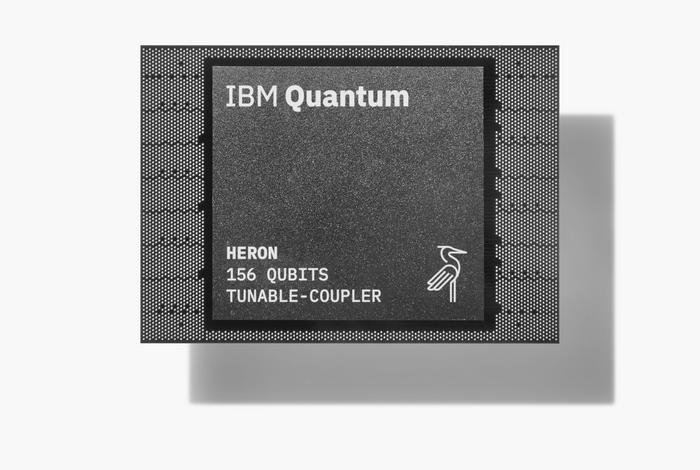
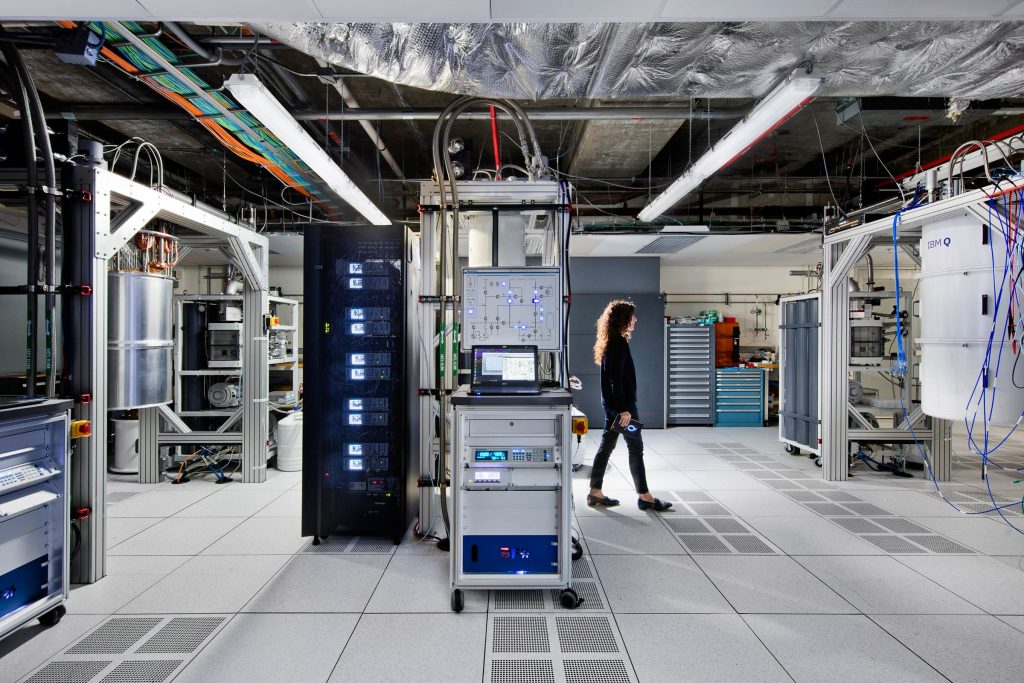
IBM has now countered that their Summit supercomputer — a massive, but still classical computer — could achieve that in a few days.
“This threshold has not been met,” an IBM blog post on the situation said.

IBM suggests their supercomputer could have done that work in 2 ½ days, not millennia. With enough finagling, the Summit might be even able to do the calculation faster. That would still be slower than the time posted by Google’s Sycamore quantum chip, but, according to Wired, the concept of quantum supremacy requires a quantum challenger to do something that a classical computer could not do at all.
“We argue that an ideal simulation of the same task can be performed on a classical system in 2.5 days and with far greater fidelity. This is in fact a conservative, worst-case estimate, and we expect that with additional refinements the classical cost of the simulation can be further reduced,” the company’s researchers added in the post.
Jonathan Dowling, a professor at Louisiana State University, told Wired that IBM has a point.
“Google picked a problem they thought to be really hard on a classical machine, but IBM now has demonstrated that the problem is not as hard as Google thought it was,” he told the publication.
While it may seem like IBM is dismissing quantum supremacy, they’re not. IBM has its own quantum computing program and is making rapid progress with their own quantum computer and are — no doubt — attempting to achieve their own crack at quantum supremacy.
Google had no comment.

Keep track of everything going on in the Quantum Technology Market. In one place.
Topics

Matt Swayne
With a several-decades long background in journalism and communications, Matt Swayne has worked as a science communicator for an R1 university for more than 12 years, specializing in translating high tech and deep tech for the general audience. He has served as a writer, editor and analyst at The Quantum Insider since its inception. In addition to his service as a science communicator, Matt also develops courses to improve the media and communications skills of scientists and has taught courses.
[email protected]

Stay Ahead of Quantum
Get the latest research, company news, and market intelligence every week.
MENTIONED IN THE ARTICLE

California Institute of Technology
The California Institute of Technology, situated in Pasadena, California, is a private research university. It has played a crucial role in numerous contemporary scientific breakthroughs and stands alongside a select few technology institutes in the United States that prioritize teaching in pure and applied sciences.
→
IBM
IBM is an iconic technology pioneer founded in 1911 as the Computing-Tabulating-Recording Company and officially renamed International Business Machines Corporation in 1924. Beyond foundational computing, IBM possesses a deep legacy in aerospace and defense from building the guidance computers and Instrument Unit for NASA's historic Apollo missions to partnering with Airbus on CIMON, the first AI assistant on the ISS.
→

Louisiana State University
Louisiana State University, located in Baton Rouge, Louisiana, operates as a publicly funded research institution. It was established in 1860, originally near Pineville, Louisiana, and was known as the Louisiana State Seminary of Learning & Military Academy.
→