

Insider Brief
- The Jane Goodall Institute USA and FormationQ have launched a two-year research partnership using IonQ’s trapped-ion quantum computing to study why chimpanzees engage in lethal intergroup conflict while bonobos generally coexist peacefully, marking what the organizations describe as a first application of quantum-enhanced computing to this area of behavioral ecology.
- The project will combine more than six decades of Jane Goodall Institute field research with the B3GET agent-based model, hybrid quantum-classical computing and expertise from the University of Minnesota, FormationQ and IonQ to examine how ecological factors influence cooperation and conflict.
- Researchers also aim to improve behavioral model calibration and generate insights that could help identify critical chimpanzee habitats, better understand population changes and support more effective conservation strategies.
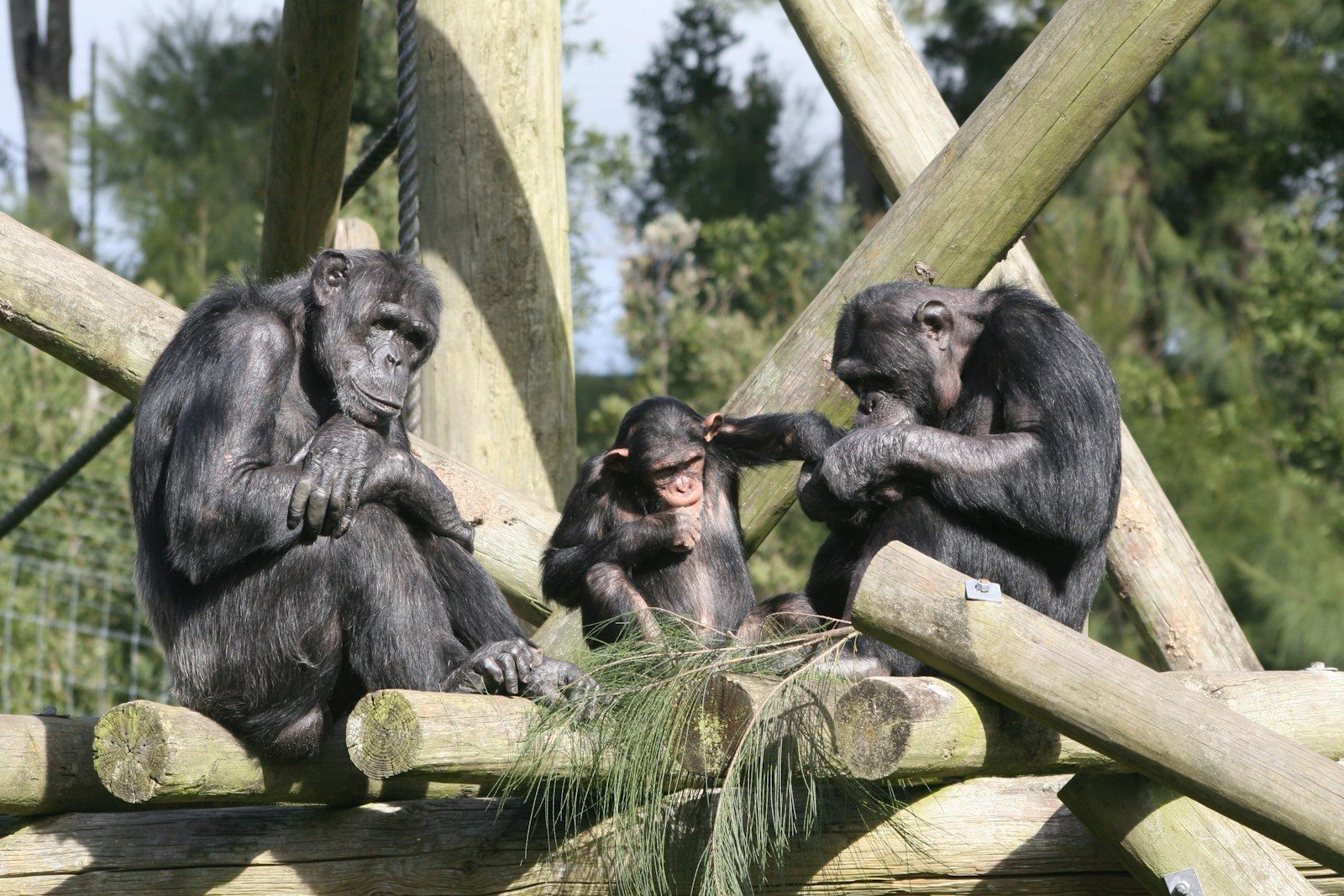
- Photo by Margaux Ansel on Unsplash
PRESS RELEASE — The Jane Goodall Institute (JGI) USA and FormationQ today announced a landmark research partnership that will apply trapped-ions quantum computing by IonQ to one of the most enduring questions in behavioral ecology: why do some species engage in lethal intergroup violence while others live peacefully alongside their neighbours?
Launching on World Chimpanzee Day, which marks the 66th anniversary of Dr. Jane Goodall’s arrival at Gombe, Tanzania to begin her wild chimpanzee study, the two-year programme builds on more than six decades of pioneering field research, bringing together advanced computational modelling, hybrid quantum-classical computing and behavioural ecology into a new state-of-the-art collaborative research framework.
The programme, Ecology of War and Peace: Using Quantum-Enhanced Agent-Based Modelling to Explain Contrasting Intergroup Behaviour in Chimpanzees and Bonobos, will mark a first-of-its-kind application of quantum-enhanced computation to the study of ecology, evolution and behaviour, representing a bold new chapter in the Jane Goodall Institute USA’s decades-long legacy of using innovative technologies to support long-term research, conservation and education.

The programme will bring together JGI’s unparalleled scientific legacy, behavioural modelling developed by researchers at the University of Minnesota, FormationQ’s expertise in designing and operating applied programmes and IonQ’s quantum computing platform.
At the centre of the programme is B3GET (Behaviour, Ecology, Genetics, Evolution and Tradeoffs), a sophisticated agent-based model in which virtual primates live, move, forage, reproduce and interact across artificial landscapes. Researchers can systematically vary ecological conditions including food distribution, home range size and group cohesion rules, to investigate how environmental factors influence patterns of cooperation and conflict over time.
Chimpanzees and bonobos are humanity’s two closest living relatives, yet they display strikingly different patterns of intergroup behaviour. Jane Goodall famously observed chimpanzee warfare in the 1970s, in which chimpanzees engaged in organised, lethal inter-group conflict. Bonobos, however, are known to peacefully socialize between communities.
The answer in explaining this difference, researchers believe, lies in ecology: in the way food is distributed across the landscape, the size of the ranges each species must cover, and the moment-to-moment decisions individuals make about whether to travel alone or in groups. Decades of field research have provided extraordinary insights into these behaviours. However, understanding how numerous ecological variables interact across complex systems remains a significant challenge.
By combining advanced agent-based modelling with hybrid quantum-classical computational approaches, the programme will investigate how quantum computing can help researchers explore this complex space in new ways and improve the calibration of large-scale behavioural models, thereby helping identify the ecological conditions that distinguish the lethal intergroup aggression of chimpanzees from the more peaceful coexistence of bonobos.
The project will also provide insights into how chimpanzees’ natural behaviour connects to habitat and increased mortality. Both factors are essential to not only understand chimpanzees, but also better identify and protect habitats and model chimpanzee populations to develop more effective conservation strategies.
Dr. Lilian Pintea, Vice President of Conservation Science at the Jane Goodall Institute and Principal Investigator, said:
“Dr. Jane Goodall spent over 65 years building the most comprehensive ongoing record of wild chimpanzees. That legacy of patient, rigorous observation is now meeting the frontier of quantum science. Understanding the ecological conditions that drive how chimpanzees interact with their habitats and neighbors is also relevant to understanding why populations thrive or decline, and where conservation action will matter most.
“This partnership embodies exactly what the Jane Goodall Institute’s scientific work stands for: strategically bringing the most powerful technology tools available to bear on the questions that matter most for chimpanzees, for conservation, and for our understanding of what it means to be human. This programme is one of the last that Jane and I worked on together. Launching it today, on the 66th anniversary of her first day at Gombe, is deeply meaningful to me.”
Nada Hosking, Founder and CEO of FormationQ said:
“This programme starts with a profound scientific question, decades of extraordinary field research and a sophisticated model built to understand a deeply complex natural system. FormationQ’s role in this partnership is to bring those elements together with IonQ’s frontier quantum computing capabilities and build a research programme around a question that has never before been approached in this way.
“We believe the real promise of quantum will emerge when world-leading domain expertise, data and models are connected to the technology in ways that allow researchers to ask new questions. There could be few more meaningful places to begin than with Jane Goodall’s extraordinary scientific legacy and what it can still teach us about nature, conservation and ourselves.”