


Insider Brief
- China’s Origin Wukong quantum computing platform has surpassed one million completed quantum computing tasks while serving users across 192 countries and regions.
- The platform combines superconducting quantum computing services with post-quantum cryptography protections, including the Origin Rock cryptographic module introduced in 2024.
- The announcement comes amid broader efforts in China and internationally to develop and adopt post-quantum cryptography standards ahead of future quantum computing threats.
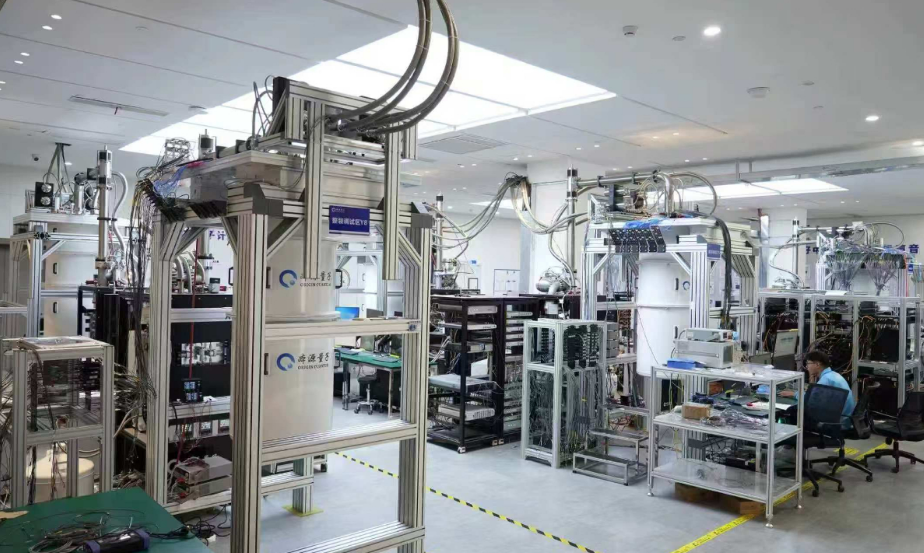
China’s Origin Wukong series of superconducting quantum computers has completed more than 1 million global quantum computing tasks, according to a joint statement from the Anhui Provincial Key Laboratory of Quantum Computing Chips and the Anhui Quantum Computing Engineering Research Center in Hefei, Anhui Province, as reported by the Global Times – an English-language newspaper published under the People’s Daily, the official newspaper of the Chinese Communist Party.
Since going into operation, the platform has run stably for more than two years, receiving over 49 million remote visits from users across 192 countries and regions worldwide. The system has been providing stable and reliable quantum computing power to users worldwide while integrating a post-quantum cryptography (PQC) protection framework, creating what the labs described as dual capabilities in both computing power and security.
The platform represents an early-stage “spear-and-shield” model, combining quantum computing services with defensive security measures to form what the statement described as an “attack-and-defense” quantum computing service system, according to the source. The PQC defense system has already been deployed in multiple enterprises and public institutions.

Furthermore, in April 2024, Origin Wukong integrated China’s first PQC “anti-quantum attack shield” – Origin Rock, a software cryptographic module – capable of resisting attacks from both classical computers and quantum computers.
NIST Standards and Global PQC Trends
The move aligns with broader global developments in post-quantum cryptography. The US National Institute of Standards and Technology (NIST) announced that nine candidates had advanced to the third round of evaluation for post-quantum digital signature algorithms. NIST had previously approved three PQC cryptographic standards and estimated that quantum computers could disrupt current cryptographic systems within the coming five to ten years. The US National Security Agency has also urged US federal agencies to move toward PQC as early as possible.
China is expected to develop national standards for post-quantum cryptography within the next three years as it increases investment in research, according to a Reuters report from March 19 cited by the Global Times. The Reuters report quoted Wang Xiaoyun, a professor at Tsinghua University’s Institute for Advanced Study, as saying: “I personally think that the next three-to-five-year period is potentially one of explosive growth for post-quantum cryptography industry migration (in China).”
Government Priorities
The Chinese government’s annual Government Work Report emphasizes nurturing industries of the future including quantum technology, future energy, embodied artificial intelligence, brain-computer interfaces, and 6G, the Global Times noted.
Guo Guoping, chief scientist of Origin Quantum and director of the Anhui Quantum Computing Engineering Research Center, told the Global Times that the company is committed to advancing quantum computing principles, aiming for scalable programmable quantum computing.