NSF Awards $37.5M to CU Boulder-Led Quantum Research Institute

Insider Brief
- The U.S. National Science Foundation is providing $37.5 million to renew the CU Boulder-led NSF Q-SEnSE institute for five years of quantum science and engineering research.
- NSF Q-SEnSE develops quantum technologies including atomic clocks, lasers and biomedical sensors designed to improve precision measurement.
- The institute brings together 39 researchers from 16 institutions and will also support quantum workforce development and training programs.
Press release – A scientific quest to build more accurate clocks, faster computers and new sensors to detect the faintest signs of disease and disaster is getting a $37.5 million financial boost.
The U.S. National Science Foundation, through its Quantum Leap Challenge Institutes, is investing in the next phase of CU Boulder and its partners’ work to advance quantum science research and engineering.
“We’re really world leaders in terms of building the best quantum technology tools and applying them to meaningful, impactful scientific problems,” said Physicist Jun Ye, a JILA fellow leading the quantum research center based at CU Boulder. “There are still a lot of unknowns in the universe, and only by building some of the most sensitive instruments can we get some clue of what is behind them.”

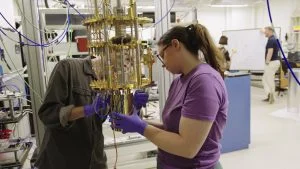
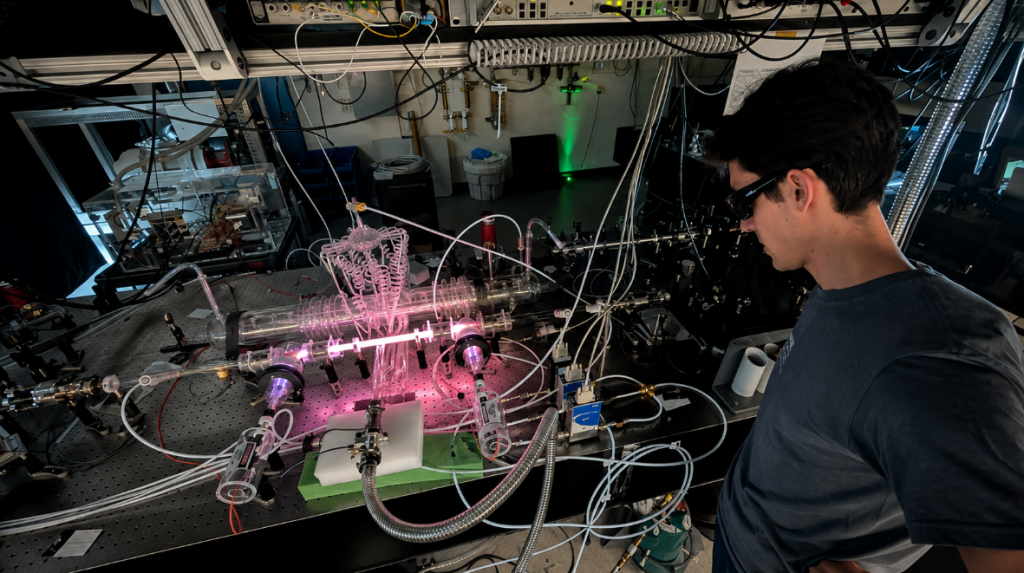
Those instruments include the next generation of atomic clocks, the world’s most stable laser and sensitive biomedical sensors that can detect disease more quickly in human breath.
Ye leads the NSF Quantum Leap Challenge Institute for Quantum Systems through Entangled Science and Engineering (NSF Q-SEnSE) center. It launched at CU Boulder in 2020 with a $25M award from NSF and has grown to include 39 researchers from 16 institutions.
“This is another example of the innovative, impactful research happening at CU Boulder, building on more than 60 years of JILA, NIST and quantum science breakthroughs,” said Justin Schwartz, CU Boulder chancellor. “This funding will accelerate the development of transformative technologies, support the growth of Colorado’s thriving quantum ecosystem and further strengthen Boulder’s position as a global hub for quantum innovation in which CU Boulder continues to play a key role.”
Quantum research led by CU Boulder is already helping develop tools that can measure molecules, atoms and other tiny things much more precisely than conventional instruments.
The center’s research has been cited more than 7,300 times in 96 countries over just the past five years.
“It brings researchers together from different disciplines and areas,” NSF Q-SEnSE executive director Inese Berzina-Pitcher said of the center. “It’s also providing opportunities for graduate students to be involved in very relevant and exciting new research.”
A portion of the award will fund workforce development and training programs.
More than 30 quantum companies are headquartered along Colorado’s northern Front Range. As recently as Friday, Ye was fielding calls from an atomic computer company to help recruit and hire students.
Greg Rieker, a professor in the Paul M. Rady Department of Mechanical Engineering and a co-principal investigator of NSF Q-SEnSE, compared the benefits of the ongoing quantum research revolution to the space race.
“A remarkable number of modern technologies have roots in the space race,” he said. “We’re now racing toward quantum computing, and generating spin-off technologies along the way that benefit society in surprising ways.”
One example is optical frequency comb technology. The same lasers used in optical clocks and quantum networks can also detect the smallest molecules in the air.
“You can use them to look at air quality or human breath to do a medical diagnosis. Those are just two examples of applications enabled by the NSF Q-SEnSE portfolio,” Rieker said.
Physics professor and JILA Fellow Cindy Regal said the research will also help scientists in the quest to make scientific discoveries.
“Quantum instruments can see minute effects and our team has the fundamental physics expertise to interpret interesting fingerprints in our measurements,” she said.
The CU Boulder-led NSF Q-SEnSE is one of eight NSF Quantum Leap Challenge Institutes that will collectively receive more than $290 million to advance foundational quantum research.

Keep track of everything going on in the Quantum Technology Market. In one place.
Topics

Mohib Ur Rehman
Covering quantum and emerging technologies, Mohib explores the intersection of technology, security, and society. His work also frequently examines surveillance infrastructure and the institutions shaping the digital world. In addition to his work at The Quantum Insider, he co-runs SK NEXUS, an independent technology publication that helps readers understand the technologies shaping their lives.

Stay Ahead of Quantum
Get the latest research, company news, and market intelligence every week.
MENTIONED IN THE ARTICLE