China Forms Quantum Standards Committee to Coordinate Industry Development


Insider Brief
- China established a national quantum information standards committee under the Ministry of Industry and Information Technology to develop industry standards and support the growth of its quantum technology sector.
- The committee will create and revise standards covering foundational quantum technologies, quantum computing, quantum communication and quantum precision measurement, with its secretariat based at the China Academy of Information and Communications Technology.
- The new body supports China’s broader strategy to advance quantum technology, following recent milestones including the public release of the Origin Pilot quantum operating system and the unveiling of the Jiuzhang 4.0 programmable photonic quantum computing prototype.
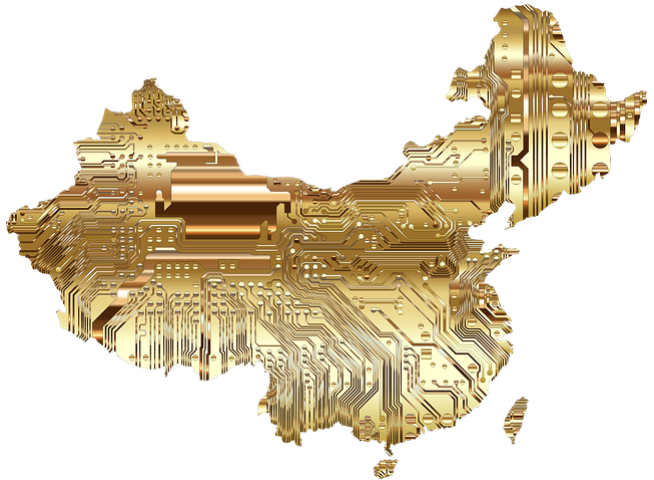
- Image: Photo by Chickenonline on Pixabay
China has established a national technical committee dedicated to quantum information standards, underscoring the country’s effort to build the regulatory and technical framework needed to support its expanding quantum technology sector.
The committee, established Thursday under China’s Ministry of Industry and Information Technology (MIIT), will develop and revise industry standards spanning quantum computing, quantum communication, quantum precision measurement and foundational quantum information technologies, according to an article by CGTN, a Chinese state-owned broadcaster, citing China’s state-run Xinhua News Agency.
The move reflects Beijing’s growing emphasis on standards as a strategic tool for shaping emerging technologies. Industry standards define technical specifications, terminology, testing methods and interoperability requirements, helping ensure that products and systems developed by different organizations can work together while providing consistency across an industry.

The committee’s secretariat will be based at the China Academy of Information and Communications Technology, a government-affiliated research institute.
According to CGTN, the establishment of the committee “marks an important step toward leveraging the foundational, strategic, and guiding role of standards, promoting the high-quality development of the quantum industry and strengthening international cooperation in the field.”
China has identified quantum technology as one of the strategic industries it intends to cultivate in 2026. The technology appears alongside future energy, embodied artificial intelligence, brain-computer interfaces and sixth-generation, or 6G, wireless communications in the country’s industrial planning.
The Ministry of Industry and Information Technology has previously said it intends to support breakthroughs in quantum technology, cultivate leading science and technology companies and participate actively in the development of international standards and technical rules.
The creation of a dedicated standards committee suggests China is placing greater emphasis not only on advancing quantum research but also on establishing the technical framework needed for commercialization and broader industrial adoption.
Standards typically become increasingly important as technologies mature beyond laboratory demonstrations. They can reduce compatibility problems, encourage investment and simplify procurement by providing common technical benchmarks for manufacturers, software developers and customers.
Recent Quantum Milestones
The standards initiative follows several high-profile developments in China’s quantum computing program this year.
In February, China’s self-developed quantum computer operating system, Origin Pilot, became available for public download. According to CGTN, the release was expected to lower barriers for software development and expand China’s quantum computing ecosystem by making quantum programming tools more widely accessible.
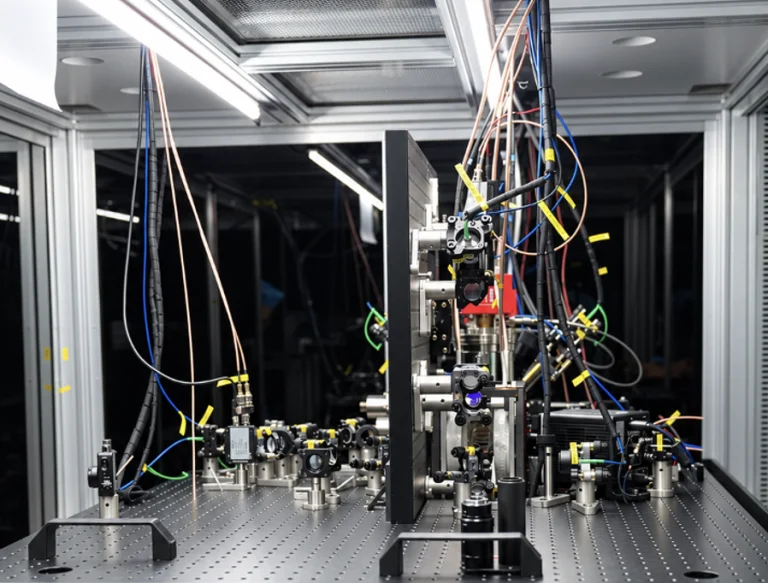
More recently, in May, Chinese researchers unveiled “Jiuzhang 4.0,” a programmable quantum computing prototype that Chinese researchers said established a world record in optical quantum information technology. Optical quantum computing uses particles of light, known as photons, to perform quantum calculations.
Together, the new standards body and these technical advances indicate that China is pursuing a parallel strategy of investing in both quantum research and the institutional infrastructure needed to support a domestic quantum industry.
The establishment of the committee also aligns with China’s broader objective of increasing its influence in international technology governance. Participation in global standards organizations can shape how future technologies are designed, tested and deployed across international markets.

Keep track of everything going on in the Quantum Technology Market. In one place.
Topics

Matt Swayne
With a several-decades long background in journalism and communications, Matt Swayne has worked as a science communicator for an R1 university for more than 12 years, specializing in translating high tech and deep tech for the general audience. He has served as a writer, editor and analyst at The Quantum Insider since its inception. In addition to his service as a science communicator, Matt also develops courses to improve the media and communications skills of scientists and has taught courses.
[email protected]

Stay Ahead of Quantum
Get the latest research, company news, and market intelligence every week.
MENTIONED IN THE ARTICLE