

Insider Brief
- Türkiye released a national quantum roadmap that identifies 85 target technologies across quantum computing, sensing and communication, dividing them into 34 near-term and 51 long-term priorities.
- The roadmap was developed through the SSB’s OTAĞ process, which brought together about 305 experts from 123 institutions and used structured scoring methods to rank technologies by priority and maturity horizon.
- The report emphasizes near-term strengths in quantum security, cryptography, sensing and secure communications while calling for domestic supply chains, expanded talent programs and stronger links among universities, government agencies and defense firms.
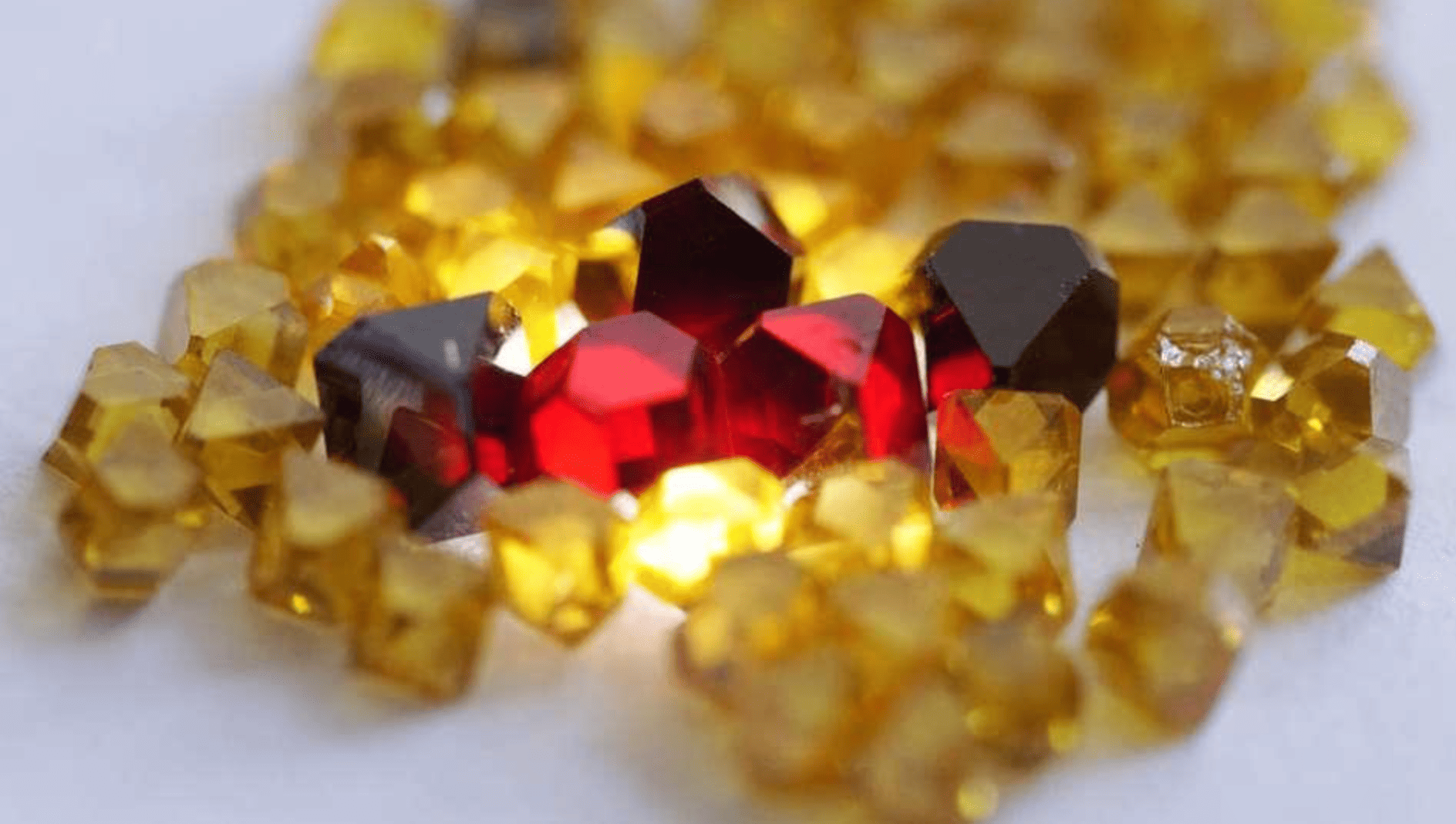
- Image: Photo by Sevgi001461 on Pixabay
Türkiye has set out a detailed plan for entering the global quantum race, publishing a national roadmap that names 85 specific technologies the country intends to pursue across the three pillars of the field — computing, sensing and communication. The document, the Quantum Technologies OTAĞ Result Report, was produced by the Presidency of Defense Industries (Savunma Sanayii Başkanlığı, or SSB) and released in June 2026.
The report is the output of an initiative known as OTAĞ — an acronym for Odak Teknoloji Ağı, or Focus Technology Network — the SSB’s recurring method for building technology roadmaps in priority fields. Coordinated by the agency’s R&D and Technology Management Department, the quantum edition was launched on December 25, 2024, and formally closed exactly one year later, on December 25, 2025.
According to the report, the process brought together approximately 305 experts from 123 separate institutions, including ministries, TÜBİTAK (Türkiye’s national science agency), universities, research institutes and private companies. The launch event alone drew around 300 attendees from 14 public institutions, 64 universities and research centers, and 20 firms.

Where Türkiye Sees Its Strengths
The report is candid about where the country already has footing and where it does not.
In computing, the near-term priority is quantum security and cryptography. The roadmap explicitly cites the threat that quantum computers pose to classical schemes such as RSA and ECC via algorithms like Shor’s and Grover’s, and flags the “harvest now, decrypt later” risk, which is the prospect that encrypted data captured today could be decrypted once hardware matures. The report indicates that Türkiye’s strong tradition in mathematics and computer science gives it an early advantage in hardware-independent areas, including quantum algorithms, optimization, machine learning, hybrid software and simulation. It also stresses the need to build a national quantum software library, noting growing restrictions on access to open-source toolkits like IBM‘s Qiskit, Xanadu‘s PennyLane and Google‘s Cirq.
In sensing — described as the most mature of the three pillars and closest to commercialization — the near-term focus is on quantum magnetometers, quantum imaging, inertial navigation systems (for GPS-denied operation) and atomic clocks. The report says Türkiye already has working competencies in metrology, atomic clocks, single-photon detectors, and NV-center and atomic-gas-cell magnetometers, while treating quantum radar, quantum LIDAR and space-based quantum sensors as longer-horizon prototypes.
In communication, the near-term priorities center on secure quantum communication protocols and modules, hybrid security infrastructure that combines quantum key distribution (QKD) with post-quantum cryptography (PQC), and cryptography resistant to quantum attack. Longer-term, the group points to harder problems — quantum repeaters, quantum-resistant internet protocols and the coherent quantum memories needed to underpin a future quantum internet.
A Crowded, Well-Funded Global Field
The roadmap situates Türkiye’s effort against a global backdrop of accelerating investment. Drawing on open sources including the European Commission’s Joint Research Centre and McKinsey’s Quantum Technology Monitor 2025, the report estimates cumulative global public funding for quantum at roughly $45 billion, with Japan alone accounting for about $7.4 billion and Australia committing some $550 million to photonic-computing firm PsiQuantum. Venture-capital funding, it notes, reached around $4.9 billion in 2025, pushing cumulative private investment past $10 billion, with money increasingly flowing to later-stage companies rather than early-stage startups.
The report also raises a concern that nations are moving to secure their own quantum supply chains, export controls on critical components are tightening, efforts that are shaping global quantum strategy. Without domestic capability and sustainability, it warns, technological dependence and national-security risk will grow, a rationale that appears to be behind much of Türkiye’s push toward home-grown manufacturing of quantum devices and control electronics.
Building the Ecosystem
Beyond the roadmap itself, the report describes a set of supporting moves already underway. Türkiye now chairs its national delegation to NATO’s Transatlantic Quantum Community, established in 2024, and has launched a digital portal, the “Türkiye Quantum Platform,” to grow awareness and talent. The SSB also announced a Strategic Competency Development Cooperation Protocol with 11 universities — including Boğaziçi, METU, İstanbul Technical, Koç, Sabancı, Bilkent and Hacettepe — set to be signed in late June 2026, and an international quantum algorithm competition to be announced the same month.
The report is explicit that talent is a significant constraint. Its closing recommendations involve that talent development, including the expansion of interdisciplinary graduate programs in quantum engineering and quantum hardware, the funding of international research and internship exchanges, the ability to attract leading researchers to Türkiye with competitive long-term support, and the building of critical shared infrastructure such as advanced nanofabrication, cryogenic test beds and precision-measurement labs.
A Three-Pillar Structure
The work was divided into three Focus Working Groups (in Turkish, Odak Çalışma Grubu, or OÇG), mirroring the standard division of the field:
The quantum computing group, led by TÜBİTAK ULAKBİM and Turkish Aerospace (TUSAŞ), drew 170 registered participants and produced 37 candidate topics. The quantum sensing group, the largest with 183 registrants, was co-led by Koç University and the defense-electronics company ASELSAN, and generated 25 topics. The quantum communication group, led by Özyeğin University and the state telecom firm ULAK Haberleşme, registered 152 participants and put forward 23 topics.
The composition of that leadership is itself a statement of intent. By placing ASELSAN, TUSAŞ and ULAK Haberleşme alongside academic institutions, the SSB has framed quantum technology as a matter of defense capability and technological sovereignty, themes that run throughout the report under the banner of Türkiye’s “National Technology Initiative” and “Century of Türkiye” vision.
From Brainstorm to Ranking
Rather than relying solely on discussion, the SSB applied a structured decision-support method that combined three established multi-criteria techniques: DEMATEL, used to map cause-and-effect relationships among evaluation criteria; AHP, used to weight independent criteria through pairwise comparison; and TOPSIS, used to rank the technologies themselves.
Each of the 85 candidate technologies was scored against seven main criteria — infrastructure, dual-use potential, global maturity, human capital, criticality, applicability to projects, and supply risk — broken down into 20 sub-attributes. Crucially, the framework calculated two separate values for each technology: a priority score (how important and how urgent) and a maturity horizon (whether it is realistically near-term or long-term). The result was a roadmap that splits the field into 34 near-term and 51 long-term targets.
This article relies on a computer translation of the report.