Diraq Expands U.S. Presence with Palo Alto Office


Insider Brief
- Diraq announced the expansion of its U.S. operations with a new office in Palo Alto, California, to support product development, partnerships, and team growth.
- The company plans to expand its Palo Alto workforce while advancing its silicon-based quantum computing approach designed to scale through existing semiconductor manufacturing processes.
- The expansion follows recent momentum including partnerships with Nvidia, Dell, GlobalFoundries, and imec, as well as proposed U.S. federal funding and participation in DARPA’s Quantum Benchmarking Initiative.
PRESS RELEASE — Diraq, the quantum-computing pioneer, today announced the expansion of its U.S. operations with a new office in Palo Alto, California. The office strengthens Diraq’s ability to scale its technology, partnerships, and team as it advances toward commercially viable, utility-scale quantum computing with a silicon-based approach.
Palo Alto expansion
The Palo Alto office will serve as a key hub for product development and ecosystem partnerships. Diraq expects to double the size of its Palo Alto team by the end of the year, reflecting continued momentum and demand for scalable quantum systems.
“Silicon Valley is where the model for scalable computing was established,” said Diraq CEO and Founder Andrew Dzurak. “We’re applying that same model to quantum computing by building processors that are CMOS-native and designed for integration into existing compute infrastructure. That’s what will enable us to scale to millions of qubits on a single chip and move toward real commercial deployment.”

“Establishing a Diraq office in Palo Alto puts us closer to the customers, partners, and talent shaping the future of computing. It gives us a stronger base to translate Diraq’s technology roadmap into products and partnerships that can accelerate the path to commercially useful quantum computing,” said Andre Saraiva, Head of Product Development, who will lead the Palo Alto office.
The announcement comes amid a period of strong momentum for Diraq as the team develops its partnerships with leading technology providers including Nvidia, Dell, Global Foundries, and imec. The company also recently announced a Letter of Intent with the U.S. Department of Commerce for up to $38 million in proposed federal funding from the CHIPS Research and Development Office, as well as the appointment of former Broadcom CEO and semiconductor veteran, Scott A. McGregor, as Chairman of Diraq’s Board.
Scaling quantum through silicon
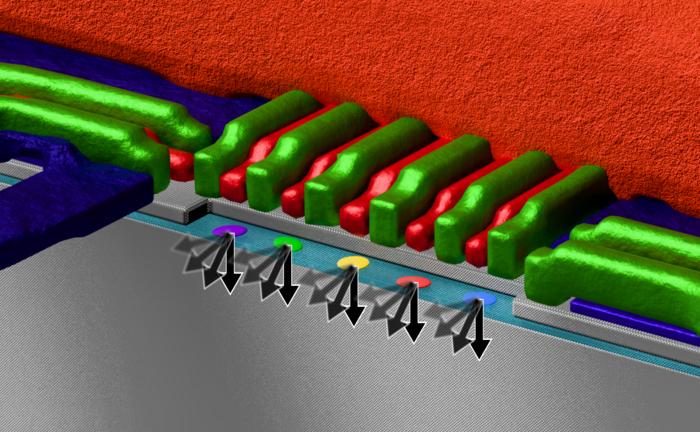
Diraq’s approach addresses one of the central challenges in quantum computing: scaling systems beyond laboratory demonstrations into practical infrastructure. By leveraging established semiconductor manufacturing processes, the company is developing compact, energy-efficient quantum processors designed for integration within standard data center environments.
Key characteristics of Diraq’s approach:
- Built using CMOS-compatible silicon technology
- Designed to scale to millions of quantum bits (qubits) on a single chip
- Engineered for integration into existing data center infrastructure
- Focused on cost effectiveness, energy efficiency, and commercial deployment
U.S. growth trajectory
The Palo Alto expansion is part of a broader U.S. growth trajectory. Diraq is planning further expansion in the Los Angeles area and is building a distributed presence across the country to support partnerships, hiring, and future deployments, including operations in Chicago.
Founded in Sydney, Australia in 2022, Diraq works with leading partners across the semiconductor and computing industry as it advances toward utility-scale quantum computing. Diraq is one of 11 companies globally that has successfully advanced to Stage B of DARPA’s exceptionally rigorous Quantum Benchmarking Initiative. The company’s technology is based on more than two decades of research by founder and CEO, Professor Andrew Dzurak.

Keep track of everything going on in the Quantum Technology Market. In one place.
Topics

Mohib Ur Rehman
Covering quantum and emerging technologies, Mohib explores the intersection of technology, security, and society. His work also frequently examines surveillance infrastructure and the institutions shaping the digital world. In addition to his work at The Quantum Insider, he co-runs SK NEXUS, an independent technology publication that helps readers understand the technologies shaping their lives.

Stay Ahead of Quantum
Get the latest research, company news, and market intelligence every week.
MENTIONED IN THE ARTICLE

Diraq
Diraq is a full stack quantum company which is building a quantum computer using silicon CMOS-based spin qubits.
→
NVIDIA
NVIDIA Corporation is an American multinational technology company and a global player in accelerated computing and Artificial Intelligence (AI). Founded in 1993, the company pushes the aerospace frontier with the Space-1 Vera Rubin Module, a platform for orbital data centers that delivers massive AI-compute Space Computing. This NVIDIA technology enables satellites and autonomous spacecraft to process and fuse sensor data rapidly Space Computing.
→
Dell
Dell Technologies functions as an extensive provider of information technology solutions, specializing predominantly in delivering hardware solutions to businesses. The company's primary focus lies in premium personal computers and enterprise hardware for on-premises data centers. It maintains dominant positions within its primary sectors of personal computers, peripheral displays, mainstream servers, and external storage. While Dell adopts a vertically-integrated approach, it also boasts a strong network of component and assembly collaborators. Additionally, the company heavily relies on its network of channel partners to facilitate its sales endeavors.
→
GlobalFoundries
GlobalFoundries Inc. is a multinational semiconductor contract manufacturing and design company. It was established through the divestiture of AMD's manufacturing arm and is currently owned by Mubadala Investment Company, a sovereign wealth fund of the United Arab Emirates.
→

Defense Advanced Research Projects Agency (DARPA)
The Defense Advanced Research Projects Agency (DARPA) is an independent research and development agency within the U.S. Department of Defense (DoD) established in 1958 to prevent and create strategic technological surprises for national security. Operating with a relatively small staff of program managers who are empowered to take high-risk, high-reward approaches, DARPA functions by funding cutting-edge research in academia, industry, and government laboratories rather than conducting research in-house. Its mission focuses on creating revolutionary technologies—such as the Internet (ARPANET), stealth technology, GPS, and mRNA vaccine platforms—that transition into practical military and civilian applications. DARPA programs are typically finite in duration and demand transformational breakthroughs rather than incremental improvements, positioning the U.S. at the forefront of technological innovation.
→

Department of Commerce
The U.S. Department of Commerce is a federal executive department responsible for creating the conditions for economic growth and opportunity in the United States. Through its 13 bureaus, it drives U.S. economic competitiveness, strengthens domestic industry, and supports job growth. The Department fosters innovation in emerging technologies, including quantum computing and artificial intelligence, and provides research and development resources through agencies such as NIST and NTIA.
→

Broadcom
Broadcom Inc. is a global technology company that designs, develops, and supplies a broad range of semiconductor and infrastructure software solutions. While the current entity (Broadcom Inc.) was formed later through mergers involving Avago Technologies (which has roots back to 1961), the "Broadcom" brand and its foundational technology originate from the 1991 startup. Originally rooted in communications chips, the company has grown through strategic acquisitions to become a giant in data center networking, AI acceleration, and enterprise software, serving critical functions in aerospace, defense, and industrial automation.
→