Patero and Carahsoft Partner to Inventory Cryptography of Federal and Commercial Organizations


Insider Brief
- Carahsoft and Patero formed a partnership to distribute Patero’s PanoQoR cryptography discovery and quantum-risk assessment platform to U.S. and Canadian public-sector agencies, aligning with federal mandates requiring inventories of vulnerable cryptographic systems.
- The agreement makes Patero’s post-quantum transition tools available through major government procurement vehicles as agencies face deadlines under OMB M-23-02, NSA CNSA 2.0, and Canadian PQC policies, which call for prioritized migration plans and staged adoption of quantum-resistant encryption.
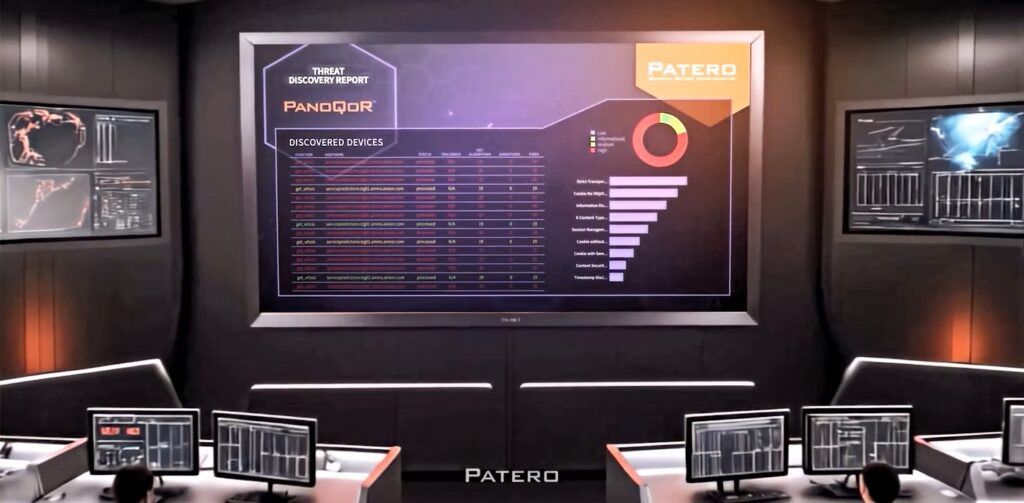
- PanoQoR provides automated cryptographic inventory, quantum-risk scoring, and compliance reporting designed to help agencies counter “harvest-now, decrypt-later” threats and prepare for systematic moves to post-quantum cryptography.
PRESS RELEASE — Carahsoft Technology Corp., the Trusted Government IT Solutions Provider®, and Patero Inc., a pioneer in cryptographic inventory and post-quantum encryption, today announced a partnership to distribute Patero’s cryptography discovery, inventory, quantum risk assessment, and compliance reporting solution, PanoQoR™, to the Public Sector. Under the agreement, Carahsoft will serve as Patero’s Master Government Aggregator®, making the company’s quantum computing solutions available to the Public Sector through Carahsoft’s reseller partners and NASA Solutions for Enterprise-Wide Procurement (SEWP) V, Information Technology Enterprise Solutions – Software 2 (ITES-SW2), National Association of State Procurement Officials (NASPO) ValuePoint and OMNIA Partners contracts.
“The shift to post-quantum cryptography is not theoretical, it’s operational,” said Peter Bentley, Chief Operating Officer at Patero. “Agencies must know what encryption they have today before they can protect what matters tomorrow. Carahsoft’s unmatched Public Sector network makes them the ideal partner to scale this capability in the U.S. and Canada.”
Sufficiently powerful quantum computers could crack the asymmetric encryption currently used by Governments and civilian organizations worldwide. In May 2022, the White House issued National Security Memorandum 10 to address the risk posed by quantum computing to encrypted data and information systems. Subsequently, OMB issued Memorandum M-23-02, which requires agencies to submit an annual prioritized inventory of information systems and assets that contain cryptographic systems vulnerable to quantum attacks.

Carahsoft’s Quantum Solutions Team now distributes Patero’s PanoQoR cryptography inventory solution to help meet this mandatory inventory requirement for its Federal, defense, and critical infrastructure customer base. Establishing a cryptography inventory, quantum risk assessment, and compliance reporting solution not only meets Federal and civilian regulatory requirements but also represents the first step toward migrating from legacy encryption methods to post-quantum cryptography (PQC) for protecting sensitive data and systems.
Urgency and Alignment With Government Timelines
- U.S. agencies must submit PQC transition plans under OMB M-23-02 and complete high-priority migrations by 2030, per NSA’s CNSA 2.0 guidance.
- Canadian departments must submit initial PQC migration plans by April 2026, complete critical transitions by 2031 and achieve full PQC compliance by 2035.
- Both administrations have warned that “harvest-now, decrypt-later” campaigns are actively capturing sensitive data encrypted with classical algorithms, creating an invisible breach window that can only be closed through quantum-resistant encryption.
Patero and Carahsoft will provide agencies with the capabilities of
- Cryptographic Discovery & Inventory: Customers can identify all instances of classical encryption across IT, OT and cloud ecosystems.
- Quantum Risk Scoring & Prioritization: Public Sector organizations may assess exposure to “harvest-now, decrypt-later” risks and regulatory deadlines.
- Compliance Reporting & Continuous Monitoring: Agencies are enabled to produce auditable evidence of progress toward CNSA 2.0 and ITSM.40.001 milestones.
“Quantum computing will redefine cybersecurity,” said Troy Meraw, Quantum Solutions Program Manager at Carahsoft. “By bringing Patero’s cryptographic inventory and PQC remediation tools to our Government and enterprise customers, Carahsoft and our reseller partners are enabling security leaders to take proactive steps now to meet mandates.”
Image credit: Patero

Keep track of everything going on in the Quantum Technology Market. In one place.
Topics

Greg Bock
Greg Bock is an award-winning investigative journalist with more than 25
years of experience in print, digital, and broadcast news. His reporting
has spanned crime, politics, business and technology, earning multiple
Keystone Awards and a Pennsylvania Association of Broadcasters honors. Through the Associated Press and Nexstar Media Group, his coverage has reached audiences across the United States.

Stay Ahead of Quantum
Get the latest research, company news, and market intelligence every week.
MENTIONED IN THE ARTICLE

Carahsoft
Carahsoft is a trusted government IT solutions provider, combining technological expertise with a thorough understanding of the government procurement process to help public sector organizations select and implement the best solution at the best possible value. As a top-ranked GSA Schedule Contract holder, Carahsoft is the largest government partner, serving as the master government aggregator for many of its best-of-breed vendors and driving value for an extensive ecosystem of IT manufacturers, resellers, system integrators, and consulting partners. Their dedicated solutions teams support proactive sales, marketing, and delivery of strategic solutions to help improve the efficiency and productivity of government IT.
→

NASA
The National Aeronautics and Space Administration (NASA) is the U.S. government agency driving pioneering research and technological development in both atmospheric flight (aeronautics) and space exploration (astronautics). NASA acts as a research organization, utilizing advanced wind tunnels, supercomputing, and flight test laboratories to advance aircraft aerodynamics, propulsion, and materials, while simultaneously involved in the design, construction, and operation of launch vehicles and spacecraft for deep space exploration. Through its aeronautics research directorate, the agency works to improve the safety, efficiency, and environmental impact of aviation, whereas its space programs focus on developing cutting-edge flight systems, robotic explorers, and human transportation capabilities.
→