DOE Partners with Fermilab and Qblox to Scale U.S. Quantum Control Technology



Insider Brief
- The DOE, Fermilab, and Qblox have partnered to manufacture and distribute the Quantum Instrumentation Control Kit (QICK) in the U.S., advancing domestic quantum capabilities and workforce development.
- QICK, an open-source platform developed by Fermilab, synchronizes quantum processors and sensors, serving as a critical control and readout tool for quantum computing, sensing, and networking.
- Qblox will manage U.S.-based manufacturing, distribution, and supply chain operations, creating a scalable public-private model for domestic quantum technology commercialization.
The U.S. Department of Energy’s Office of Technology Commercialization has announced a new partnership between Fermi National Accelerator Laboratory (Fermilab) and Qblox to manufacture and distribute the Quantum Instrumentation Control Kit (QICK) domestically. The collaboration aims to accelerate U.S. capabilities in quantum computing, sensing, and networking, while supporting workforce development in high-tech quantum infrastructure.
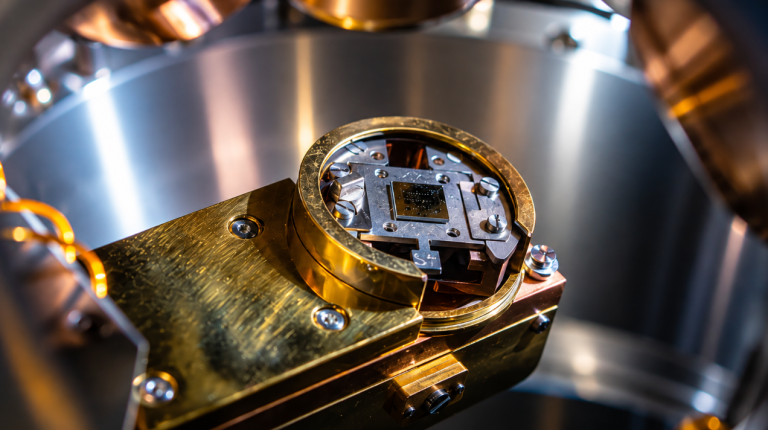
Originally developed by Fermilab, QICK is an open-source platform designed to manage quantum readouts and controls, synchronizing quantum processors and sensors — making it a foundational tool for the quantum ecosystem.
Under the agreement, Qblox, a specialist in control and readout electronics bridging quantum and classical systems, will oversee U.S.-based manufacturing, distribution, and supply chain operations for QICK.

“This partnership demonstrates how DOE’s National Laboratories and private industry can accelerate quantum commercialization while strengthening U.S. manufacturing and workforce capabilities.”
— said DOE Under Secretary for Science Dr. Darío Gil.
“Qblox is proud to facilitate this Made-in-the-USA platform to strengthen America’s quantum infrastructure, cultivate a highly skilled talent pool, and cement the nation’s position as a global leader in quantum technology.”
— said Qblox Founder & CEO, Niels Bultink.
The initiative is currently under a Letter of Intent, with plans to formalize under a Cooperative Research and Development Agreement (CRADA) and full licensing in the coming weeks, creating a scalable model for public-private quantum collaboration.
Read the full announcement here.

Keep track of everything going on in the Quantum Technology Market. In one place.
Topics

Mohib Ur Rehman
Covering quantum and emerging technologies, Mohib explores the intersection of technology, security, and society. His work also frequently examines surveillance infrastructure and the institutions shaping the digital world. In addition to his work at The Quantum Insider, he co-runs SK NEXUS, an independent technology publication that helps readers understand the technologies shaping their lives.

Stay Ahead of Quantum
Get the latest research, company news, and market intelligence every week.
MENTIONED IN THE ARTICLE

U.S. Department of Energy (DOE)
The mission of the Department of Energy is to ensure America's security and prosperity by addressing its energy, environmental, and nuclear challenges through transformative science and technology solutions. In September, 2022, Research supported by ASCR demonstrated that classical machine learning algorithms can accurately predict ground state properties and classify quantum phases of matter using data generated from quantum experiments. In November, 2022, Research supported by Q-NEXT revealed that the performance of a sensor network is constrained by the intrinsic noise associated with the quantum states used in the network. In March, 2023, Research funded by DOE SC NP achieved the first experimental observation of entanglement between dissimilar particles, specifically positive and negative pions. In August, 2023, Research funded by DOE SC BER demonstrated strong preservation of entanglement in a two-photon absorption process involving organic molecules, offering a new approach for developing quantum light-based spectroscopy and microscopy.
→

Qblox
Qblox specializes in advancing quantum technology through scalable control electronics crucial for quantum computing. They are known for their modular quantum control stacks, which enable efficient qubit control and readout for diverse applications. The company is based in the Netherlands and is a spin-off of QuTech.
→