IBM Commits $150 Billion to Boost U.S. Tech Leadership, Includes $30 Billion to Back Quantum, Mainframe Manufacturing


Insider Brief
- IBM announced a $150 billion investment plan over five years to strengthen U.S. innovation and technology leadership, including more than $30 billion for research and development.
- The company will continue manufacturing mainframes in Poughkeepsie, New York, and expand its American-based quantum computing operations.
- IBM described quantum computing as a major platform shift poised to boost U.S. competitiveness, create jobs, and enhance national security.
That’s Billion, with a “B”.
IBM said it plans to invest $150 billion in the United States over the next five years, a move the company framed as both an economic catalyst and a strategy to strengthen its leadership in computing technologies, including quantum computing.
In a company statement, the company said the investment includes more than $30 billion earmarked specifically for research and development, with a focus on advancing American manufacturing of mainframe and quantum computers.

“Technology doesn’t just build the future — it defines it,” said Arvind Krishna, IBM chairman, president and chief executive officer, in the statement. “We have been focused on American jobs and manufacturing since our founding 114 years ago, and with this investment and manufacturing commitment we are ensuring that IBM remains the epicenter of the world’s most advanced computing and AI capabilities.”
The announcement spotlights IBM’s ongoing role as one of the nation’s largest technology employers and a company with a longstanding record of contributions to critical infrastructure projects. IBM’s systems have historically supported programs ranging from the U.S. social security system to NASA’s Apollo Program, and continue to support businesses across multiple industries, according to the statement.
Centered Operations Poughkeepsie
IBM’s investment plans center around its operations in Poughkeepsie, New York, where the company manufactures its flagship mainframe computers. These systems, IBM reports, form the backbone of global financial transactions, with more than 70% of the world’s transaction value running through IBM mainframes produced in the United States.
The company also plans to deepen its commitment to quantum computing.
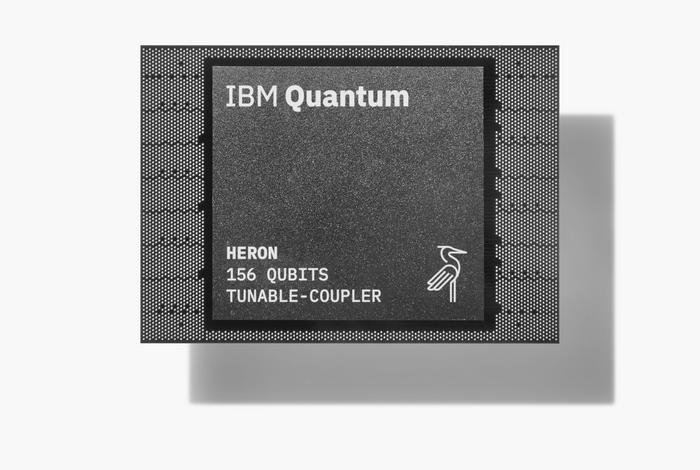
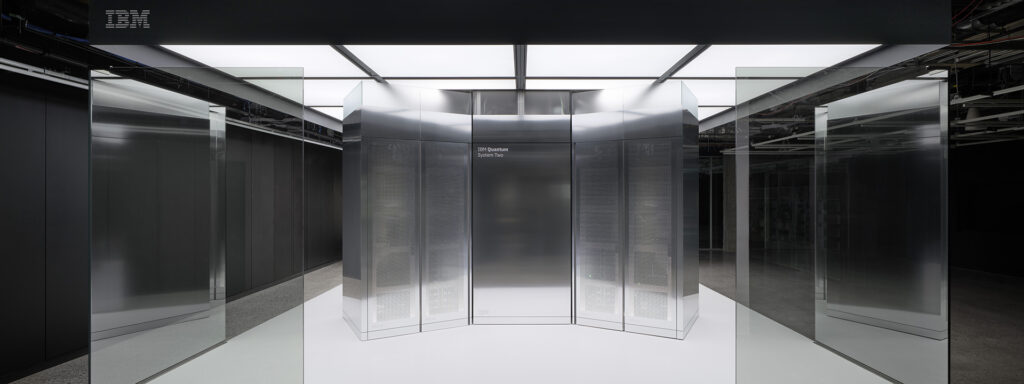
IBM writes that it the world’s largest fleet of quantum systems and will continue designing, building and assembling quantum computers in America. IBM described quantum computing as a transformational technology shift capable of solving problems beyond the reach of classical computers. These capabilities, the company said, are expected to drive advances in fields from scientific discovery to national security, while also enhancing American industrial competitiveness.
IBM’s Quantum Network gives companies and institutions access to IBM’s quantum systems to provide the next generation of quantum solutions.
“Enabling these solutions will not only help us better understand the fundamentals of how the world works but are projected to transform American competitiveness, jobs, and national security,” the IBM team writes. “IBM’s Quantum Network provides access to IBM’s quantum systems for nearly 300 Fortune 500 companies, academic institutions, national laboratories and startups and is accessed by over 600,000 active users. currently counts nearly 300 Fortune 500 companies, academic institutions, national laboratories, and startups among its members.”
Long-Term Commitment
The company framed the $150 billion commitment as a signal of its long-term confidence in American innovation and economic growth. By investing heavily in advanced manufacturing, research, and new technology platforms,
IBM added it aims to foster new opportunities across industries while reinforcing the country’s leadership in global technology markets.

Keep track of everything going on in the Quantum Technology Market. In one place.
Topics

Matt Swayne
With a several-decades long background in journalism and communications, Matt Swayne has worked as a science communicator for an R1 university for more than 12 years, specializing in translating high tech and deep tech for the general audience. He has served as a writer, editor and analyst at The Quantum Insider since its inception. In addition to his service as a science communicator, Matt also develops courses to improve the media and communications skills of scientists and has taught courses.
[email protected]

Stay Ahead of Quantum
Get the latest research, company news, and market intelligence every week.
MENTIONED IN THE ARTICLE

IBM
IBM is an iconic technology pioneer founded in 1911 as the Computing-Tabulating-Recording Company and officially renamed International Business Machines Corporation in 1924. Beyond foundational computing, IBM possesses a deep legacy in aerospace and defense from building the guidance computers and Instrument Unit for NASA's historic Apollo missions to partnering with Airbus on CIMON, the first AI assistant on the ISS.
→

NASA
The National Aeronautics and Space Administration (NASA) is the U.S. government agency driving pioneering research and technological development in both atmospheric flight (aeronautics) and space exploration (astronautics). NASA acts as a research organization, utilizing advanced wind tunnels, supercomputing, and flight test laboratories to advance aircraft aerodynamics, propulsion, and materials, while simultaneously involved in the design, construction, and operation of launch vehicles and spacecraft for deep space exploration. Through its aeronautics research directorate, the agency works to improve the safety, efficiency, and environmental impact of aviation, whereas its space programs focus on developing cutting-edge flight systems, robotic explorers, and human transportation capabilities.
→