3 Research Universities to Collaborate With Industry, Government to Develop Quantum Technologies


Insider Brief:
- With a grant from the National Science Foundation, researchers from Indiana University, Purdue University and the University of Notre Dame will develop industry- and government-relevant quantum technologies as part of the Center for Quantum Technologies.
- Given the wide applicability of quantum technologies, the new Center for Quantum Technologies will team with member organizations from a variety of industries, including computing, defence, chemical, pharmaceutical, manufacturing and materials.
- Committed industry and government partners include Accenture, the Air Force Research Laboratory, BASF, Cummins, D-Wave, Eli Lilly, Entanglement Inc., General Atomics, Hewlett Packard Enterprise, IBM Quantum, Intel, Northrup Grumman, NSWC Crane, Quantum Computing Inc., Qrypt, and Skywater Technology.
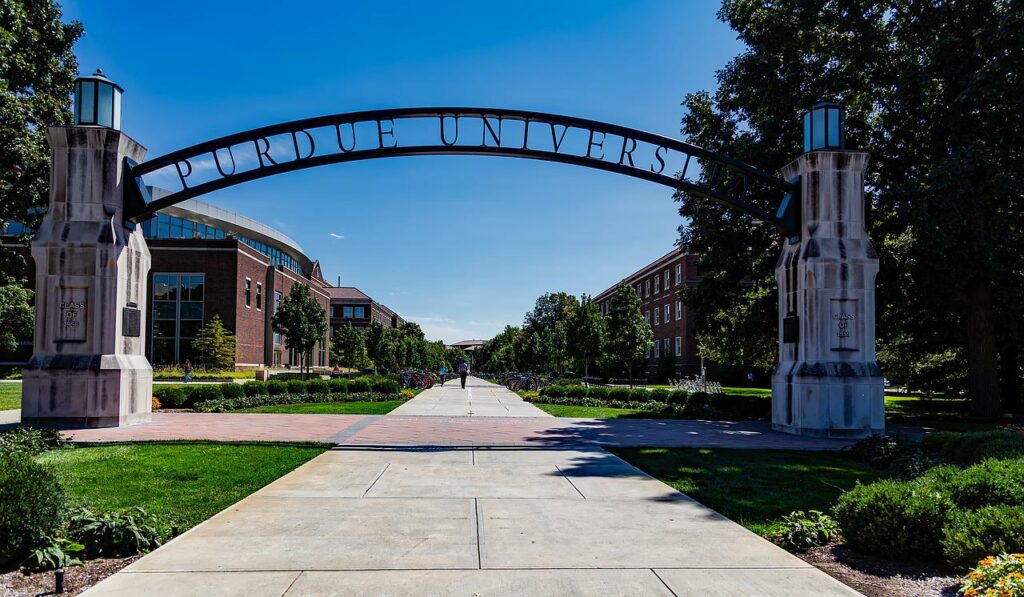
UNIVERSITY NEWS — BLOOMINGTON, Ind./Aug. 29, 2022 — Quantum science and engineering can save energy, speed up computation, enhance national security and defense, and innovate health care. With a grant from the National Science Foundation, researchers from Indiana University (both Bloomington and IUPUI campuses), Purdue University and the University of Notre Dame will develop industry- and government-relevant quantum technologies as part of the Center for Quantum Technologies. Purdue will serve as the lead site.
“The Center for Quantum Technologies is based on the collaboration between world experts whose collective mission is to deliver frontier research addressing the quantum technological challenges facing industry and government agencies,” said Gerardo Ortiz, Indiana University site director, scientific director of the IU Quantum Science and Engineering Center and professor of physics. “It represents a unique opportunity for the state of Indiana to become a national and international leader in technologies that can shape our future.”
“This newly formed center is unique in many aspects,” said Ricardo Decca, professor and chair of the Department of Physics at IUPUI. “It brings together experts in many scientific disciplines — computer science, physics, chemistry, materials science — from three universities and four campuses and companies developing the next generation of quantum-based information and sensing systems. The future seems very bright.”

Given the wide applicability of quantum technologies, the new Center for Quantum Technologies will team with member organizations from a variety of industries, including computing, defense, chemical, pharmaceutical, manufacturing and materials. The center’s researchers will develop foundational knowledge into industry-friendly quantum devices, systems and algorithms with enhanced functionality and performance.

“Over the coming decades, quantum science will revolutionize technologies ranging from the design of drugs, materials and energy harvesting systems, to computing, data security, and supply chain logistics,” IU Vice President for Research Fred Cate said. “Through the CQT, Indiana will be at the forefront of transferring new quantum algorithms and technologies to industry. We are also looking forward to educating the quantum workforce for the future through the corporate partnerships that are integral to the funding model of the CQT.”
Committed industry and government partners include Accenture, the Air Force Research Laboratory, BASF, Cummins, D-Wave, Eli Lilly, Entanglement Inc., General Atomics, Hewlett Packard Enterprise, IBM Quantum, Intel, Northrup Grumman, NSWC Crane, Quantum Computing Inc., Qrypt and Skywater Technology.
Additionally, the Center for Quantum Technologies will train future quantum scientists and engineers to fill the need for a robust quantum workforce. Students engaged with the center will take on many of the responsibilities of principal investigators, including drafting proposals, presenting research updates to members, and planning meetings and workshops.
The center is funded for an initial five years through the NSF’s Industry-University Cooperative Research Centers program, which generates breakthrough research by enabling close and sustained engagement between industry innovators, world-class academic teams and government agencies. The IUCRC program is unique in that members fund and guide the direction of research through active involvement and mentoring.
Other academic collaborators include Sabre Kais, center director and distinguished professor of chemical physics at Purdue; Peter Kogge, the University of Notre Dame site director and the Ted H. McCourtney Professor of Computer Science and Engineering; and David Stewart, Center for Quantum Technologies industry liaison officer and managing director of the Purdue Quantum Science and Engineering Institute.
SOURCE: Indiana University
If you found this article to be informative, you can explore more current quantum news here, exclusives, interviews, and podcasts.

Keep track of everything going on in the Quantum Technology Market. In one place.
Topics

James Dargan
James Dargan is a writer and researcher at The Quantum Insider. His focus is on the QC startup ecosystem and he writes articles on the space that have a tone accessible to the average reader.

Stay Ahead of Quantum
Get the latest research, company news, and market intelligence every week.
MENTIONED IN THE ARTICLE

Purdue University
Purdue University, located in West Lafayette, Indiana, is a public research institution and serves as the main campus of the Purdue University system. Its establishment in 1869 was made possible by the contribution of land and funds from John Purdue, a local businessman in Lafayette. He aimed to establish a college focused on science, technology, and agriculture.
→

Air Force Research Laboratory Quantum Group
The Air Force Research Laboratory is partnering with industry, academia, and the Department of Defense to apply quantum information science to Air Force concerns. AFRL has formally joined the IBM Q Network, the first ever partnership of its kind in the Department of Defense. This alliance will provide AFRL and its collaborators with access to commercial quantum systems to explore practical applications relevant to the Air Force. Early applications include optimization problems, speed-up of machine learning algorithms and quantum chemistry simulation. The Extreme Computing facility by the Air Force Research Laboratory (AFRL), is now open in New York. It is involved in quantum computing research, ranging from development, integration and deployment of advanced computing technologies for the Department of the Air Force. The AFRL Information Directorate received funding for five major projects. They include: 1. $10 million for Distributed Quantum Networking Testbed and Quantum Cloud Computing Environment, 2. $4 million for Photonic Quantum Computing, which will develop a next-generation ion trap computer. 3. $10 million for Enhancements and Operational Readiness improvements for Trusted DoD/Federal Unmanned Aircraft Systems. This system will manage UAS traffic to support the emerging Federal Aviation Administration/National Aeronautics and Space Administration Advanced Air Mobility vision and provide a real-time interface to Air Traffic Control. 4. $10 million for a Joint All-Domain Command and Control testbed which creates an operational-like environment that allows the warfighter to test cutting-edge technology and tools and provide feedback for researchers. 5. $10 million for a Multi-Domain Radio Frequency Spectrum Test environment. Total government funding involved in the AFRL currently amounts to ~$44 million USD.
→

D-Wave Quantum
D-Wave Quantum is a pioneering dual-platform quantum computing company that partners with aerospace organizations to solve complex logistical, defense, and satellite challenges. Founded in 1999, the company’s quantum annealing technology is utilized by industry leaders like Lockheed Martin to optimize aircraft networks, improve manufacturing efficiencies, and support critical national security initiatives.
→

Hewlett Packard Enterprise
HPE is a global edge-to-cloud company. They connect, protect, analyze and act on various data and applications, from edge to cloud, and turn insights into outcomes.
→
IBM
IBM is an iconic technology pioneer founded in 1911 as the Computing-Tabulating-Recording Company and officially renamed International Business Machines Corporation in 1924. Beyond foundational computing, IBM possesses a deep legacy in aerospace and defense from building the guidance computers and Instrument Unit for NASA's historic Apollo missions to partnering with Airbus on CIMON, the first AI assistant on the ISS.
→

Intel
Intel's mission is to drive the future of technology to contribute to a better world. By advancing in areas such as AI, analytics, and cloud-to-edge technology, Intel is central to many innovations.
→