ColdQuanta Acquires Super.tech and Announces the Commercial Availability of Hilbert, the World’s First Cold Atom Quantum Computer



Combination of ColdQuanta Hardware and Super.tech Software to Maximize Value of Quantum Computing Investments
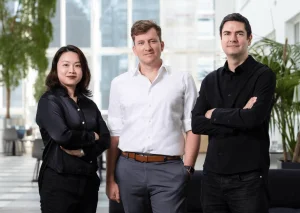
BOULDER, CO, and CHICAGO, IL, May 9, 2022 — ColdQuanta, the global quantum ecosystem leader, today announced its acquisition of Chicago-based Super.tech, a world leader in quantum software application and platform development, and the beta launch of Hilbert, the world’s first gate-based cold atom quantum computer. Super.tech’s full team of quantum information scientists and software developers, including CEO Pranav Gokhale and Chief Scientist Fred Chong, will join ColdQuanta and lead the company’s new Chicago office. The acquisition of Super.tech transforms ColdQuanta into a multi-platform, quantum hardware and software company.
“The quantum industry is experiencing tremendous growth as hardware and software solutions begin to take root in the real world,” said ColdQuanta CEO Scott Faris. “Since its launch, Super.tech has been recognized as an innovator in quantum software and benchmarking. The combination of Super.tech’s software applications and algorithms and ColdQuanta’s ground-breaking quantum computer, Hilbert, will enable customers to accelerate time to value.”
Introducing Hilbert, The World’s First Cold Atom Quantum Computer

ColdQuanta’s Hilbert is the world’s first commercial cold atom quantum computer. It supports the Qiskit API and will initially be available in beta to customers through ColdQuanta’s comprehensive multi-tenant cloud platform. Integration with public cloud services will be introduced later this year.
“The commercial release of Hilbert marks an important and exciting milestone for ColdQuanta and for the cold atom quantum computing modality,” said Paul Lipman, President of Quantum Information Platforms at ColdQuanta. “Building on our recent world first in executing algorithms on a cold atom quantum computer, Hilbert demonstrates the power and scalability of atomic qubits and their promise to transform the quantum computing landscape.”
Super.tech – The Software Stack for Quantum Computing
Super.tech brings deep software expertise to ColdQuanta, providing customers with a broad set of applications and algorithmic capabilities. Super.tech will significantly enhance the capabilities of Hilbert by improving circuit performance via pulse-level optimization, optimized transpilation, and error mitigation techniques. The ability to deeply optimize the physics of quantum computers can greatly increase their efficiency and shave years off the timeline for addressing practical applications.
Super.tech has been awarded millions of dollars in federal research funding since launching in 2020. Major organizations including Fortune 500 companies and national research laboratories currently rely on Super.tech’s software as part of their strategic quantum initiatives.
Super.tech’s optimized software stack includes:
- SuperstaQ: The company’s flagship write-once, run anywhere software enables customers to write quantum programs in any source language, which can be optimized and executed on any quantum computer and native gate set.
- SupermarQ: Super.tech’s open source benchmark software is the industry’s most comprehensive quantum computing benchmarking platform, based on real-world use cases and applications.
- Applications: Super.tech develops quantum algorithms to address a range of critical use-cases across multiple industries.
“ColdQuanta has made a tremendous investment across the most important components of the quantum ecosystem including computing, emulation, sensors, communication and clocks,” said Super.tech Co-Founder and CEO Pranav Gokhale. “All of these areas require quantum information science and software to realize their full potential. As part of ColdQuanta, we have the opportunity to play a pivotal role in building a quantum company that will define the future of the industry.”
“With this acquisition, ColdQuanta is establishing an office in Chicago which will allow the company to tap into the tremendous talent and innovation from the University of Chicago, the Chicago Quantum Exchange and the city’s startup ecosystem,” said Fred Chong, Super.tech Chief Scientist and renowned Professor of Computer Science at the University of Chicago. “Together, we will create an unstoppable force in quantum by enabling customers to maximize the performance and value of their quantum computing investments.”
About Super.tech
Super.tech is a Chicago-based quantum software company. Super.tech’s software makes quantum computing solutions accessible without the need for quantum expertise, accelerating the commercial adoption of this burgeoning technology. The company was spun out of pioneering quantum computing research from EPiQC, an NSF Expedition in Computing at the University of Chicago. Super.tech is embedded in Argonne National Laboratory‘s Chain Reaction Innovations program and is also incubated by Duality, the first accelerator dedicated exclusively to supporting quantum startups, operated by the Chicago Quantum Exchange and UChicago’s Polsky Center.
About ColdQuanta
ColdQuanta is a global quantum technology company solving the world’s most challenging problems. The company harnesses quantum mechanics to build and integrate quantum computers, sensors, and networks. From fundamental physics to leading edge commercial products, ColdQuanta enables “quantum everywhere” through our ecosystem of devices and platforms. Founded in 2007, ColdQuanta grew from decades of research in atomic physics and work at JILA, with intellectual property licensed through the University of Colorado and University of Wisconsin. ColdQuanta’s scalable and versatile cold atom technology is used by world-class organizations around the globe and deployed by NASA on the International Space Station. ColdQuanta is based in Boulder, CO, with offices in Chicago, IL; Madison, WI; and Oxford, UK. Find out how ColdQuanta is building the future at www.coldquanta.com.
Solomon Partners acted as financial advisor to ColdQuanta.
Contact:
FINN Partners for ColdQuanta
For more market insights, check out our latest quantum computing news here.

Keep track of everything going on in the Quantum Technology Market. In one place.
Topics

Resonance
The Quantum Insider is the leading online resource dedicated exclusively to Quantum Computing. You can contact us at [email protected].

Stay Ahead of Quantum
Get the latest research, company news, and market intelligence every week.
MENTIONED IN THE ARTICLE

University of Chicago
The University of Chicago, located in Chicago, Illinois, USA, is a private research university with its primary campus situated in the Hyde Park neighborhood of Chicago.
→

Argonne National Laboratory
Argonne National Laboratory, one of the U.S. Department of Energy's national laboratories for science and engineering research, employs 3,400 employees, including 1,400 scientists and engineers, three-quarters of whom hold doctoral degrees. Argonne's annual operating budget of around $1 billion supports upwards of 200 research projects. Since 1990, Argonne has worked with more than 600 companies and numerous federal agencies and other organizations. The Lab has successfully launched its own Quantum Foundry to accelerate quantum information research.
→

University of Colorado
The University of Colorado Boulder, situated in Boulder, Colorado, USA, is a public research university that was established in 1876, preceding Colorado's statehood by five months. It serves as the flagship institution of the University of Colorado system and holds membership in the Association of American Universities. CU Boulder is recognized as a Doctoral University with very high research activity, as classified by the R1 category.
→
NASA
The National Aeronautics and Space Administration (NASA) is the U.S. government agency driving pioneering research and technological development in both atmospheric flight (aeronautics) and space exploration (astronautics). NASA acts as a research organization, utilizing advanced wind tunnels, supercomputing, and flight test laboratories to advance aircraft aerodynamics, propulsion, and materials, while simultaneously involved in the design, construction, and operation of launch vehicles and spacecraft for deep space exploration. Through its aeronautics research directorate, the agency works to improve the safety, efficiency, and environmental impact of aviation, whereas its space programs focus on developing cutting-edge flight systems, robotic explorers, and human transportation capabilities.
→