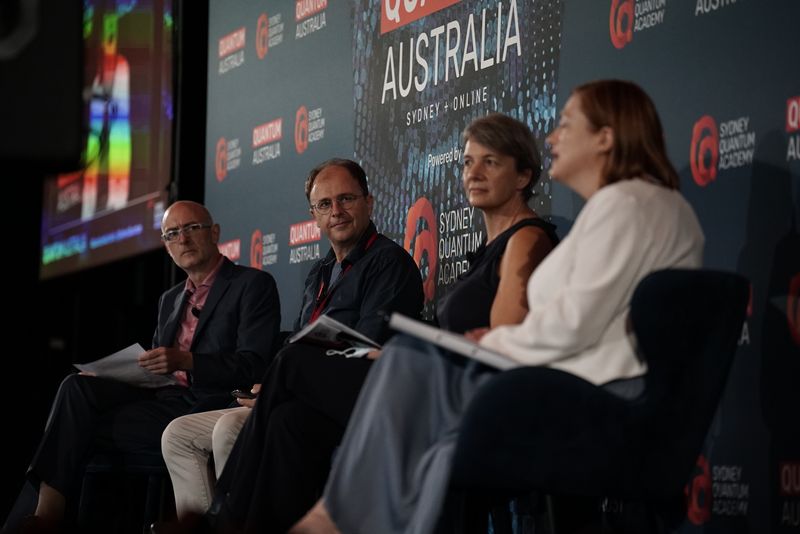


2022 has started as a big year for Australia, as it has been hosting the Quantum Australia conference in Sydney. Researchers and industry leaders from all over the world have come to speak on the advances and importance of quantum technology The list of names includes representatives from IBM Quantum, Microsoft Quantum, Xanadu, Google Quantum AI, and many key individuals within the research community. According to the CEO of the Sydney Quantum Academy, Pete Turner: “We have close to 800 registered for the three-day event, with a mix of students, academics and higher education professionals, Australian and state government representatives, quantum industry suppliers, investors and VCs, big tech and startups.” The varied backgrounds of attendees allowed for a wider range of perspectives on the current state of quantum technology.
The Quantum Australia conference has been years in the making. “Australia has played host to a number of quantum academic or research conferences in the past, and has a long history of quantum research success,” explained Turner. “However, with growing interest in the field, increased activity within the commercial and government sectors, and a burgeoning startup scene, the time felt right for a more industry-focused event.” Because this conference hosts the best and brightest of Australia’s, and the world’s, quantum experts, participants are sure to find the event engaging and informative. “The event has something from everyone,” he added, “a careers fair connecting employees with emerging talent, poster sessions, technical panels, and investor and industry-focused panels exploring the opportunities and challenges in developing the quantum economy.”
Like many other quantum conferences, Quantum Australia is hoping to spark multi-disciplinary collaborations and partnerships throughout the global quantum community. “We want to bring the key parties together,” said Turner, “leading researchers, investors, government decision-makers, and quantum industry players to share ideas, developments, and discuss potential applications. Our academic community, government, and industry need to collaborate on potential use cases across all industry sectors where quantum technology could deliver significant advantages. This conference was designed to accelerate this vital interaction. It also gives us an opportunity to showcase to the world the innovative collaborations and research taking place here in Sydney and Australia.” As quantum technology is an interdisciplinary industry, global collaboration is not only welcome but necessary for this technology to advance.
Turner, for his part, has a long history in quantum research and is excited to see the results of this conference. “I’m a quantum information theorist who has collaborations in Australia going back 20 years. Previously, I led the Quantum Engineering Centre for Doctoral Training at the University of Bristol, providing students with extra skills that open up opportunities beyond the traditional academic career. This is important to me that aligns exactly with the goals of the Sydney Quantum Academy (SQA). The SQA’s programs support the development of the next generation of quantum leaders, scientists, entrepreneurs, engineers, programmers, and researchers.”

Turner also believes that the Quantum Australia conference will have large ramifications for the country as a whole. “Australia is hoping to build on its world-renowned reputation for quantum research to establish a thriving and diverse global hub of quantum innovation. A national quantum strategy is under development, being led by Australia’s Chief Scientist and Quantum Australia keynote speaker Dr. Cathy Foley. It includes the development of a national commercialization hub with strategic international partnerships to develop quantum technologies, playing a vital role.”
Due to the overwhelming success of this conference, it will be no surprise to see more of these conferences pop up around the country. Australia is working hard to join the global quantum community, and clearly, the global quantum community is more than happy to welcome them in.
To learn more about the conference, as well as the Sydney Quantum Academy, click the link here.
If you found this article to be informative, you can explore more current quantum news here, exclusives, interviews, and podcasts.