IonQ, a quantum computing leader, announced the opening of its new Quantum Data Center and said two new hires will fill key positions, according to company news releases.
IonQ CEO & President Peter Chapman announced that Dave Bacon has joined IonQ as the Vice President of Software, coming to IonQ from Google’s quantum engineering team. Denise Ruffner, former Chief Business Officer of Cambridge Quantum Computing, has joined IonQ as the Vice President of Business Development.
“We are beyond thrilled to have Dave and Denise on board,” said Chapman. “Both are undeniable leaders in the quantum computing industry and will bring invaluable experience to the IonQ team as we continue to grow. Our mission is to attract the best talent in the world to help us build and scale, and having Dave and Denise join us from two of the industry’s biggest players further affirms that IonQ is the true leader in quantum.”
New Space

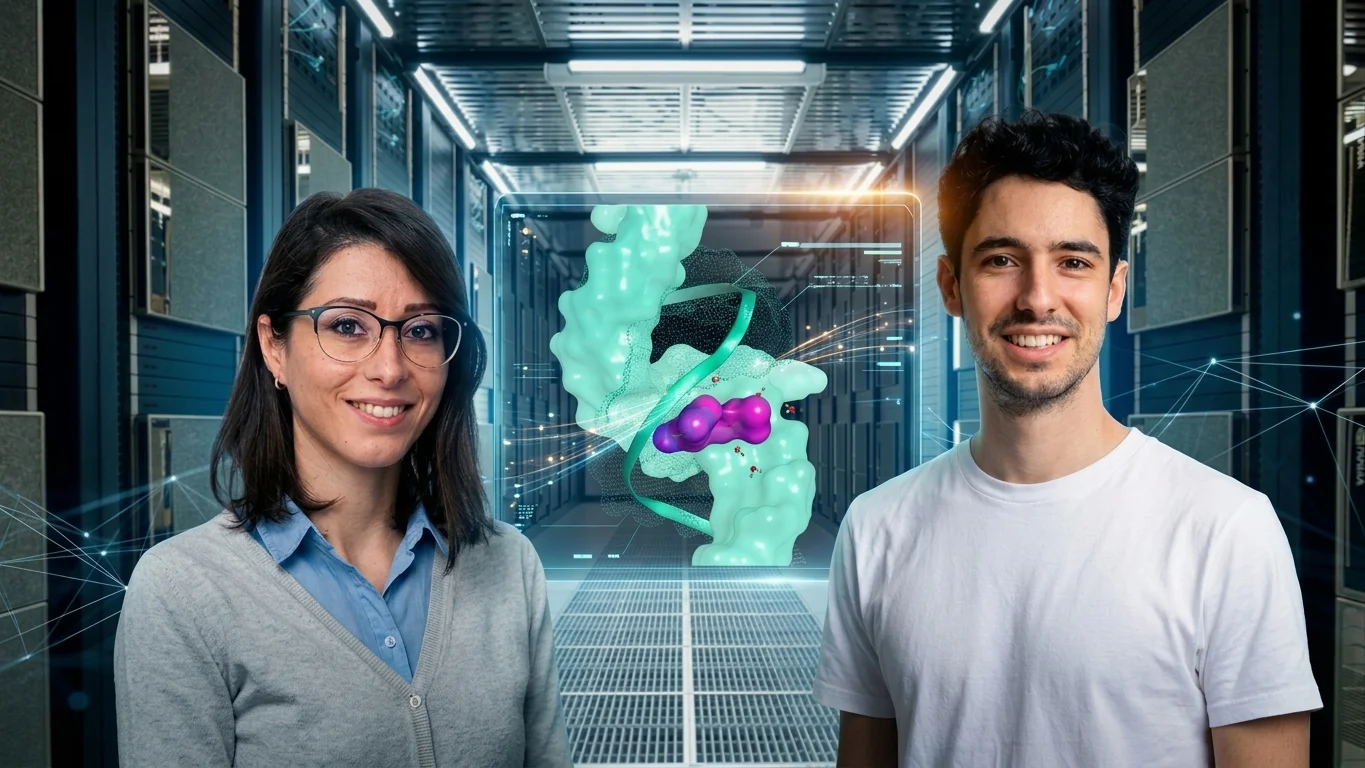
In addition to IonQ’s current space, the company added 23,000 square foot Quantum Data Center, strategically located in Maryland’s Discovery District, which will house IonQ’s existing state of the art quantum computers. This will significantly expedite the development of future, more powerful quantum computers for commercial use, according to the company.
This new space marks IonQ’s first major expansion and will feature increased reliability via both onsite generators and battery backups, backup quantum computers, and state of the art security. It will also feature redundant point of presence (PoP) connections to the Internet2 backbone, the nation’s coast-to-coast research network that provides secure research environments for universities.
The new Quantum Data Center can accommodate 10 quantum computers, with space for more as IonQ’s systems simultaneously scale down in size and scale up in number of qubits with each new generation. Currently, IonQ is working on three new generations of quantum computers in parallel, with each expected to be exponentially more powerful than the last.
“Our Quantum Data Center solidifies IonQ’s position in leading the race to build quantum computers able to tackle problems not yet solvable,” said Mahsa Dornajafi, vice president of finance and operations at IonQ. “This dedicated space will empower our employees and researchers with the best equipment and resources needed to continue advancing the field of quantum computing.”

In addition to the Quantum Data Center, the new space also features 10 conference rooms, Class A office space and two clean rooms for scientific research to enable increased productivity. The combined space can support up to 175 employees, and IonQ has already hired 25 new employees since a recent funding raise and expects to continue aggressively recruiting talent in the years to come.
To remain cognizant of the health implications of working in a high-density workspace, IonQ’s Quantum Data Center provides ample space to maintain social distancing and future-proof the workspace.
The Quantum Data Center was made possible in part by a $5.5 million investment from the University of Maryland to quicken advancements in research, innovation, and learning, creating economic and social benefits for Maryland and beyond.
“Quantum computing technology will mature in this important new facility, and we are proud to partner with IonQ on it,” said University of Maryland President Darryll J. Pines. “The new data center—with all its capabilities—will enhance our standing as a major international center for the development of quantum science and computing.”
IonQ will move into the new space this month. Last month IonQ announced the world’s most powerful quantum computer, unveiling a next generation quantum computing system featuring 32 perfect atomic qubits with low gate errors and an expected quantum volume greater than 4,000,000.
This follows recent new funding from Lockheed Martin, Robert Bosch Venture Capital GmbH (RBVC) and Cambium VC, as well as the addition of four prominent new advisors to IonQ’s board, including Umesh Vazirani, Roger A. Strauch Professor of Electrical Engineering and Computer Sciences and the co-director of the Berkeley Quantum Computation Center (BQIC), David Wineland, Nobel Laureate and Philip H. Knight Distinguished Research Chair, University of Oregon, Department of Physics, Margaret (Peg) Williams, former Senior Vice President of Research and Development, Cray Inc., and Kenneth Brown, Associate Professor at Duke University, Department of Electrical and Computer Engineering.
If you found this article to be informative, you can explore more current quantum news here, exclusives, interviews, and podcasts.