Rigetti Computing Wins $8.6 million DARPA Grant to Demonstrate Practical Quantum Computing
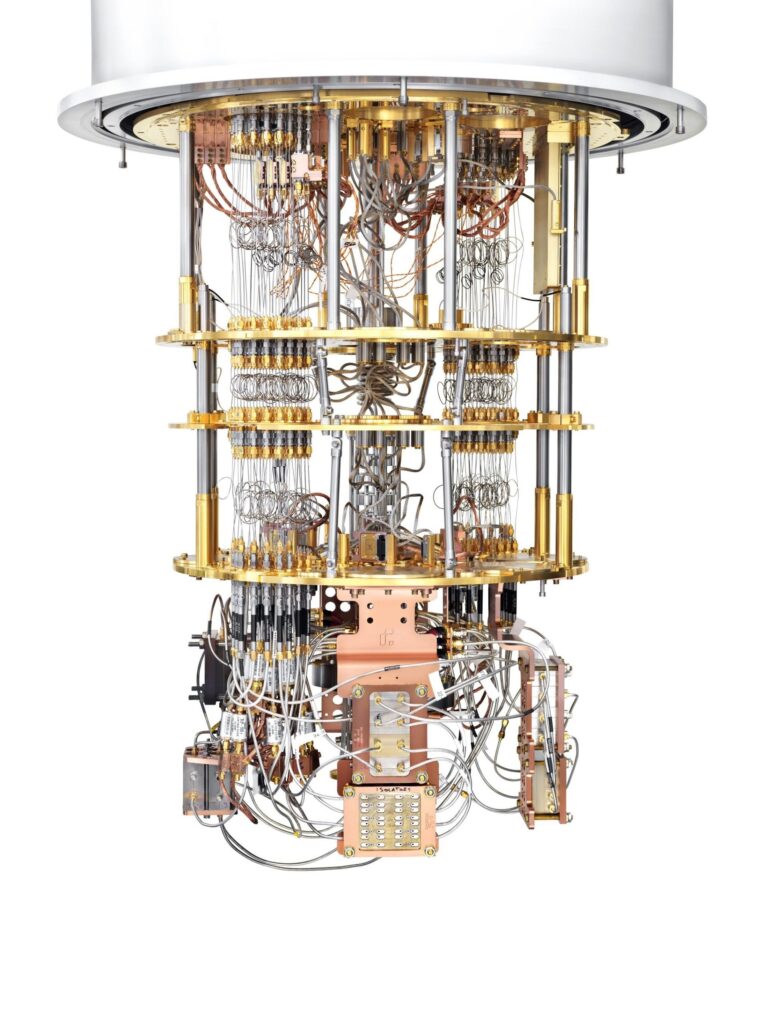



Rigetti Computing, a pioneer in hybrid quantum-classical computing systems, received up to $8.6 million from the Defense Advanced Research Projects Agency (DARPA) to develop a full-stack system with proven quantum advantage for solving real world problems, according to a news release.
The initiative is part of a larger collaboration with the NASA Quantum Artificial Intelligence Laboratory (QuAIL) and Universities Space Research Association (USRA).
In particular, the work will address complex scheduling problems that remain hard or impossible for classical computers to solve. Using quantum computers to find new solutions could have important implications for national security, such as real-time strategic asset deployment, as well as commercial applications including global supply chain management, network optimization, or vehicle routing.
“We’re honored to be chosen by DARPA and believe we are uniquely positioned to demonstrate quantum advantage for this class of problem,” said Mandy Birch, Senior Vice President, Engineering Strategy at Rigetti. “We believe strongly in an integrated hardware and software approach, which is why we’re bringing together the scalable Rigetti chip architecture with the algorithm design and optimization techniques pioneered by the NASA-USRA team.”

The collaboration will focus on developing a superconducting quantum processor, hardware-aware software, and custom algorithms based on real-world scenarios. The work will leverage Rigetti’s Fab-1—the only dedicated quantum integrated circuit foundry in the U.S.—to manufacture chips that scale beyond 100 qubits.
In addition, the NASA-USRA team will design methods for benchmarking the hardware against classical computers to determine quantum advantage.
The grant is part of the DARPA ONISQ (Optimization with Noisy Intermediate-Scale Quantum) program. The goal of the program is to establish that quantum information processing using NISQ devices has a quantitative advantage for solving real-world combinatorial optimization problems as compared with the best known classical methods.
About Rigetti Computing
Rigetti Computing is an integrated quantum systems company. Through our Quantum Cloud Services platform, Rigetti machines can be integrated into any public, private or hybrid cloud. Rigetti serves customers in finance, insurance, government, defense, and energy with custom software and full-stack quantum computing solutions focused on simulation, optimization, and machine learning applications. The company is based in Berkeley, CA with offices in Fremont, CA, Washington, D.C., London, and Australia. Learn more at rigetti.com.

Keep track of everything going on in the Quantum Technology Market. In one place.
Topics

Matt Swayne
With a several-decades long background in journalism and communications, Matt Swayne has worked as a science communicator for an R1 university for more than 12 years, specializing in translating high tech and deep tech for the general audience. He has served as a writer, editor and analyst at The Quantum Insider since its inception. In addition to his service as a science communicator, Matt also develops courses to improve the media and communications skills of scientists and has taught courses.
[email protected]

Stay Ahead of Quantum
Get the latest research, company news, and market intelligence every week.
MENTIONED IN THE ARTICLE

Rigetti Computing
Rigetti Computing develops integrated quantum computers and superconducting processors specialized for complex aerospace optimization and satellite communication tasks, including collaborations with the U.S. Air Force. Founded in 2013, the firm produces modular, multi-chip processors internally and provides cloud-based access for large-scale, complex simulations.
→

Defense Advanced Research Projects Agency (DARPA)
The Defense Advanced Research Projects Agency (DARPA) is an independent research and development agency within the U.S. Department of Defense (DoD) established in 1958 to prevent and create strategic technological surprises for national security. Operating with a relatively small staff of program managers who are empowered to take high-risk, high-reward approaches, DARPA functions by funding cutting-edge research in academia, industry, and government laboratories rather than conducting research in-house. Its mission focuses on creating revolutionary technologies—such as the Internet (ARPANET), stealth technology, GPS, and mRNA vaccine platforms—that transition into practical military and civilian applications. DARPA programs are typically finite in duration and demand transformational breakthroughs rather than incremental improvements, positioning the U.S. at the forefront of technological innovation.
→